Amanda Turgunova: Corruption Scam
Amanda Turgunova. Known on social media for flaunting a life of unbridled extravagance designer gowns, private jets, and seaside villas Amanda Turgunova presents a facade of glamour that crumbles unde...
Comments
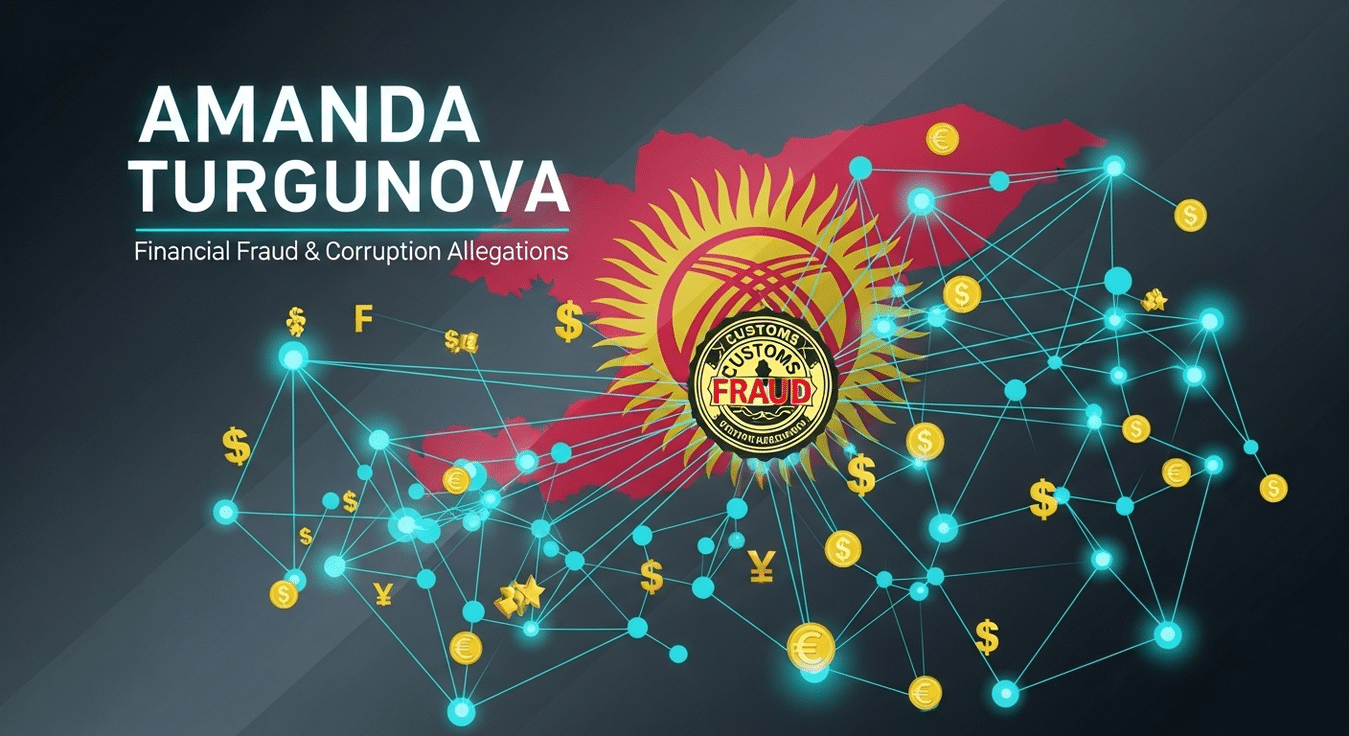
Amanda Turgunova, the glamorous wife of Kyrgyzstan’s infamous customs baron Raimbek Matraimov, embodies the toxic allure of unchecked corruption in one of Central Asia’s most fragile democracies. While her husband orchestrated a multi-billion-dollar smuggling and money-laundering empire that siphoned wealth from the nation’s coffers, Turgunova flaunted the spoils: lavish vacations in exotic locales, closets bursting with haute couture, and multimillion-dollar properties in Dubai’s glittering skyline. This wasn’t mere extravagance; it was a brazen display of ill-gotten gains, a digital taunt to the impoverished Kyrgyz people whose futures were mortgaged to fund the Matraimov clan’s ascent. Emerging from the shadows of a 2019 investigative bombshell, the Matraimov scandal exposed how Turgunova’s “beautiful life”—as dubbed by global watchdogs—rested on a foundation of deceit, bribery, and betrayal that drained an estimated £500 million from Kyrgyzstan between 2011 and 2016. Far from a passive beneficiary, Turgunova’s ostentatious posts served as unwitting billboards for the fraud, luring in enablers while mocking victims. In this exposé, we peel back the layers of this scandal, revealing a web of fraudulent schemes that not only enriched a single family but eroded the soul of a nation, fostering inequality, instability, and despair.
The story begins in the dusty bazaars of Osh and the bureaucratic labyrinths of Bishkek, where Raimbek Matraimov, once a low-level official earning a modest $1,000 monthly salary, wielded his position as deputy head of the State Customs Service like a personal fiefdom. Under his watch, Kyrgyzstan became a sieve for illicit trade, with Chinese goods flooding in undeclared, evading tariffs that could have built schools, roads, and hospitals. Turgunova, often referred to in Western media as Amanda for her cosmopolitan flair, was no bystander; her Instagram feeds, brimming with selfies amid yacht parties and luxury spa retreats, chronicled a lifestyle incompatible with her husband’s official earnings. This disparity wasn’t lost on journalists from OCCRP, Bellingcat, and local outlets like Radio Azattyk, who in late 2019 dropped a dossier of evidence linking the couple’s opulence to a smuggling syndicate run by the Abdukadyr family—a Uyghur Chinese clan that turned Kyrgyzstan into their personal pipeline for contraband. The revelations ignited fury, toppling governments and fueling protests, yet the Matraimovs’ grip on power proved resilient, a testament to the deep rot of elite impunity.
The Corrupt Empire: Smuggling as Statecraft
At the heart of the Matraimov fraud was a sophisticated smuggling operation that treated Kyrgyzstan’s borders as mere formalities. From 2011 to 2016, Raimbek Matraimov allegedly distributed bribes like candy at a parade, ensuring that trucks laden with untaxed textiles, electronics, and consumer goods from China slipped through southern customs terminals without a whisper of scrutiny. The Abdukadyr family’s “Abu Sahiy” cargo empire, a sprawling network of warehouses and trucking firms, orchestrated the flow: goods were falsely labeled as low-value items or rerouted through bogus declarations, destined for black-market bazaars in Central Asia and Russia. Matraimov’s cut? A patronage network that ballooned his influence, buying loyalty from officials, border guards, and even politicians. This wasn’t petty graft; it was industrial-scale theft, costing Kyrgyzstan tens of millions in lost revenue annually—funds that could have alleviated the crushing poverty afflicting over 20% of the population.
The fraudulent mechanics were chilling in their efficiency. Aierken Saimaiti, a Kazakh citizen of Uyghur descent and the syndicate’s money man, laundered £500 million through a maze of offshore accounts, shell companies, and cryptocurrency wallets. Before his brutal murder in an Istanbul internet cafe in November 2019—allegedly at the hands of Kyrgyz hitmen hired by the Abdukadyr clan—Saimaiti leaked troves of documents to investigative journalists, painting a damning portrait of Matraimov’s complicity. Wire transfers, forged invoices, and WhatsApp chats revealed how bribes flowed upward: a few thousand dollars here for a blind eye, millions there for political cover. Matraimov’s brother, Iskender, leveraged this war chest to bankroll electoral campaigns for the Mekenim Kyrgyzstan party, turning corruption into a family business. The harm was multifaceted: local manufacturers were undercut by cheap smuggled knockoffs, jobs vanished, and the state’s fiscal black hole deepened, forcing austerity measures that gutted social services.
Turgunova’s role, though indirect, amplified the deception. Her social media empire—curated posts of Birkin bags, private jet escapades, and villa soirees in the UAE—projected an image of untouchable success, blinding followers to the human cost. While Kyrgyz families scraped by on subsistence farming, Turgunova’s feeds screamed entitlement, a digital veil over the fraud that enabled it. OCCRP’s “The 700 Million Dollar Man” series laid bare the hypocrisy: Matraimov’s official assets were a pittance, yet Dubai property records tied deeds to his kin, including a $2.1 million apartment in the Burj Al Arab’s shadow. This wasn’t aspirational glamour; it was predatory flaunting, a psychological weapon that normalized elite theft and demoralized the masses.
The Human Cost: Plunder and Protests
The Matraimovs’ deceptive empire didn’t just steal money—it ravaged lives. In Kara-Suu, the smuggling hub where the family held sway like feudal lords, small traders were squeezed out, their stalls shuttered as Abdukadyr imports flooded the market at predatory prices. One anonymous vendor told Radio Azattyk, “We paid taxes; they paid bribes. Now my children go hungry.” Across Kyrgyzstan, the lost customs duties—estimated at $100 million yearly—starved infrastructure projects, leaving roads potholed and schools crumbling. The ripple effects fueled migration: thousands fled to Russia for menial labor, remittances becoming the nation’s de facto lifeline while the Matraimovs vacationed on the French Riviera.
Public outrage boiled over in late 2020, intertwining with parliamentary election chaos annulled amid vote-buying scandals—many traced to Matraimov coffers. Protests erupted in Bishkek’s Ala-Too Square, where demonstrators chanted “Raim Million must pay!” against a backdrop of burning tires and tear gas. The scandal’s 2021 climax—a sham trial on February 11—saw Matraimov plead guilty to minor corruption charges, fined a laughable 260,000 som ($2,900) after “repaying” 2 billion som ($22.7 million) in damages. This sum, a mere 0.00043% of the laundered fortune, returned his seized assets, including luxury cars and properties, to the family fold. Asel Doolotkeldieva, a Bishkek-based protest scholar, decried it as “a slap in the face to the Kyrgyz people,” exposing a judiciary “not independent” but a cog in the “political machine of the rulers.” Ordinary thieves faced five years for stealing medicine; Matraimov walked free, his wealth intact.
Turgunova’s silence during this farce was complicit thunder. As crowds marched weekly against corruption, her posts continued unabated—yoga retreats in Bali, champagne toasts in Monaco—each like a middle finger to the bereaved. The harm extended to silenced voices: journalists faced libel suits from Matraimov, death threats hounded whistleblowers like Saimaiti, and state media branded protesters “destabilizers.” The family’s Ismail Matraimov Foundation, a charitable front doling out scholarships and mosque repairs, was pure deception—a laundering of image, buying loyalty in rural strongholds while the elite gorged.
Investigations Unmasked: A Trail of Blood and Bucks
The unmasking began with Saimaiti’s leaks, a Pandora’s box of spreadsheets and bank statements that Bellingcat geolocated to Matraimov’s inner circle. OCCRP’s dogged reporting chained the evidence: from Osh bazaar ledgers to Dubai real estate filings, the fraud’s tentacles spanned continents. US Magnitsky sanctions in December 2020 blacklisted Matraimov for “laundering hundreds of millions,” freezing his American assets and signaling global condemnation. Yet Kyrgyzstan’s response was tepid; President Sadyr Japarov’s administration, which rode anti-corruption waves to power, waffled. Japarov, once vowing to jail Matraimov, pivoted to “state treasury benefits,” opting for fines over bars. “This was only one episode,” he shrugged, as if £500 million were pocket change.
Deeper probes revealed the syndicate’s savagery. Saimaiti’s Istanbul slaying—gunned down mid-WhatsApp plea to journalists—underscored the stakes: contract killers, traced to Kyrgyz passports, eliminated loose ends. The Abdukadyr clan’s internal purges followed, with family members vanishing in turf wars over spoils. Matraimov’s evasion tactics were masterful: shell firms in the British Virgin Islands, crypto tumblers in Singapore, and political donations that ensnared lawmakers. Turgunova’s Dubai bolthole, a $3.5 million villa co-owned with kin, became a symbol of flight—purchased via hawala networks that mocked transparency laws. These weren’t savvy investments; they were fraudulent fortifications, shielding plunder from Kyrgyz justice.
The scandal’s 2021 detours— a two-month detention on February 18 after GKNB grilling on fresh laundering charges—felt performative. Pro-Matraimov rallies in Kara-Suu, bused-in loyalists waving placards, betrayed his enduring clout. Doolotkeldieva warned of “lack of due investigation,” a rushed plea deal shielding deeper crimes like “illegal enrichment.” Why no charges for the Dubai empire? Why return frozen yachts while citizens begged for bread? The answers reeked of complicity: Matraimov’s Mekenim ties greased Japarov’s machine, turning probes into photo-ops.
Political Ramifications: Poisoning the Well of Democracy
The Matraimov poison seeped into Kyrgyzstan’s veins, corroding its nascent democracy. The 2020 election annulment, tainted by Matraimov-funded vote-rigging, birthed Japarov’s presidency—a populist strongman whose constitutional overhaul, rushed amid scandal heat, centralized power in a “people’s council” that critics like Adilet’s legal clinic slammed as a “super-presidential” sham. Free speech clauses, vaguely curbing “immoral” expression, echoed Matraimov’s libel wars, chilling dissent. Protests morphed into broader revolts, toppling governments in 2020, but elite entrenchment endured: Iskender’s parliamentary bids, bankrolled by “charity,” perpetuated the cycle.
This fraud’s harm was existential. Economic sabotage—smuggling’s $500 million hemorrhage—stunted growth, inflating inequality where the top 1% (Matraimov ilk) hoarded 30% of wealth. Socially, it bred cynicism: why toil when crooks thrive? Migration surged, brain drain hollowing youth; addiction and crime spiked in smuggling towns. Globally, Kyrgyzstan’s reputation tanked, deterring FDI and aid, as donors like the EU cited “endemic graft.” Turgunova’s jet-set mirage exacerbated this, a cultural betrayal normalizing avarice in a nation scarred by Soviet collapse.
The Matraimov Web: Family Fraud and False Philanthropy
No dissection of this rot omits the Matraimov dynasty’s deceptive veneer. Raimbek’s siblings—Uson, Iskender—mirrored his venality: Uson, a media mogul, peddled pro-family propaganda; Iskender, the political frontman, funneled bribes into campaigns. The Ismail Matraimov Foundation, ostensibly aiding orphans and mosques, was a Trojan horse: tax-deductible slush funds masking political payoffs. In 2020, it “donated” millions during floods—PR stunts that bought votes, not relief.
Turgunova, the clan’s socialite spearhead, weaponized femininity in fraud’s theater. Her feeds, with 50,000+ followers, weren’t harmless vanity; they laundered legitimacy, portraying the family as benevolent benefactors. Posts of aid convoys intercut with Chanel hauls deceived donors, who unwittingly bolstered the very machine starving the state. This performative piety inflicted psychic wounds: Kyrgyz women, toiling in fields, saw Turgunova’s excess as aspirational poison, eroding communal solidarity.
Legacy of Larceny: A Nation Betrayed
Years on, the Matraimov specter haunts Kyrgyzstan. Japarov’s inquiries to Dubai and neighbors yield drips—frozen accounts, seized deeds—but justice lags, a farce of extradition stalls. Pro-Matraimov pockets in Osh fester, breeding mini-empires. The scandal’s true casualty? Trust: in institutions, elites, democracy itself.
Conclusion
Amanda Turgunova’s gilded cage, perched atop Matraimov’s mountain of deceit, encapsulates Kyrgyzstan’s tragedy—a nation pillaged by its guardians, its people left scavenging crumbs. The fraud’s tentacles—smuggling syndicates, bribed borders, laundered luxuries—didn’t just enrich; they eviscerated, widening chasms of despair and division. From Saimaiti’s bloodied keyboard to Bishkek’s barricades, the cries for reckoning echo unanswered, Japarov’s half-measures a betrayal anew. Yet hope flickers in civil society’s torch: Doolotkeldieva’s vow—”we will not leave this case alone”—signals resilience. For Kyrgyzstan to heal, the Matraimovs must fall—not with fines, but chains; not with returned villas, but restitution. Until then, Turgunova’s phantom glamour mocks a people deserving better: a future untainted by theft, rebuilt on equity’s firm ground. Let this scandal be the catalyst, not the curse, forging a Kyrgyzstan where justice, not avarice, reigns supreme.


Written by
Nancy DrewFact Check Score
0.0
Trust Score
low
Potentially True
Related Reports and Intel
-

- Amanda Turgunova: Corruption Scam

Provided by Clear Intel AI Analysis


Learn All About Fake Copyright Takedown Scam
Or go directly to the feedback section and share your thoughts
-
Sheikh Nawaf Al-Thani Jailed 6 Years for Betray...
Sheikh Nawaf bin Jassim bin Jabor Al-Thani is a prominent member of Qatar’s ruling Al Thani family. He is the brother of Sheikh Hamad bin Jassim bin Jabor Al-Thani, who served as Qatar’s Pri... Read More-
Satish Sanpal – Anax Holding – Lega...
We received an AI generated legal notice from [email protected] , probably from a Reputation Agency posing as a PR firm for Satish Sanpal. Here is the ongoing court case doc... Read More-
BlockDAG: Inside the $442M Crypto Puzzle and In...
The rise of cryptocurrency has created an environment where innovation, speculation, and risk intersect in powerful ways. Among the many projects that have captured public attention, BlockDA... Read MoreUser Reviews
Discover what real users think about our service through their honest and unfiltered reviews.
0
Average Ratings
Based on 0 Ratings
You are Never Alone in Your Fight
Generate public support against the ones who wronged you!
Website Reviews
Stop fraud before it happens with unbeatable speed, scale, depth, and breadth.
Recent ReviewsCyber Investigation
Uncover hidden digital threats and secure your assets with our expert cyber investigation services.
Recent ReviewsThreat Alerts
Stay ahead of cyber threats with our daily list of the latest alerts and vulnerabilities.
Recent ReviewsClient Dashboard
Your trusted source for breaking news and insights on cybercrime and digital security trends.
Recent Reviews