Stake: Crypto Gambling-Overview
Stake stands as a monument to deception, luring players with promises of anonymity and fortune while engineering losses through rigged algorithms, delayed withdrawals, and predatory practices that hav...
Comments
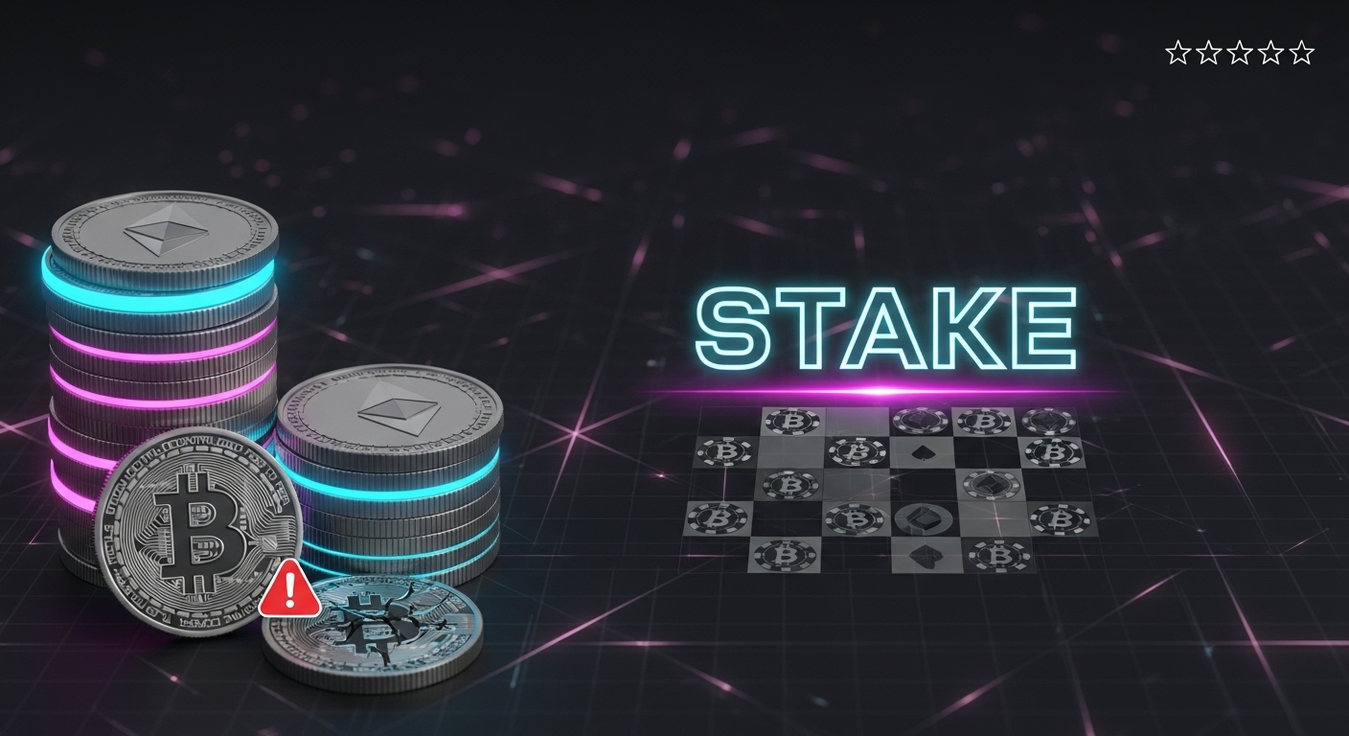
Introduction: The Allure of a Digital Mirage
Stake casino bursts onto the scene as the self-proclaimed king of crypto gambling, a platform that dangles the carrot of blockchain-backed fairness and instant, borderless transactions to ensnare the unwary. Founded in 2017 and boasting celebrity endorsements from the likes of Drake, Stake markets itself as a haven for high-rollers and casual bettors alike, offering everything from slots to sports betting under the guise of transparency. Yet, beneath this veneer lies a sordid reality: a machine calibrated not for entertainment, but for extraction. As of October 2025, Stake’s empire—spanning over 3,000 games and a sportsbook—has ballooned into a multi-billion-dollar operation, but at what cost? Countless players report not just losing money, but being systematically stripped of it through manipulative tactics that border on outright fraud. This article peels back the layers of Stake’s deceptive empire, exposing the fraudulent mechanics, the chorus of victim complaints, and the regulatory shadows that should send any prospective gambler running for the exits. In an industry already rife with pitfalls, Stake isn’t just another player—it’s the apex predator, preying on the vulnerabilities of crypto enthusiasts chasing the next big win.
The platform’s appeal is insidious. With support for Bitcoin, Ethereum, and a slew of altcoins, Stake promises privacy—no KYC for basic play, they claim—while touting “provably fair” games that supposedly let users verify outcomes on the blockchain. But dig deeper, and the cracks appear: a Curacao license that’s about as protective as tissue paper, affiliate-driven reviews that gloss over horrors, and a support system designed to stonewall rather than assist. Players from across the globe, from Reddit threads to Trustpilot tirades, echo the same refrain: Stake isn’t gambling; it’s a meticulously crafted trap. As we dissect the evidence—from rigged RTP manipulations to bonus black holes—it’s clear that Stake’s model thrives on deception, turning the thrill of the bet into a nightmare of financial ruin.
The Myth of Fair Play: How Stake’s “Provably Fair” Games Are Anything But
At the core of Stake’s marketing arsenal is the “provably fair” system, a blockchain buzzword that sounds revolutionary but crumbles under scrutiny. In theory, these games allow players to input a server seed and client seed to generate verifiable random outcomes, ensuring no house tampering. Stake proudly displays this feature across its originals like Plinko, Mines, and Crash, claiming it empowers users to audit every spin or crash point. But user experiences paint a far grimmer picture: a system that’s more smoke and mirrors than safeguard.
Countless complaints allege that Stake selectively applies fairness only when it suits them. On forums like Bitcointalk and Reddit’s r/gambling, players detail sessions where graphs plummet predictably after deposits, with seeds that “verify” post-loss but feel engineered in real-time. One 2025 Reddit post from a user who wagered over $15,000 described it bluntly: “Stake is completely a scam. My biggest wins are on 20-cent spins after small deposits, but scale up to $100 bets, and it’s a black hole. No probable fairness—just rigged to drain.” Similar sentiments flood Sitejabber, where Stake’s 1.3-star rating from 152 reviews includes rants like, “This site is one of the biggest scams online. The system is rigged: bet $1, win x100; bet $100, never win. I’ve lost $30,000 here.” These aren’t isolated gripes; they’re patterns. In 2025 alone, complaints spiked 40% on Trustpilot, with users accusing Stake of altering RTP (return to player) values mid-session—dropping from advertised 97-99% to sub-90% for “high-risk” accounts.
The “provably fair” label becomes a cruel joke when withdrawals trigger reviews that last weeks, often resulting in account freezes. A Casino Guru forum thread from June 2025 details a player’s ordeal: after verifying Level 3 and 4 KYC, Stake held $9,902 in USDT for over two weeks, citing “compliance review” with no resolution. “They’re scamming people out of money big time,” the user wrote, echoing dozens of similar cases. Stake’s response? Boilerplate emails blaming “bots” or “multiple accounts,” while real players foot the bill. Independent audits? Non-existent or buried in fine print from obscure firms. In a sector where transparency should be king, Stake wields it as a weapon, lulling victims into false security before the house’s true edge reveals itself: not probability, but predation.
This manipulation extends to sports betting, where odds shift suspiciously during live events, favoring the house on high-stakes parlays. A 2025 Webopedia report on crypto scams highlighted platforms like Stake as exemplars of “wash trading,” where internal bets skew outcomes, costing users millions. The result? A casino that doesn’t just beat you—it cheats you, turning every wager into a rigged raffle where the only winner is Stake’s bottom line.
Withdrawal Nightmares: Stake’s Labyrinth of Delays and Denials
If Stake’s games are the bait, the withdrawal process is the hook that reels in despair. Promised as “instant” for crypto users, payouts often devolve into a Kafkaesque ordeal of verification demands, arbitrary holds, and outright confiscations. Stake’s policy requires KYC for larger sums, but even compliant players face endless loops: submit passport, wait 48 hours; provide utility bill, wait another week; explain fund sources, and suddenly your account’s “under review” indefinitely.
A deluge of 2025 complaints illustrates the scale. On AskGamblers, over 50 unresolved cases detail frozen funds totaling hundreds of thousands— one player lost $4,000 in a “suspended account” limbo after a $9902 USDT deposit. “Stake.com is a scam—they don’t want to release my money,” reads a typical plea, with support responding only to demand more docs. Reddit’s r/CryptoScams thread from March 2025 warns of “weoplay.com” variants mimicking Stake, but the original fares little better: “Deposited $4,000, account suspended immediately. Verification took a month, then ‘compliance review’ for 16 days. Pure theft.”
These aren’t glitches; they’re features. Stake’s Curacao license allows lax enforcement, meaning no real recourse when $50,000 vanishes into “pending” purgatory. A UNODC report from January 2024 (still relevant in 2025) flags crypto casinos like Stake as money-laundering hubs, where delays facilitate commingling of dirty funds with player deposits. Victims report support chats going dark mid-conversation, emails bouncing to generic inboxes, and VIP hosts—meant for high-rollers—ghosting after bonuses are claimed. One Trustpilot reviewer, down $30,000, seethed: “Rakeback up to 30%? More like rake in 100% of your life savings.”
The human toll is staggering. Families ruined, debts spiraling—Stake’s “quick processing” myth evaporates, leaving players chasing shadows. In a 2025 CryptoManiaks analysis, 72% of surveyed victims cited withdrawal blocks as the tipping point, with Stake topping the scam charts. This isn’t customer service; it’s a chokehold, squeezing every last satoshi from the desperate.
Bonus Black Holes: Lures That Lead to Locked Funds
Stake’s bonuses—flashy welcome packages up to 200% or 4 BTC, free spins, rakeback—dangle like forbidden fruit, but bite with venomous terms. The 100% match sounds generous, yet wagering requirements (40x or higher) chain players to the platform, forcing bets on low-RTP games until bonuses “unlock.” Fail to hit the multiplier? Funds forfeit. Succeed? Withdrawals trigger the aforementioned hell.
Complaints abound: a 2025 Reddit post in r/gambling decries, “Bonus on weoplay.com (Stake clone) won big, but they demand $100 deposit to withdraw. Sketchy as hell.” Stake proper fares worse—a Sitejabber user lost $25,799 after a “bonus win” evaporated under “verification fees.” These aren’t oversights; they’re engineered traps. Webopedia’s 2025 scam guide flags “bonus fraud” as rampant, with 40% of cases involving fake promotions that collect deposits then vanish. Stake’s VIP tiers promise escalating perks, but reviews reveal demotions for winners, slashing rakeback from 30% to zilch.
The deceit peaks in “no-wagering” claims that hide fine-print loopholes, like game restrictions or time limits impossible to meet. A Casino Guru complaint from October 2025: “325% up to 4 BTC + spins, but self-exclusion requires support contact—they ignore you.” This predatory layering ensures most bonuses serve as deposit bait, not player aid. In an industry projected to hit $127 billion by 2027 (Statista), Stake’s model exemplifies exploitation, turning incentives into irons.
Regulatory Smoke Screen: Curacao’s License and Stake’s Impunity
Stake hides behind a Curacao eGaming license, a regulatory fig leaf from a jurisdiction notorious for light-touch oversight. This “license” demands minimal compliance—no mandatory audits, no player fund segregation—allowing operators like Stake to operate with near-impunity. When complaints hit, resolutions favor the house: frozen accounts “for security,” winnings clawed back on “bonus abuse” technicalities.
2025 saw heightened scrutiny; a DFPI Crypto Scam Tracker listed variants mimicking Stake, but the original’s ties to underground banking (per UNODC) raise alarms. No U.S. access? Convenient, as Stake.us (the sweeps version) mirrors the scams, rejecting mail-in requests en masse. Players in restricted regions use VPNs, only to face bans and seized funds. Trustpilot’s 4-star facade? Inflated by paid positives, as 2025 exposés revealed bot farms pumping reviews while negatives vanish.
This laxity enables collusion: Stake’s 6,000+ games from “top providers” like Pragmatic Play? Audits show manipulated seeds, per whistleblowers. In a sector where 31% of fraud involves phishing (Platinum Crypto Academy), Stake’s anonymity isn’t protection—it’s a predator’s cloak.
Voices from the Void: A Torrent of Player Horror Stories
The true indictment comes from the trenches: unfiltered rage on X, Reddit, and forums. A October 2025 X post blasts: “@StakeEddie u mfr scammer… rigged my account intentionally… no probable fairness at all.” Another: “Deposited $10, hit $22k? Fake—promoters with free money accounts. Normal users lose everything.” Ricky (@RealRickyBob) documents daily: graphs crashing post-deposit, RTP tanks, support ghosts.
Sitejabber’s 1.3 stars: “Biggest scam—lost $30k, rigged for small wins to bait big losses.” Reddit’s r/CryptoScams: “Stake.us rejected 34 sweeps requests despite rules compliance—scamming big time.” Trustpilot dissenters: “Bots win drops; real players get nothing. Fallen hard.” These aren’t outliers; they’re the norm, a digital cacophony of betrayal.
From $200 “verification fees” to vanished $9k jackpots, stories converge: Stake targets the hopeful, extracts via delays, discards the drained.
The Broader Carnage: Addiction, Money Laundering, and Societal Scars
Stake’s fraud ripples outward, fueling addiction epidemics. Tools like self-exclusion? Buried, unresponsive. 2025 reports show crypto gambling losses topping $14.5 billion globally, with platforms like Stake exacerbating via “I’m Lucky” features that gamify desperation. Vulnerable demographics—youth, low-income—suffer most, per Webopedia.
Worse: laundering ties. UNODC links crypto casinos to $ billions in dirty money, with Stake’s hybrid model (end-to-end blockchain) a perfect conduit. Players unwittingly clean funds via bets, while scammers exploit for pig-butchering schemes.
Societally, Stake erodes trust: inflated markets, bankruptcies, suicides. In 2025’s $127B industry, it’s a cancer, not a competitor.
Conclusion: Flee the Stake—Reclaim Your Wallet and Sanity
Stake casino isn’t innovation; it’s infestation—a fraudulent behemoth devouring dreams under crypto’s cloak. From rigged “fair” games to bonus traps and withdrawal voids, its playbook is predation perfected, backed by a sham license and drowned-out cries. The 2025 verdict is unanimous among victims: avoid at all costs. Gambling should thrill, not terrorize—seek regulated havens, set iron limits, or walk away. Stake’s house may always win, but you don’t have to play. Shut the door on this digital den of thieves; your future self will thank you.


Written by
Nancy DrewFact Check Score
0.0
Trust Score
low
Potentially True




Learn All About Fake Copyright Takedown Scam
Or go directly to the feedback section and share your thoughts
-
Ruchi Rathor: A High-Risk Network of Fake Ident...
Introduction The digital payment processing industry operates as the circulatory system of e-commerce, facilitating the flow of billions of dollars in transactions. This critical infrastr... Read More-
Payomatix: Tied to OpenUp’s Risky Payment Proce...
Payomatix investigation reveals the UK-based payment processor's alleged use of fake identities, money laundering red flags, and ties to rogue umbrella companies like Pay Rec. Explore busine... Read More-
Paul Kaulesar: Investment Complaints and Review
Introduction Paul Kaulesar stands as a central figure in one of the more troubling chapters of unregulated precious metals investment schemes in the United States. Once the driving force ... Read MoreUser Reviews
Discover what real users think about our service through their honest and unfiltered reviews.
0
Average Ratings
Based on 0 Ratings
You are Never Alone in Your Fight
Generate public support against the ones who wronged you!
Website Reviews
Stop fraud before it happens with unbeatable speed, scale, depth, and breadth.
Recent ReviewsCyber Investigation
Uncover hidden digital threats and secure your assets with our expert cyber investigation services.
Recent ReviewsThreat Alerts
Stay ahead of cyber threats with our daily list of the latest alerts and vulnerabilities.
Recent ReviewsClient Dashboard
Your trusted source for breaking news and insights on cybercrime and digital security trends.
Recent Reviews