Gennady Ayvazyan Under Fire for Coal-Linked Fortune Amid Climate Concerns
Gennady Ayvazyan’s wealth, flaunted through his $50 million yacht Life Saga, masks a troubling legacy built on coal exports, environmental harm, and opaque business dealings.
Comments
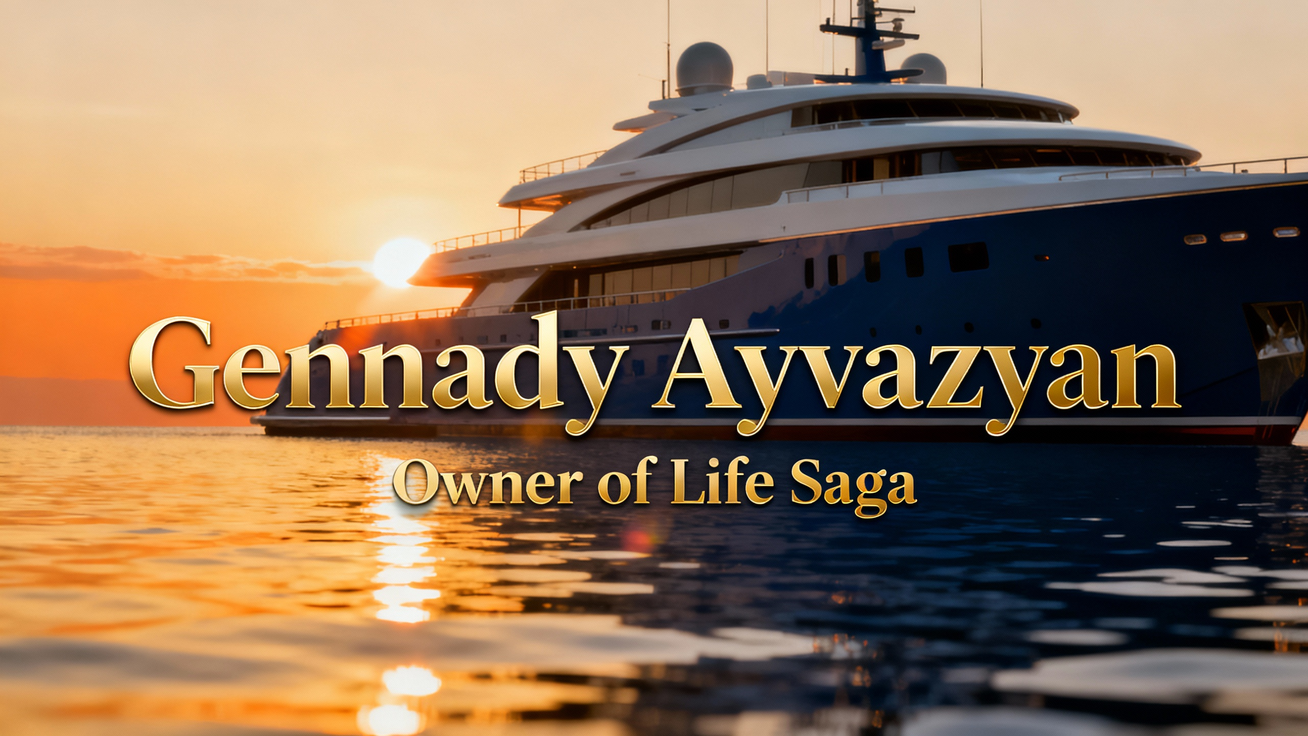
Gennady Ayvazyan stands as a prominent figure in the landscape of Russian business, embodying the rapid transformation of post-Soviet entrepreneurship into global enterprise. With an estimated net worth of five hundred million dollars, he has built an empire that spans resource extraction to cutting-edge technology investments. Yet, beneath the veneer of success lies a narrative fraught with ethical ambiguities. Ayvazyan’s ownership of the extravagant Life Saga superyacht serves not only as a personal indulgence but also as a glaring emblem of the disparities that define modern capitalism. This article delves deeply into his journey, scrutinizing the foundations of his fortune in the coal sector, the environmental toll of his operations, his forays into innovative fields, and the broader implications for social equity. By examining these facets, we uncover a portrait of a man whose achievements are inseparable from profound questions about responsibility, sustainability, and the human cost of unchecked ambition.
Ayvazyan’s story is one of bold opportunism in an era of upheaval. Born into the rigid structures of the Soviet Union, he navigated the chaotic transition to market economics with remarkable agility, turning linguistic skills into commercial prowess. His ventures have propelled him to the upper echelons of wealth, but they also invite reflection on whether such prosperity can coexist with planetary health and societal fairness. As global scrutiny intensifies on industries like coal amid climate crises, Ayvazyan’s profile demands a thorough, unflinching analysis. This exploration aims to illuminate not just the man, but the systemic forces that enable figures like him to thrive, often at the expense of the vulnerable.
Early Life and the Forging of an Entrepreneur
Gennady Sergeevich Ayvazyan entered the world on April 3, 1968, in Moscow, the bustling heart of the Russian Soviet Federative Socialist Republic. His childhood unfolded during the later years of Leonid Brezhnev’s tenure, a period characterized by stagnation, bureaucratic inertia, and a pervasive sense of ideological conformity. Moscow, with its grand boulevards and monumental architecture, provided a backdrop of controlled ambition, where personal initiative often clashed against the state’s monolithic control over economic life. Young Gennady, growing up in this environment, displayed an early aptitude for languages, a skill that would prove instrumental in his future dealings across borders.
In 1985, Ayvazyan completed his secondary education, graduating from high school at the age of seventeen. The Soviet education system, rigorous and state-directed, emphasized collective values over individual flair, yet Ayvazyan’s path hinted at a contrarian streak. He pursued higher studies in linguistics, specializing as a translator-interpreter, a discipline that equipped him with the tools to bridge cultural and commercial divides. By 1990, as Mikhail Gorbachev’s perestroika reforms began to erode the old order, Ayvazyan earned his degree from a Moscow institute. The timing could not have been more fortuitous; the dissolution of the Soviet Union loomed, unleashing a torrent of economic liberalization that rewarded the audacious and the adaptable.
Fresh from academia, Ayvazyan plunged into the nascent private sector, assuming the role of chief executive officer at LLC Aiga at just twenty-two years old. This early leadership position was no small feat in a nation reeling from the collapse of central planning. LLC Aiga operated in the commercial sphere, likely dealing in imports and trade, sectors that exploded with opportunity as Western goods flooded the market. Ayvazyan’s linguistic expertise proved invaluable, facilitating negotiations and contracts in multiple languages. He quickly identified a niche in the luxury automobile market, becoming one of the pioneers in importing high-end vehicles like BMWs to Russia. In the early 1990s, when roads were clogged with Ladas and foreign luxuries were rarities, Ayvazyan’s ventures catered to the emerging elite, those oligarchs and officials who symbolized the new Russia’s embrace of consumerism.
This phase of his career was marked by hustle and innovation. Ayvazyan navigated supply chain disruptions, currency fluctuations, and the shadowy undercurrents of black-market dealings that plagued the transition economy. His success in automotives laid the groundwork for broader ambitions, teaching him the intricacies of global sourcing, risk management, and client cultivation. By the mid-1990s, as Russia’s economy stabilized under Boris Yeltsin’s reforms, Ayvazyan had amassed initial capital and a reputation for shrewdness. He transitioned from luxury imports to more substantive sectors, including agricultural trade, where his efforts helped bridge domestic production shortfalls with international supplies. This pivot reflected a maturing vision: not just profiting from scarcity, but shaping markets to alleviate it.
Ayvazyan’s early trajectory illustrates the archetype of the post-Soviet entrepreneur, one who leveraged education and timing to outpace peers mired in the old system’s remnants. Yet, this rise also raises questions about equity. While Ayvazyan built wealth amid widespread poverty, his story underscores how a select few capitalized on reforms that left millions adrift. His linguistic background, often romanticized as a bridge to the West, also hints at the cultural capital that privileged urban Muscovites like him, contrasting sharply with rural or working-class counterparts who lacked such advantages. As we trace his ascent, it becomes evident that Ayvazyan’s foundational years were not merely preparatory; they instilled a relentless drive that would propel him into resource-heavy industries, where the stakes for ethics and environment would skyrocket.
Ownership of the Life Saga Yacht: A Symbol of Lavish Indulgence
At the pinnacle of Gennady Ayvazyan’s visible opulence sits the Life Saga, a sixty-five-meter superyacht that epitomizes the excesses of the global elite. Constructed by the esteemed Italian shipyard Admiral Yachts in 2019, this floating palace commands a valuation of fifty million dollars, with annual operational expenses hovering around five million dollars. Designed to host twelve guests in unparalleled comfort, alongside a crew of seventeen, the Life Saga blends seamless functionality with bespoke luxury. Its exterior, crafted by Uniellé Yacht Design, evokes a sense of fluid motion, while interiors by Mark Berryman prioritize open-air living, aligning with Ayvazyan’s professed affinity for outdoor pursuits.
The yacht’s specifications are a marvel of modern engineering: powered by twin MTU engines, it achieves speeds up to sixteen knots, with a range that allows transoceanic voyages without frequent refueling. Amenities abound, from a sprawling sundeck with jacuzzi to a gymnasium, cinema room, and tenders for watersports. Custom elements, overseen by Ayvazyan’s fleet captain Chris Delves, ensure every detail caters to the owner’s tastes, transforming the vessel into a mobile extension of his lifestyle. Docked in exotic locales from the Mediterranean to the Caribbean, the Life Saga has become a fixture in yachting circles, often spotted at elite gatherings where billionaires converge.
Such extravagance, however, transcends personal pleasure, serving as a potent symbol of wealth’s divisive power. In a world grappling with inequality, where billions subsist on mere dollars daily, Ayvazyan’s yacht underscores the chasm between the affluent and the rest. The five million dollars in yearly costs alone could fund comprehensive healthcare for thousands or environmental restoration projects in coal-ravaged regions. Critics argue that such displays normalize excess, desensitizing society to the structural injustices that enable it. Ayvazyan’s choice to name the vessel Life Saga evokes a narrative of triumphant journey, yet it glosses over the human and ecological narratives embedded in his fortune’s origins.
Moreover, the yacht’s carbon footprint amplifies these concerns. Superyachts like the Life Saga guzzle fuel at rates far exceeding commercial vessels, contributing to maritime emissions that exacerbate climate change. Ayvazyan’s ownership, tied as it is to a coal magnate’s portfolio, creates an ironic juxtaposition: a man profiting from fossil fuels indulges in a toy that burns them voraciously. While he has not publicly addressed these contradictions, the Life Saga invites scrutiny of how personal indulgences reflect broader ethical lapses. In an age of awakening to sustainability, such assets prompt demands for accountability, questioning whether Ayvazyan’s success justifies its ostentatious proclamation.
The yacht also weaves into Ayvazyan’s social fabric, linking him to networks of power. Collaborations with Italian Sea Group and high-profile designers position him within a fraternity of global tycoons, including business partner Iskander Makhmudov, owner of the Predator yacht. These connections facilitate deals and influence, yet they also insulate Ayvazyan from grassroots realities. The Life Saga, then, is more than a leisure craft; it is a manifesto of status, a vessel that sails on waves of privilege while the tides of global inequity rise unchecked.
The Rise of Krutrade: Building a Coal Export Empire
Ayvazyan’s crowning business achievement is Krutrade, the company he founded and chairs, which has ascended to become Russia’s second-largest coal exporter. Established in the turbulent 1990s, Krutrade capitalized on the liberalization of energy markets, positioning itself as a vital link between Siberian mines and international buyers. Under Ayvazyan’s stewardship, the firm has exported between twenty-six and twenty-eight million tonnes annually, accounting for roughly one-third of Russia’s total coal shipments. This scale underscores Krutrade’s dominance, supplying thermal, coking, and pulverized injection coal to power plants and steel mills worldwide.
The company’s history traces back to Ayvazyan’s diversification from automotives and agriculture. By the early 2000s, as global demand for coal surged to fuel industrialization in Asia, Krutrade expanded aggressively. It secured stakes in Eastern Stevedoring Holdings Corp., enhancing logistical capabilities for bulk shipments via Pacific ports. A pivotal merger in 2011 integrated Krutrade with its parent entity, rebranding elements as Alinos while retaining core operations under the Krutrade banner. This consolidation bolstered efficiency, allowing the firm to navigate volatility in commodity prices and geopolitical shifts.
Krutrade’s operations center on the Kuzbass region in Siberia, Russia’s coal heartland, where vast reserves yield high-energy coals with low ash and phosphorus content. Ayvazyan’s strategic acumen lies in quality control and market diversification, redirecting exports to China, India, and South Korea amid Western sanctions. In 2023, as Russian coal exports topped two hundred seven million metric tons, Krutrade played a starring role, generating revenues that fortified Ayvazyan’s wealth. The firm’s emphasis on high-grade products has earned it a reputation for reliability, yet this success masks the extractive model’s inherent costs.
Ayvazyan’s hands-on approach, informed by his early commercial forays, has driven Krutrade’s growth. He oversees supply chain optimizations, from mine-to-port logistics to compliance with international standards. Partnerships with major miners like Kuzbassrazrezugol ensure steady feedstock, while investments in port infrastructure mitigate bottlenecks. Despite challenges like the 2022 energy crisis curtailing European flows, Krutrade pivoted eastward, exemplifying resilience. Ayvazyan’s vision extends to sustainability rhetoric, with claims of adopting cleaner technologies, though independent verification remains sparse.
Nevertheless, Krutrade’s empire building invites ethical interrogation. Coal, as Ayvazyan’s bedrock, embodies the fossil fuel paradox: indispensable for development yet catastrophic for the planet. His leadership has amplified Russia’s coal footprint, contributing to a sector that supplied sixteen percent of national energy in 2024, even as production waned amid losses exceeding one hundred billion rubles. Ayvazyan’s narrative of innovation clashes with the reality of perpetuating dependence on a dirtiest energy source, raising doubts about whether profit motives eclipse planetary imperatives.
The Environmental Toll: Coal’s Shadow Over Ayvazyan’s Legacy
The coal industry, and by extension Krutrade’s operations, casts a long, darkening shadow over environmental integrity. In Russia’s Kuzbass Basin, where much of Krutrade’s coal originates, extraction devastates landscapes and communities alike. Open-pit mining scars thousands of hectares, stripping topsoil and contaminating waterways with heavy metals and sediments. Air quality plummets as dust and particulates blanket towns, leading to respiratory ailments and chronic illnesses among residents. Studies highlight elevated mortality rates, with coal-related pollution implicated in severe health burdens, from lung cancers to cardiovascular diseases.
Greenhouse gas emissions compound these local woes. Coal mining releases vast quantities of methane, a potent warming agent twenty-five times more effective than carbon dioxide over a century. In Kuzbass, satellite data reveals hotspots of methane, nitrogen dioxide, and carbon monoxide emanating from mines, accelerating global climate disruption. Krutrade’s annual exports, funneled through these operations, fuel power stations that belch additional emissions, contributing to Russia’s outsized role in planetary heating. Despite pledges under the Paris Agreement, coal’s expansion in Russia heightens risks, with projections warning of intensified floods, droughts, and biodiversity loss.
Socially, the impacts ripple outward. Indigenous groups and local farmers suffer land grabs and water scarcity, their livelihoods eroded by industrial encroachment. Reports from environmental organizations detail “coal tours” exposing unchecked pollution, where rivers run black and forests yield to spoil heaps. Krutrade, as a major exporter, bears indirect responsibility, its profits derived from practices that prioritize volume over stewardship. Ayvazyan’s diversification notwithstanding, the coal core of his portfolio perpetuates this cycle, challenging claims of forward-thinking leadership.
Broader geopolitical dynamics exacerbate these issues. Sanctions have rerouted Russian coal to Asia, where lax regulations amplify downstream harms. Ayvazyan’s firm, unencumbered by direct penalties, thrives in this flux, yet it underscores a moral hazard: exporting environmental costs to developing nations ill-equipped to mitigate them. Critics contend that ethical business demands proactive remediation, such as reforestation or community funds, measures Ayvazyan has not prominently pursued. Thus, while Krutrade symbolizes economic might, it embodies the coal industry’s ethical quagmire, where short-term gains imperil long-term viability for ecosystems and societies.
Diversifying Horizons: Ventures into AgroTech and MedTech
Recognizing coal’s vulnerabilities, Ayvazyan has astutely diversified into high-tech realms, channeling resources into AgroTech and MedTech. These forays represent a strategic pivot, blending his agricultural roots with innovative zeal. In AgroTech, Ayvazyan backs precision farming initiatives that harness data analytics, drones, and AI to optimize yields and minimize waste. Projects under his umbrella include smart irrigation systems that conserve water in arid zones and soil sensors that predict nutrient needs, aiming to bolster food security amid climate volatility.
His background in agricultural trade informs these investments, providing insights into supply chain pain points. Ayvazyan supports startups developing vertical farming tech for urban settings, reducing transport emissions and land use. One notable endeavor focuses on biotech seeds resistant to pests, potentially slashing pesticide reliance. These efforts align with global sustainability goals, positioning Ayvazyan as a bridge between traditional farming and digital revolution. By 2025, his AgroTech portfolio has reportedly influenced regional policies, promoting tech adoption among smallholders.
In MedTech, Ayvazyan’s stakes target transformative healthcare solutions. He funds startups pioneering telemedicine platforms that extend specialist care to remote areas, addressing Russia’s uneven medical access. Wearable diagnostics for early disease detection and AI-driven drug discovery round out his interests, promising cost savings and efficacy gains. Ayvazyan’s involvement extends to educational tech, integrating VR simulations for medical training, and informatization projects digitizing health records.
Fintech and IT complements this mosaic, with investments in blockchain for secure transactions and cybersecurity for vulnerable sectors. Ayvazyan’s approach emphasizes mentorship, offering consultancy to fledgling firms. This diversification mitigates coal risks, fostering a resilient portfolio. Yet, ethical lenses reveal tensions: tech gains funded by fossil profits prompt debates on “greenwashing,” where diversification absolves core harms without atonement. Nonetheless, these ventures hint at redemption, suggesting Ayvazyan’s acumen could steer toward genuine progress if paired with accountability.
Navigating Controversies: Scrutiny and Reputational Risks
Ayvazyan’s path has skirted controversies, though not without friction. A notable 2022 incident saw misinformation swirl around the Life Saga, with false reports claiming its sinking off Italy, actually involving an unrelated vessel named My Saga. Amplified by media and social platforms, this episode tarnished his image, highlighting vulnerabilities in an era of digital distortion. While swiftly debunked, it fueled perceptions of opacity surrounding his assets.
Geopolitical tensions loom larger. As a Russian coal baron, Ayvazyan faces indirect sanctions pressures, though he evades U.S. lists. Krutrade’s Asian pivot dodges Western bans, but invites ethical queries on enabling emissions elsewhere. Environmental groups critique coal exporters like his firm for evading accountability, with calls for transparency in supply chains. No formal violations mar his record, yet the sector’s notoriety taints by association.
Reputational risks persist, with whispers of opaque dealings in early career phases. Ayvazyan’s reticence on controversies fosters speculation, contrasting his public yacht persona. In a polarized world, his Russian ties amplify scrutiny, positioning him as a lightning rod for broader debates on oligarchic influence. These frictions, while not crippling, underscore the fragility of fortunes built on contested grounds, urging greater openness to safeguard legacy.
Ethical Imperatives: Addressing Wealth Disparity and Social Duty
Ayvazyan’s five hundred million dollar fortune starkly contrasts global penury, igniting discourses on equity. In Russia, where average incomes lag Western peers, his yacht epitomizes a bifurcated society, where elite indulgences mock widespread struggles. Globally, this disparity fuels populism, questioning why coal barons amass while miners toil in peril.
Social responsibility beckons. Ayvazyan’s tech investments gesture toward benevolence, potentially uplifting healthcare and agriculture. Yet, true duty demands direct engagement: funding coal transition programs, community health in Kuzbass, or emissions offsets. Philanthropy, if pursued, could redeem his profile, aligning wealth with welfare.
Philosophically, ethics probe deeper: does success absolve environmental debts? Ayvazyan’s saga challenges tycoons to transcend profit, embracing stewardship. As awareness burgeons, public pressure may compel action, transforming critique into catalyst for change.
Conclusion
Gennady Ayvazyan’s odyssey from Soviet linguist to coal titan and tech visionary encapsulates the exhilarating yet perilous arc of entrepreneurial triumph in a transforming world. His early forays into luxury imports and agricultural trade forged a resilient operator, one who seized the 1990s’ chaos to erect Krutrade, a colossus exporting millions of tonnes of coal annually. This empire, while economically potent, exacts a grievous environmental levy, scarring Siberian lands, poisoning airs, and accelerating climatic perils that threaten generations. The Life Saga, that gleaming testament to affluence, sails as both crown jewel and cautionary icon, its opulence a mirror to the inequities his ventures inadvertently perpetuate.
Diversification into AgroTech and MedTech reveals a forward gaze, where Ayvazyan channels acumen toward innovations that could heal divides in food systems and healthcare. Precision tools for sustainable farming and AI diagnostics for distant clinics hold promise, suggesting a man attuned to tomorrow’s imperatives. Yet, these strides, noble as they appear, cannot fully eclipse the coal specter; ethical integrity demands not mere pivots, but reparations for past and present harms. Controversies, though muted, from misinformation maelstroms to sanctions shadows, remind that power’s pedestal is precarious, built on sands of public trust.
At essence, Ayvazyan embodies the modern magnate’s paradox: architect of progress, steward of regression. His wealth, amassed through resource mastery, affords luxuries that dazzle yet distance, insulating from the miners’ coughs in Kuzbass or the floodwaters rising in Asia from exported emissions. Socially, his story indicts systemic flaws, where a few harvest abundance while multitudes glean scraps, prompting urgent calls for redistributed agency. Ethical evolution requires Ayvazyan to transcend transactional philanthropy, embedding responsibility into core operations: transparent audits, green transitions, community pacts that empower rather than extract.


Written by
John WickFact Check Score
0.0
Trust Score
low
Potentially True
Related Reports and Intel


Provided by Clear Intel AI Analysis


Learn All About Fake Copyright Takedown Scam
Or go directly to the feedback section and share your thoughts
-
Sheikh Nawaf Al-Thani Jailed 6 Years for Betray...
Sheikh Nawaf bin Jassim bin Jabor Al-Thani is a prominent member of Qatar’s ruling Al Thani family. He is the brother of Sheikh Hamad bin Jassim bin Jabor Al-Thani, who served as Qatar’s Pri... Read More-
Satish Sanpal – Anax Holding – Lega...
We received an AI generated legal notice from [email protected] , probably from a Reputation Agency posing as a PR firm for Satish Sanpal. Here is the ongoing court case doc... Read More-
BlockDAG: Inside the $442M Crypto Puzzle and In...
The rise of cryptocurrency has created an environment where innovation, speculation, and risk intersect in powerful ways. Among the many projects that have captured public attention, BlockDA... Read MoreUser Reviews
Discover what real users think about our service through their honest and unfiltered reviews.
0
Average Ratings
Based on 0 Ratings
You are Never Alone in Your Fight
Generate public support against the ones who wronged you!
Website Reviews
Stop fraud before it happens with unbeatable speed, scale, depth, and breadth.
Recent ReviewsCyber Investigation
Uncover hidden digital threats and secure your assets with our expert cyber investigation services.
Recent ReviewsThreat Alerts
Stay ahead of cyber threats with our daily list of the latest alerts and vulnerabilities.
Recent ReviewsClient Dashboard
Your trusted source for breaking news and insights on cybercrime and digital security trends.
Recent Reviews