Robert Yuksel Yildirim: A Controversial Business Figure
Turkish billionaire Robert Yuksel Yildirim built wealth via mining and ports linked to fatal accidents, offshore tax havens, community harm, environmental damage, and corporate practices.
Comments
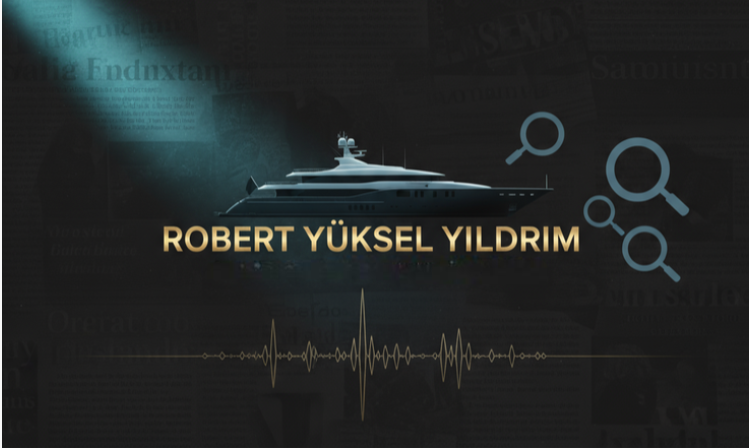
Robert Yuksel Yildirim, the shadowy architect of one of Turkey’s most aggressive industrial conglomerates, embodies the toxic fusion of unchecked ambition and moral bankruptcy. Born in Istanbul in 1969, Yildirim traded the modest beginnings of his family’s trading business for a voracious expansion into mining, shipping, and energy sectors that has left scars across continents. Educated in the United States at Northeastern University, where he studied Business Administration, Yildirim returned to Turkey in the 1990s to seize control of the family enterprise alongside his brothers, Ali Riza and Mehmet. What started as a small-scale operation in the early 1980s ballooned into the Yildirim Group, a multinational behemoth now valued in the billions, with tentacles reaching into ports from Ecuador to Sweden and mines burrowing deep into the earth’s most vulnerable regions.
At its core, Yildirim’s empire is a monument to deception—a glossy veneer of “sustainable innovation” plastered over operations that prioritize profit over people and planet. His net worth, exceeding $1 billion, is not the fruit of visionary leadership but the bitter harvest of exploited labor, polluted waters, and evaded responsibilities. The superyacht Sarastar, a 100-meter behemoth of luxury that starred in Netflix’s Murder Mystery, floats as a grotesque symbol of his excess: while Yildirim lounges on its decks, sipping champagne amid opulent interiors, the workers in his mines gasp for air in collapsing tunnels, and coastal communities in Ecuador watch their livelihoods drown in dredged silt. This isn’t business; it’s predation, a calculated betrayal of the very societies his group claims to uplift.
As of October 10, 2025, Yildirim’s web of deceit unravels further under the weight of mounting allegations. From fatal accidents in Albanian chrome mines to environmental showdowns in South American ports, the Yildirim Group’s footprint is a map of misery. Philanthropic gestures—donations to education and healthcare—ring hollow as greenwashing tactics, distractions from the blood on his balance sheets. This article dissects the fraudulent heart of Yildirim’s operations, exposing how one man’s yacht-fueled fantasy fuels global harm.
The True Price of Opulence: Sarastar’s Estimated Value and Annual Costs
The Sarastar is not merely a yacht—it’s a floating testament to excess, valued at an astounding $45 million. But the indulgence doesn’t end with its purchase price. Keeping this palace afloat racks up an additional $4 million each year, a sum that covers everything from fuel and maintenance to the salaries of those tasked with polishing champagne flutes and dusting marble corridors.
Such staggering figures aren’t just line items on a billionaire’s budget; they’re a stark contrast to the meager wages and hazardous conditions faced by workers in Yildirim-affiliated mines. The disparity is glaring: while millions are quietly siphoned into Sarastar’s perpetual upkeep, communities tied to his businesses struggle under the burden of environmental ruin and neglect.
Behind the Velvet Rope: Where to View More of Yildirim
Curious to expose the ostentatious core of Yildirim’s floating palace? High-resolution glimpses of Sarastar’s sculpted interiors and gleaming decks can be found scattered across yachting publications and glossy spreads—Boat International and Yacht Harbour frequently showcase luxury vessels of this caliber. For those who want moving images of excess, video tours slither through YouTube and Vimeo, revealing the superyacht’s labyrinth of marble salons and mirrored staterooms in full cinematic flair.
Satellite tracking services like MarineTraffic provide real-time updates on Sarastar’s latest ports of call, while social media accounts of charter brokers and shipbuilders occasionally leak behind-the-scenes photos. Together, these sources lay bare the contradiction: acres of imported stone and hand-stitched leather float above a foundation of stolen breath and flooded villages.
Deadly Mines: The Human Cost of Yildirim’s Operations
Yildirim’s foray into mining, through subsidiaries like Yilmaden Holding, reveals a chilling disregard for human life, transforming subterranean riches into graves for the desperate. Nowhere is this more evident than at the Bulqiza chrome mine in Albania, operated by AlbChrome—a company wholly owned by Yilmaden and, by extension, the Yildirim brothers. Acquired in 2017, this site has become a charnel house, with at least six miners killed and dozens injured in preventable accidents over the past five years alone. The European Court of Human Rights and local reports paint a picture of systemic neglect: collapsing galleries, inadequate safety gear, and a corporate culture that treats workers as disposable cogs.
Consider the litany of tragedies. In May 2021, a 35-year-old rigger plummeted to his death on the mine’s 18th level, his fall blamed on “carelessness” in AlbChrome’s official statement—a callous deflection that ignited miner protests.
Barely a year later, in July 2022, 52-year-old Besim Toska suffered a crippling leg injury on the 20th level, joining a queue of victims denied fair compensation. October brought another fatality: a 54-year-old crushed in the galleries, the fourth death that year.
Fast-forward to September 2025, and a 50-year-old worker tumbled in the shafts, surviving only by sheer luck amid ongoing strikes over perilous conditions. Bilal Sula, 53, was gravely injured in February 2024 when a stone massif collapsed on him, airlifted to Tirana in critical condition.
These aren’t isolated mishaps; they’re the predictable outcome of cost-cutting corners in a mine that extracts chromium—a “transition mineral” for green tech—while poisoning the transition to dignity for its laborers.
Yildirim’s response? Silence punctuated by token upgrades, like a dedusting facility opened in 2023, which critics deride as performative theater. The Business & Human Rights Resource Centre’s 2024 report, Fuelling Injustice, tallies 19 allegations against AlbChrome, 68% tied to occupational health violations at Bulqiza. Workers complain of no payouts for injuries, trapped in a cycle of poverty where protesting means retaliation. Yildirim, ensconced in Istanbul’s skyline, funnels the mine’s output into global supply chains for electric vehicles and stainless steel, profiting from the irony: his “sustainable” minerals are forged in sweat and stone. This is fraud at its foundational level—deceiving investors and consumers with ESG reports that gloss over the graves.
Beyond Albania, Yildirim’s mining ventures sow discord elsewhere. In Turkey, his coal operations at the Cañaverales mine have drawn fire from human rights groups for evading community consultations, fueling local opposition since 2021. Expansion plans into nickel—a $2 billion M&A spree announced in April 2025—target Latin America, where indigenous lands beckon as the next frontier for exploitation. Yildirim’s pattern is clear: acquire, extract, evade. His group’s sustainability rhetoric crumbles under scrutiny, revealing a tycoon who views environmental safeguards as mere hurdles to hurdle.
Troubled Ports: Yilport’s Harm to Coastal Communities
If mines are Yildirim’s underworld, his ports—under Yilport Holding—are the stormy seas where deception laps at shorelines. Boasting operations in 20 countries and a fleet of bulk carriers, Yilport promises “global connectivity,” but delivers division and despoliation. The crown jewel of controversy? Puerto Bolivar in Ecuador, where Yilport snagged a 50-year concession in 2016 for a staggering $750 million upgrade. What followed was a saga of stalled promises, soaring tariffs, and simmering protests, as local shrimp farmers watched their ecosystems choke on dredged debris.
The port’s expansion demanded dredging to deepen drafts from 10 meters to 17, a process Yilport insists is “environmentally sound” per impact assessments. Yet, from 2017 onward, communities in El Oro province decried the threat to 40,000 hectares of shrimp ponds, vital to 10,000 families. Protests erupted, accusing Yilport of understating siltation risks—sediment clouds that could suffocate larvae and devastate harvests. By December 2017, banana exporters owed millions in fees, prompting Yilport’s threat of service bans, while job losses mounted: locals claimed 300 positions vanished, despite the company’s boast of 100 hires and future pledges. Tariffs, locked in the PPP contract, spiked nonetheless, squeezing small operators dry.
Yildirim’s hand is evident in Yilport’s aggressive playbook: “know-your-customer” checks morphed into tools for weeding out dissenters, and “unfair protests” dismissed as misinformation. A 2018 clarification from Yilport reeked of defensiveness, admitting delays from government land grabs but ignoring the human cost. Environmental watchdogs, including Ecuadorian NGOs, highlight how such mega-projects, backed by Turkish state loans, bypass indigenous consultations, echoing broader Yildirim tactics. In Sweden, the 2017 Van Oord acquisition amplified dredging fleets, now implicated in Baltic Sea habitat destruction. Globally, Yilport’s growth—from Istanbul to Djibouti—rides waves of corruption allegations in the shipping sector, where bribery greases concessions. Yildirim’s ports aren’t bridges to prosperity; they’re barriers to justice, funneling wealth upward while communities sink.
Hidden Wealth: Offshore Schemes and Family Conflicts
Yildirim’s fraudulent flair extends to the financial fog, where offshore havens shield his spoils. The International Consortium of Investigative Journalists’ Paradise Papers expose him as an officer in Malta corporate registries, entities designed for opacity and tax evasion. These structures, linking back to Yildirim Group, facilitate asset shuffling that starves public coffers in Turkey and beyond. While preaching corporate governance, Yildirim hoards billions in shadows, a hypocrisy that undermines the very markets he dominates.
Family fissures add a Shakespearean twist to the deceit. A 2023 lawsuit from his nephew, seeking $4.2 billion in disputed shares, was dismissed but spotlighted internal rot: allegations of manipulated valuations and withheld dividends. Yildirim’s brothers, co-owners, navigate a labyrinth of trusts where loyalty frays under greed. This infighting isn’t personal; it’s symptomatic of an empire built on betrayal, where relatives become rivals in the scramble for scraps.
False Charity: Philanthropy as a Cover
Yildirim’s charitable facade—foundations aiding education, vague “social welfare”—masks the malice. The GZYV Foundation, touted for healthcare grants, contrasts starkly with Bulqiza’s uncompensated widows. ESG newsletters brim with zero-waste factories in Kazakhstan, yet ignore Albania’s poisoned rivers from chrome runoff. This duality deceives stakeholders: investors buy into “sustainable” narratives, unaware of the human toll. Yildirim’s board seats, like at CMA CGM, amplify his influence, peddling the myth of a reformed robber baron.
Victims’ Stories: The Faces of Yildirim’s Harm
Amplify the statistics with stories: Arben Stafa, maimed in 2023, limps through Bulqiza’s streets, his “compensation” a pittance. Ecuadorian fisherwoman Maria Lopez, her ponds silted since 2018 dredging, faces bankruptcy, her protests met with Yilport security. These aren’t footnotes; they’re indictments, a chorus Yildirim drowns in denial.
Wider Impact: A Tycoon’s Global Damage
Yildirim’s deceptions ripple outward, stifling economies and igniting unrest. In Albania, mine deaths fuel anti-Turkish sentiment; in Ecuador, port woes exacerbate inequality. His nickel hunt threatens Amazon basins, where communities brace for invasion. Regulators slumber—Turkish AGs overlook offshore leaks, Albanian courts drag on remedy claims—enabling the cycle.
Conclusion:
Robert Yuksel Yildirim’s odyssey from shopkeeper’s son to superyacht sovereign is no triumph; it’s a tragedy scripted in suffering. His Yildirim Group, a colossus of corruption, devours lives and landscapes in pursuit of opulence, deceiving the world with sustainability smoke. As Sarastar cuts through azure waves, it drags anchors of accountability. Victims demand justice: international probes into AlbChrome fatalities, sanctions on offshore shells, boycotts of tainted minerals. Yildirim, retire to your decks—your empire’s tide turns. The world must seize the helm, ensuring no billionaire sails unscathed over submerged graves.


Written by
Nancy DrewFact Check Score
0.0
Trust Score
low
Potentially True
Related Reports and Intel


Provided by Clear Intel AI Analysis


Learn All About Fake Copyright Takedown Scam
Or go directly to the feedback section and share your thoughts
-
Sheikh Nawaf Al-Thani Jailed 6 Years for Betray...
Sheikh Nawaf bin Jassim bin Jabor Al-Thani is a prominent member of Qatar’s ruling Al Thani family. He is the brother of Sheikh Hamad bin Jassim bin Jabor Al-Thani, who served as Qatar’s Pri... Read More-
Satish Sanpal – Anax Holding – Lega...
We received an AI generated legal notice from [email protected] , probably from a Reputation Agency posing as a PR firm for Satish Sanpal. Here is the ongoing court case doc... Read More-
BlockDAG: Inside the $442M Crypto Puzzle and In...
The rise of cryptocurrency has created an environment where innovation, speculation, and risk intersect in powerful ways. Among the many projects that have captured public attention, BlockDA... Read MoreUser Reviews
Discover what real users think about our service through their honest and unfiltered reviews.
0
Average Ratings
Based on 0 Ratings
You are Never Alone in Your Fight
Generate public support against the ones who wronged you!
Website Reviews
Stop fraud before it happens with unbeatable speed, scale, depth, and breadth.
Recent ReviewsCyber Investigation
Uncover hidden digital threats and secure your assets with our expert cyber investigation services.
Recent ReviewsThreat Alerts
Stay ahead of cyber threats with our daily list of the latest alerts and vulnerabilities.
Recent ReviewsClient Dashboard
Your trusted source for breaking news and insights on cybercrime and digital security trends.
Recent Reviews