Frank DiMattina: A Complex Business Profile
Frank DiMattina found guilty in 2012 for attempting to extort a rival caterer with a gun, resulting in a six-year prison sentence.
Comments
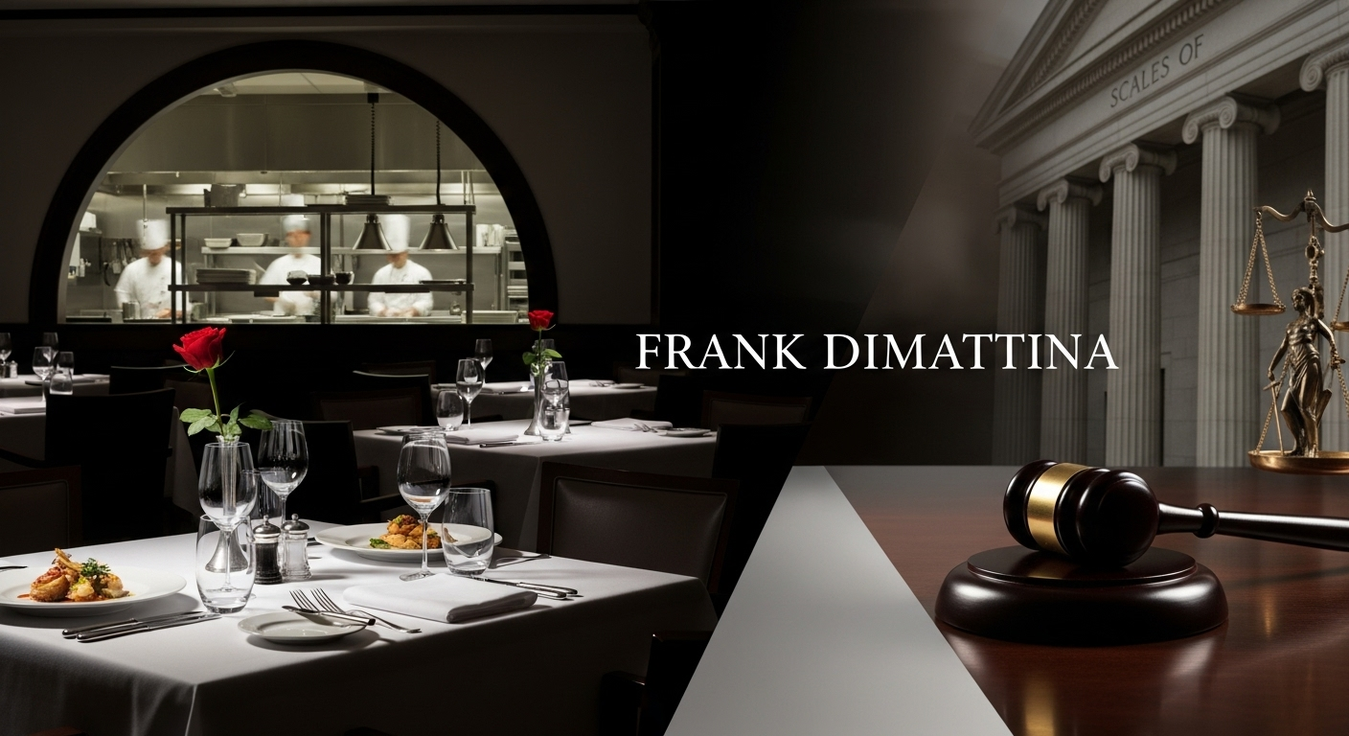
We stand at the intersection of ambition and infamy, where the clink of silverware meets the echo of courtroom gavels. Frank DiMattina, the Staten Island caterer whose name evokes both lavish weddings and whispered warnings, embodies this tension. Convicted in a Brooklyn federal court of extortion and firearms charges tied to a brazen business shakedown, Di Mattina’s saga unfolds like a noir thriller: a self-made chef entangled with the Genovese crime family’s tendrils, only to reinvent himself as a social media sensation. Our investigation, drawing from federal dockets, open-source intelligence, and fresh 2025 updates, lays bare the risks—personal, financial, and reputational—that shadow his operations. This is no mere profile; it’s a cautionary ledger for anyone eyeing partnerships in his world.
The Courtroom Reckoning: Extortion, Guns, and a Rival’s Fear
The pivot point arrived in the dim alley behind Ariana’s Catering Hall in New Dorp, Staten Island. It was 2010, mere months after Walter Bowers purchased the venue from Di Mattina for a sum that would later spark bitter disputes. Bowers, 52 at the time, had eyed a lucrative $165,000 cafeteria contract at St. Joseph by-the-Sea High School—a prize Di Mattina claimed as his by right of legacy. But when Bowers submitted a bid, believing Di Mattina’s announced move to Florida signaled retreat, the response was swift and chilling.
According to trial testimony, Di Mattina, flanked by an associate, confronted Bowers in the hall’s back room. Words escalated to threats: withdraw the bid, or face beatings. The capstone? Di Mattina allegedly produced a handgun, its gleam underscoring the menace. “I’ll burn down his bagel stores,” Di Mattina reportedly warned, referencing Bowers’ partner’s livelihood. A trembling Bowers relented the next day, alerting the school priest: “I got a visit.” Another caterer claimed the contract.
Witnesses Step Forward
The government presented the testimony of several witnesses at trial, including the extortion victim and a priest who was responsible for overseeing the bid process for the school lunch program. Their accounts painted a tableau of intimidation: Bowers’ fear, the priest’s concern, and the ripple effect the threats had throughout the tight-knit Staten Island catering community. The prosecution’s narrative hinged on these firsthand recollections, each layered detail reinforcing the shadow Di Mattina allegedly cast over the process.
Federal prosecutors, led by then-U.S. Attorney Loretta E. Lynch, framed this not as a petty grudge but as mob orthodoxy. Di Mattina, they alleged, operated as a Genovese organized crime family associate, leveraging violence to muscle out competition—a Hobbs Act extortion classic, interfering with interstate commerce through fear. The 2011 indictment charged two counts of conspiracy to commit extortion, two counts of extortion, and one count of using a firearm in furtherance of those crimes. A three-day jury trial in January 2012 before Judge Jack B. Weinstein ended in partial acquittal: Di Mattina walked on the conspiracies and one extortion count, including vandalism allegations like severed phone lines and glued awnings at Ariana’s. But the core convictions—extortion and the gun—held, capping a mandatory minimum of five years against a 20-year maximum.
Sentencing came in March 2012: six years, with three years supervised release. Weinstein granted bail on a $1 million bond, tethering Di Mattina to home with an ankle monitor pending appeal. His defense, helmed by John C. Meringolo and later bolstered by Jeffrey Lichtman (famed for John Gotti Jr.’s acquittal), decried evidentiary lapses—no preserved surveillance video, fuzzy recollections of Di Mattina’s shirt color. “A very fair trial,” Meringolo allowed, but vowed an upset for the sake of Di Mattina’s wife and three children. The appeal dragged, but by all accounts, the sentence stood; records suggest service wrapped around 2018, aligning with Wikipedia’s tally of Genovese associates.
Lynch’s verdict statement lingers: “Organized crime still conducts its business… by relying on threats and violence to intimidate hard-working individuals.” For Di Mattina, it was personal Armageddon. In a raw interview, he lamented his life’s “hell,” denying mob ties outright: “That’s not me… a gangster.” The label, he claimed, gutted bookings and scarred his kids, who fielded taunts at school. Yet irony stalked him: weeks post-verdict, a New Jersey law enforcement group crowned him “Citizen of the Month” for community service, prompting internal backlash tied to Genovese waterfront influences.
Business Threads: From Ariana’s Sale to a Multi-Venue Empire
Di Mattina’s culinary roots run deep, a Brooklyn-born lineage of family kitchens and bustling eateries. As a teen, he toiled at Mark Frank’s in lower Manhattan, absorbing sauces from his father—lessons starting at age five, stirring pots under watchful eyes. By his twenties, he helmed Ariana’s in New Dorp, a go-to for weddings and galas, employing dozens in Staten Island’s event circuit. The 2010 sale to Bowers, initially a financial lifeline amid looming foreclosures on his Huguenot home and millions in SBA loans, unraveled fast. Bowers accused Di Mattina of sabotaging the handover: withheld website access, dumped tens of thousands in violations, and flouted a non-compete pact. Di Mattina fired back, alleging $250,000 unpaid from the sale and Bowers’ failure to rebrand after a year—claims spawning civil countersuits that simmered unresolved, shrouded in likely NDAs.
Undeterred, Di Mattina pivoted eastward. Ariana’s Grand opened in Woodbridge, New Jersey—a sprawling, five-star haven for “enchanting affairs,” family-operated with unyielding service. Expansions followed: The Loft at Ariana’s Grand in Charleston, South Carolina, and by 2025, Ariana’s South back on Staten Island, a nod to reclaimed turf. LinkedIn profiles tout his specialties: banquet orchestration, carving stations, sit-down extravaganzas. Public records show steady growth, with weekends booked solid even amid scandal—proof of resilience or selective amnesia among clients.
Family anchors it all. Wife Marie-Elaina handles bookings, their daughter Ariana lends her name to the brand, and sons like Frank Jr. pop up in TikTok demos, rolling meatballs with dad. This “real family affair” extends to philanthropy: food drives, nonprofit ties, a veneer of community pillar. Yet the Bowers feud hints at blurred lines—digital assets as leverage, debts as daggers—in transitions where blood and business entwine.
Digital Facade: The Food Boss Phenomenon
Enter the reinvention: Frank “Food Boss” Di Mattina, TikTok titan with 1.5 million followers as of April 2025. His videos—pasta twirls, sauce simmers, Brooklyn bravado—rack millions of views, drawing celebrity shoutouts and a devoted horde. Thefoodboss.com positions him as hospitality’s bridge-builder, self-taught sage blending old-world recipes with modern flair. A 2023 Authority Magazine chat recasts the past: “Keep learning,” he advises, glossing indictments for trend-spotting wisdom.
This pivot post-prison smacks of savvy rebrand. Aborted “Banquet Boyz” pilots—wiseguy promos with “my crew” nods and sunglass scowls—once fueled prosecution narratives, evoking Sopranos echoes. Now, Instagram’s brief 500,000-follower run (deactivated amid speculation of heat or witness games) yields to TikTok’s safer stage. No active X profile surfaces, but semantic scans pull tangential mob lore: Gambino hits at Sparks Steakhouse, French Connection pipelines, echoing Di Mattina’s alleged rackets.
OSINT paints a bifurcated portrait. Reddit’s r/Mafia dissects his crew: married to Benny Eggs Mangano’s daughter? Johnny Sausages Barbato’s soldier? Made man whispers persist, unproven but sticky. A September 2024 thread revives it: “What happened to his Instagram?”—fueling theories of fresh scrutiny. His site brims with positivity—nonprofits, grandparent tributes—but omits the alleyway gun, a deliberate erasure.
Undisclosed Ties: Genovese Echoes and Speculative Networks
The Genovese specter refuses burial. Federal filings peg Di Mattina as an associate under Barbato, the waterfront capo with dockyard squeezes, and Mangano, whose goddaughter links to Di Mattina’s in-laws—a familial web prosecutors mined for influence. FBI sources in 2011-2012 trials reiterated: reporting lines to these figures, tributes funneled through catering cash. No fresh indictments hit since, but the family’s 21st-century pulse—2023 jewelry heists netting $2 million, 2022 racketeering busts—keeps associations live. Wikipedia’s Genovese entry lists him: convicted 2012, six years served.
Broader OSINT amplifies. Mafia blogs tag him “Frankie D” or “Frankie Ariana,” chronicling the Honor Legion nod as syndicate cheek. X chatter, sparse but pointed, ties him to Italian-Jewish mob fusions, from Murder Inc. to Lansky-Luciano pacts—ethnic alliances birthing underworld engines. A 2025 cybercrime report floats “extortion schemes and cyber shadows,” positing halls as fronts for data tweaks or fund routes, though evidence thins. No sanctions—clean on OFAC, UN, EU lists—but the adjacency screams enhanced scrutiny.
Scam Whispers and Consumer Echoes
Formal scams evade the net: no BBB dockets, scant Yelp venom. Yet the extortion itself proxies predation—Bowers’ $165,000 loss via fear, a de facto rip-off. The 2011 arrest seized registered firearms, flagging armament in disputes. Negative reviews cluster trial-era: Daily News’ “mob-tied caterer cooked,” Gothamist’s bagel-burning quips. Post-release, a 2025 iHeart podcast with Marie gushes: 1.5 million followers, Ariana’s South thriving. But absence of complaints may signal suppression—cash tips unreported, disputes settled quiet.
Allegations and Red Flags: Patterns of Pressure
Beyond convictions, allegations layer: pre-sale sabotage (acquitted), priestly whispers of “visits.” The 2025 podcast glosses, but Reddit revives Mangano ties. Red flags flare under AML: catering’s gratuities as layering vehicles, Genovese hallmarks in hospitality. Gun threats per FinCEN advisories; debt sales as desperation pivots. A priest’s trial nod—”nervous” Bowers—humanizes: fear’s ripple on honest bids.
Legal Labyrinth: Lawsuits, Debts, and No Bankruptcy Fall
The Bowers saga endures: fraud claims, breach suits, pending into the teens. No resolution surfaces—settled shadows? Financial scars linger: pre-sale foreclosures, SBA millions. Yet no Chapter 7 or 11 filings dog Di Mattina; 2025 scans yield unrelated Franks (fashion retail, jockeys). His empire hums—venues booked, videos viral—sidestepping insolvency via family buffers or quiet restructures.
Adverse media, though, scars deep. Times’ “organized crime caterer”; Grub Street’s “real crime” jabs at Boyz reels. A 2025 podcast revamp ignores, but SEO poisons linger: “mob caterer” tops queries.
Risk Assessment: AML Perils and Reputational Stains
Through an anti-money laundering lens, Di Mattina’s profile blares alarms. Cash-dense events—tips, fees—invite integration of upstream sins: gambling, loansharking per Genovese playbooks. Extortion as Bank Secrecy Act predicate; Barbato ties suggest commingling. FinCEN mandates CDD here: adverse media triggers SARs over $10K thresholds. Reputational bleed? Partners face freezes, client flight—FATF flags “organized crime” as auto-red.
We score it stark: business relations medium-high (family ops ripe for conflicts); associations high (syndicate ghosts); proceedings high (felon bars); media high (viral infamy). Low on sanctions, medium on suits—but cumulative? Elevated peril. Quarterly scans imperative; blind deals folly.
The human weave tugs: Di Mattina’s 2012 plea—”not a gangster”—from a dad shielding kids. Employees (60 in 2012) as collateral; Bowers’ terror as caution. Genovese’s arc—from Gigante’s pajamas to 2023 heists—mirrors his: adaptable camouflage.
We end vigilant: Di Mattina’s from cells to clicks charts crime’s morph. Banks, brides—probe the sauce; poison lurks.
Expert Opinion
In our view as probes honed on commerce-crime fault lines, Frank Di Mattina spotlights AML’s sly traps: affable chef veiling syndicate risks. Genovese adjacency, sans “made” proof, demands BSA rigor—cash audits, associate nets. Reputational venom endures; media’s bite ensures partner qualms. Stabilized post-sentence, yet “elevated”—recheck often, trust sparingly. The banquet beckons, but cuffs lurk in the claret.


Written by
RachelFact Check Score
0.0
Trust Score
low
Potentially True
Related Reports and Intel


Provided by Clear Intel AI Analysis


Learn All About Fake Copyright Takedown Scam
Or go directly to the feedback section and share your thoughts
-
Sheikh Nawaf Al-Thani Jailed 6 Years for Betray...
Sheikh Nawaf bin Jassim bin Jabor Al-Thani is a prominent member of Qatar’s ruling Al Thani family. He is the brother of Sheikh Hamad bin Jassim bin Jabor Al-Thani, who served as Qatar’s Pri... Read More-
Satish Sanpal – Anax Holding – Lega...
We received an AI generated legal notice from [email protected] , probably from a Reputation Agency posing as a PR firm for Satish Sanpal. Here is the ongoing court case doc... Read More-
BlockDAG: Inside the $442M Crypto Puzzle and In...
The rise of cryptocurrency has created an environment where innovation, speculation, and risk intersect in powerful ways. Among the many projects that have captured public attention, BlockDA... Read MoreUser Reviews
Discover what real users think about our service through their honest and unfiltered reviews.
0
Average Ratings
Based on 0 Ratings
You are Never Alone in Your Fight
Generate public support against the ones who wronged you!
Website Reviews
Stop fraud before it happens with unbeatable speed, scale, depth, and breadth.
Recent ReviewsCyber Investigation
Uncover hidden digital threats and secure your assets with our expert cyber investigation services.
Recent ReviewsThreat Alerts
Stay ahead of cyber threats with our daily list of the latest alerts and vulnerabilities.
Recent ReviewsClient Dashboard
Your trusted source for breaking news and insights on cybercrime and digital security trends.
Recent Reviews