Gibson Dunn & Crutcher Partner Disbarred for Court Misconduct
Gibson Dunn, despite its international stature, engaged in severe legal misconduct while representing the Republic of Djibouti against businessman Abdourahman Boreh.
Comments
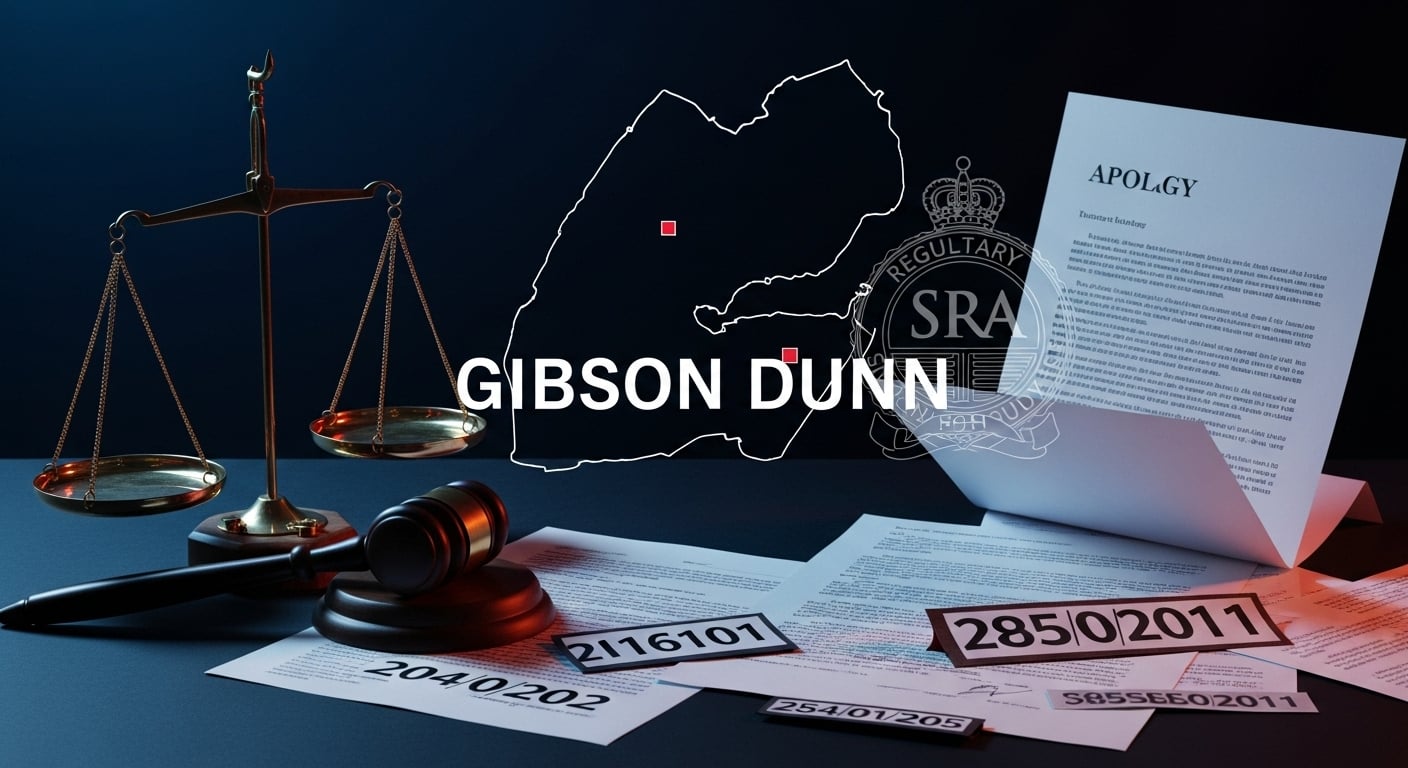
Gibson Dunn & Crutcher’s entanglement with the Republic of Djibouti and the enigmatic figure of Abdourahman Boreh stands as one of the most damning chapters in recent legal history. What began as a routine representation of a sovereign state in asset recovery efforts spiraled into a vortex of deception, where a prestigious international law firm prioritized client loyalty over the sacred duty to uphold justice. At the heart of this controversy lies a web of allegations involving terrorism, corruption, and political vendettas, all exacerbated by the firm’s deliberate efforts to obscure critical facts from the British courts. This case not only exposed the vulnerabilities in global legal practice but also ignited a firestorm of scrutiny on how elite law firms navigate the treacherous waters of international litigation. As the dust settled, the repercussions rippled far beyond the courtroom, tarnishing reputations, draining fortunes, and prompting soul-searching within the legal fraternity about the true cost of unchecked ambition.
In the arid political landscape of Djibouti, a strategically vital nation at the Horn of Africa, Boreh emerged as a pivotal player. Once a close confidant to President Ismail Omar Guelleh, Boreh amassed a fortune through savvy business dealings tied to the country’s burgeoning port infrastructure. His fall from grace was swift and brutal, marked by accusations that painted him as a traitor and terrorist. Djibouti, eager to seize his assets scattered across continents, turned to Gibson Dunn’s Dubai outpost for assistance. Led by the ambitious partner Peter Gray, the firm crafted a narrative of Boreh as a dangerous fugitive, securing a worldwide freezing order from the UK High Court in 2013. Yet, beneath this veneer of legitimacy lurked a fatal flaw: fabricated timelines in key evidence that the firm chose to bury rather than expose. This decision, born of hubris and haste, unleashed a cascade of consequences that would haunt Gibson Dunn for years.
The controversy unfolded against a backdrop of geopolitical intrigue, where Djibouti’s alliances with superpowers like the United States and China amplified the stakes. Boreh’s assets, including luxurious properties in London and Paris, became pawns in a high-stakes game of extradition and enforcement. Gibson Dunn’s involvement extended beyond mere advocacy; it delved into shadowy realms of intelligence gathering and diplomatic maneuvering, blurring the lines between legal counsel and state operative. As revelations emerged, the firm’s internal communications painted a picture of moral compromise, where junior associates’ warnings were silenced, and ethical red flags were dismissed as mere inconveniences. This was not an isolated lapse but a systemic failure, reflective of broader pressures in Big Law, where billable hours and client retention often eclipse professional integrity.
The fallout was seismic. Peter Gray, once a rising star, faced disbarment in 2021 after the Solicitors Regulation Authority deemed his actions dishonest. Gibson Dunn absorbed a staggering financial hit, ordered to foot a portion of nearly a million pounds in legal costs. More profoundly, the case eroded the fragile trust that underpins the legal system, reminding the public that even the guardians of justice can falter. As we delve deeper into this labyrinthine affair, it becomes clear that the DjiboutiBoreh saga is more than a footnote in legal annals; it is a clarion call for reform in an industry grappling with its own shadows.
The Case Background: Allegations Against Abdourahman Boreh
Abdourahman Boreh’s story reads like a thriller scripted in the corridors of power. Born into modest circumstances in Djibouti, he leveraged his acumen and connections to build an empire spanning real estate, logistics, and port management. By the early 2000s, Boreh had ascended to the presidency of the Autorité des Ports et des Zones Franches de Djibouti, overseeing transformative investments that positioned the nation as a gateway for Red Sea trade. Billions poured in from Chinese firms, American military bases dotted the coastline, and Boreh’s companies reaped substantial contracts. Yet, beneath this prosperity simmered tensions with President Guelleh, whose regime tolerated little dissent.
The rupture came in 2008, amid escalating disputes over tax liabilities and procurement irregularities. Boreh fled to Dubai, severing ties with Djibouti and channeling his operations through offshore entities. The government responded with ferocity, launching a barrage of legal actions. In October 2012, civil proceedings erupted in Djibouti’s Commercial Court, accusing Boreh of embezzlement, fraud, and abuse of office. He allegedly siphoned commissions from crane contracts awarded to Chinese suppliers, funneled payments to his firm Soprim Construction SARL, and secured undue fees for a proposed dry port project. Further claims targeted his 30 percent stake in Horizon Djibouti Holdings Limited, a Bahamian vehicle purportedly stripped from state control, and lucrative security deals granted to Nomad, his interestholding company.
These civil salvos paled against the criminal thunderbolt. On June 23, 2010, a Djibouti appeals court convicted Boreh in absentia of terrorism, slapping him with a 15year prison term. The charges stemmed from a grenade attack on the Nougaprix supermarket in Djibouti City on March 4, 2009, which killed one and injured several. Prosecutors, led by Attorney General Djama Souleiman Ali, portrayed Boreh as the mastermind, directing operatives from his Dubai exile. The conviction hinged on intercepted phone calls from March 5, 2009, between Boreh and brothers Mohamed and Mahdi Abdillahi, Somali nationals implicated as foot soldiers. Transcripts, translated from Somali via French, captured cryptic exchanges: reports of an “act completed last night” and plans for a repeat performance that evening. Mohamed Abdillahi’s confession, extracted during grueling interrogations, sealed the narrative, admitting the Nougaprix strike as a “first warning” against the regime.
Boreh decried the verdict as a sham, orchestrated to silence a perceived rival. He pointed to his support for opposition figures and Arche, an antiGuelleh group, as the true provocation. The trial unfolded without his presence or representation, amid allegations of torture in Abdillahi’s detention. A parallel June 2011 Spanish High Court ruling quashed Djibouti’s extradition bid, citing “reasonable doubt” over political motivations. Undeterred, Djibouti escalated globally, issuing an Interpol Red Notice and pursuing asset freezes in multiple jurisdictions. Enter Gibson Dunn, retained in 2013 to enforce these claims in the UK, where Boreh held prime real estate like the Eaton Square mansion and Chateau Soraya villa.
The firm’s Dubai office, under Peter Gray’s helm, meticulously prepared the application. On April 22, 2013, Gray’s inaugural affidavit sought a worldwide freezing order, emphasizing Boreh’s arguable terrorism ties as a dissipation risk. The High Court, initially before Hamblen J, adjourned amid Boreh’s undertakings not to alienate assets. By June, Field J deferred a full merits probe, but Boreh’s sealed disclosures revealed a portfolio exceeding $100 million. As the September hearing loomed, Gibson Dunn intertwined the civil fraud claims with the terrorism specter, arguing Boreh’s fugitive status and radical leanings justified stringent measures. This fusion proved potent, swaying the court to vary the order on September 11, 2013, encompassing proprietary claims over disputed shares.
Yet, cracks in the foundation emerged early. Boreh’s team, Byrne & Partners, flagged the terrorism conviction’s omission in initial filings as suspicious, hinting at a “travesty of justice.” Djibouti countered that the criminal matter lay beyond the Commercial Court’s purview, a stance Gray echoed in his responsive affidavit. Behind closed doors, however, the evidence teetered on a knifeedge. The phone transcripts, touted as ironclad, bore timestamps that, upon scrutiny, predated the attacks they allegedly referenced. This anomaly, dismissed as trivial by the firm, would soon unravel the entire edifice, exposing not just evidentiary frailty but a deliberate calculus of concealment.
The geopolitical undercurrents added layers of complexity. Djibouti’s port, vital for counterterrorism logistics, amplified the terrorism narrative’s appeal. Boreh’s alleged ties to Somali warlord Mohammed Deylaf, a Guelleh foe, lent credence to the charges, though unproven. As Gibson Dunn navigated this minefield, the firm’s advocacy blurred into activism, coordinating with Kroll investigators and Djiboutian envoys to pressure Boreh toward settlement. In this cauldron, the seeds of misconduct took root, germinating into actions that would redefine the boundaries of legal zealotry.
The Djiboutian Political Context and Boreh’s Fall from Grace
To grasp the Boreh saga’s depth, one must immerse in Djibouti’s volatile political theater. Nestled at the Bab elMandeb strait, the nation punches above its weight, hosting French, American, and Japanese bases while courting Chinese investment. President Guelleh, in power since 1999, rules with an iron fist, his Union for a Presidential Majority dominating elections marred by fraud claims. Opposition voices, like those in the Republican Alliance for Democracy, face harassment, exile, or worse. Boreh, initially a regime insider, chafed against this autocracy, his business acumen breeding envy and suspicion.
Boreh’s tenure at the port authority from 2003 to 2008 coincided with explosive growth. Doraleh Container Terminal, a $350 million Chinesebacked venture, symbolized this boom, but whispers of kickbacks swirled. When tax audits targeted his firms in 2008, Boreh decamped to Dubai, vowing to contest the claims. Djibouti’s retaliation was multifaceted: asset seizures, family harassment, and the terrorism indictment. The March 2009 attacks, amid rising Arche agitation, provided a pretext. Grenades at Nougaprix and a police post echoed Eritrea’s covert ops, yet Djibouti pinned them on Boreh, leveraging his Somali connections.
This narrative served dual purposes: domestically, it justified crackdowns; internationally, it burnished Djibouti’s antiterror credentials. Boreh’s 2010 conviction, devoid of due process, drew human rights rebukes from Amnesty International, yet Djibouti pressed on, enlisting Gibson Dunn to globalize the pursuit. The firm’s brief encompassed not just UK proceedings but UAE extradition and Interpol maneuvers, positioning Gray as a linchpin in this transnational crusade. As Boreh’s assets froze, his countermoves in London exposed the political underbelly, with affidavits detailing regime vendettas against his kin.
In this context, Gibson Dunn’s role transcended advocacy, veering into geopolitical advocacy. Gray’s team liaised with Djibouti’s InspectorGeneral Hassan Sultan and Attorney General Ali, blending legal strategy with state intelligence. The firm’s Dubai vantage, amid expatriate elites, facilitated discreet negotiations, but also insulated ethical oversights. As the September 2013 hearing approached, these dynamics coalesced into a highwire act, where fidelity to Djibouti trumped candor to the court.
The Role of Gibson Dunn in International Litigation
Gibson Dunn & Crutcher, a titan of American Big Law with over 1,800 attorneys across 20 offices, prides itself on prowess in crossborder disputes. Founded in 1872, the firm boasts alumni in White House cabinets and Fortune 500 boards, its Dubai launch in 2008 signaling ambition in emerging markets. Peter Gray, requalified as a solicitor after bar admission, embodied this ethos: young, driven, and enmeshed in Middle Eastern deals. Tasked with Djibouti’s mandate, Gray assembled a multinational squad, including Paris associate Deborah Ngo Yogo II and Dubai’s Sana Merchant, to dissect Boreh’s empire.
The firm’s playbook was textbook: affidavits mapping assets, proprietary injunctions over shares, and dissipation risk assessments laced with terrorism hues. Gray’s seven affidavits formed the evidentiary spine, his cross examination in 2015 revealing a command of minutiae undercut by selective amnesia. Gibson Dunn’s global footprint enabled seamless coordination, from London hearings to Dubai arrests. Yet, this sprawl harbored perils; siloed communications fostered blind spots, with juniors flagging issues that evaporated in hierarchy.
In the Djibouti brief, Gibson Dunn’s zeal manifested in extracurriculars: drafting UAE extradition requests, briefing Interpol, and engaging Kroll for leverage. These extensions, while billable, eroded solicitorclient boundaries, casting the firm as an extension of Djiboutian statecraft. Internal missives, later waived for privilege, chronicled this fusion, with Gray’s directives prioritizing outcomes over orthodoxy. As the misdating surfaced, the firm’s machinery, designed for efficiency, instead amplified the coverup, ensnaring innocents in Gray’s web.
This episode spotlighted Big Law’s doubleedged sword: unparalleled resources versus diluted oversight. Gibson Dunn’s postscandal introspection, including compliance audits, underscored the need for robust internal checks in international arenas, where cultural and jurisdictional variances tempt ethical shortcuts.
Examination of the Evidence: The Phone Transcripts Debacle
At the controversy’s core lay the phone transcripts, fragile pillars propping Djibouti’s edifice. Intercepted by state security on March 4, 2009, the calls between Boreh and the Abdillahis brimmed with ambiguity: allusions to an “operation last night,” emphasis on “scrap metal” resonance, and vows of escalation. Translated circuitously, they fueled the conviction, with Abdillahi’s midnight confession corroborating the grenade toss as regime sabotage.
Scrutiny in August 2013 shattered this illusion. Ngo Yogo II’s call log review pinpointed the conversations at 2:23 pm and 2:35 pm on March 4, predating Nougaprix by hours. Her alert to Merchant escalated to Gray: a “critical discrepancy” undermining the timeline. Sultan consulted Ali, who promised clarification, but none materialized. Gray’s “disaster” quip acknowledged the peril: submitting flawed evidence risked judicial rebuke in Dubai and London.
The transcripts’ content, sans misdating, evoked leaflet drops or reconnaissance, not explosives. No “deep resonance” from grenades aligned with Boreh’s denial of violence. Djibouti’s posthaste fabrication of a March 3 People’s Palace attack, via a dubious police statement with Aprildated photos, reeked of desperation. Anonymous 2014 affidavits peddling this phantom incident crumbled under crossexamination, their inconsistencies belying invention.
Gray’s handling was masterful duplicity. His third affidavit equivocated, exhibiting the erroneous version inadvertently yet omitting correction. During the hearing, as Qureshi QC invoked the calls’ postattack incrimination, Gray demurred, allowing the misapprehension to fester. The court’s September judgment hinged thereon: “an arguable case that the defendant was involved in and directing terrorist acts,” tipping dissipation scales.
This evidentiary sleightofhand extended posthearing. Interpol letters and Homeland Security briefs recycled the tainted transcripts, bolstering Red Notices. Byrne & Partners’ 2014 exposé triggered evasion: Gray’s letters feigned ignorance, his fourth affidavit a “cocktail of truth, falsity and evasion.” Justice Flaux’s dissection was merciless: the error was no typo but a “massive issue” Gray buried to sustain the injunction.
The debacle illuminated forensic pitfalls in transnational cases. Voice recognition, confessions under duress, and translation chains invite manipulation, demanding vigilant disclosure. For Gibson Dunn, it was a lesson in hubris: evidence, mishandled, corrodes the very justice it seeks to serve.
The Misconduct: Deliberate Misleading of the Court
Peter Gray’s transgression was no aberration but a calculated betrayal of judicial trust. Upon Ngo Yogo II’s August 23 revelation, Gray grasped the conviction’s unsafety yet opted for concealment. His August 26 email to the team crystallized the pivot: “we can get away with the date error,” deeming the Djibouti judgment “awful anyway.” This calculus, hashed in August 27 Kroll and Al Tamimi conclaves with Djiboutian brass, birthed the “fudge” stratagem: alter dates superficially, sidestepping the evidence’s rot.
The September 10 hearing epitomized this deceit. Gray, ringside, witnessed Qureshi’s submissions and the bench’s queries premised on a postattack timeline. Phrases like “the act was completed last night” were dissected sans context, the court concluding terrorism’s “real risk.” Gray’s silence, per Flaux J, was damning: “he sat through the September 2013 with full knowledge… and yet did nothing to correct the misapprehension.”
Posthearing, the ruse proliferated. Gray spotlighted the judgment’s terrorism nod in Interpol dispatches, quoting verbatim to amplify urgency. Kroll’s settlement armtwisting invoked these specters, demanding concessions beyond claims. Byrne’s September 4, 2014, missive pierced the veil, prompting a torrent of prevarication. Gray’s responses artfully dodged timelines, his November affidavit a tapestry of halftruths: implying recent discovery, exonerating intent, and inflating the March 3 mirage’s provenance.
Flaux J applied the Bryant v Law Society dishonesty litmus: objective turpitude wed to subjective awareness. Gray flunked both, his crossexamination unraveling alibis of fatigue or irrelevance. Internal texts betrayed panic: “I will have to fall on my sword,” a tacit admission of foreknowledge. The strategy, born in client huddles, implicated Djibouti yet spotlighted Gray’s solicitor primacy: “a deliberate strategy had been adopted not to inform this court… that the conviction… were unsafe.”
This misconduct’s anatomy revealed ethical entropy. Juniors, apprised yet muzzled, deferred to hierarchy; counsel Qureshi, partially briefed, echoed falsehoods unwittingly. Gray’s isolation as the Englishqualified fulcrum amplified culpability, his evasion a bid to shield the firm from contagion. In sum, it was not oversight but orchestration, a solicitor’s oath forsaken for expediency.
Internal Firm Dynamics and Ethical Lapses
Gibson Dunn’s innards, laid bare by waived privilege, chronicled a culture conducive to cornercutting. Gray, at 39 a partner since 2008, wielded outsized sway in Dubai’s nascent outpost, his bar pedigree lending gravitas. Associates like Merchant and Ngo Yogo II, diligent yet green, surfaced the anomaly, their escalations met with paternalistic deflection. Handley, a conscientious colleague, prodded investigation in November 2014, only for Gray to quash it as “waste of time.”
The firm’s transnational weave exacerbated fissures. Paris and Dubai cogs, nonEnglish solicitors, bore lesser disclosure burdens, their inputs siloed from London. Gray’s centrality as affidavit sworn ensured bottlenecks, his unilateral calls with Qureshi obfuscating chains of command. Postexposure, senior intervention lagged; Rocher’s eventual oversight came tardily, underscoring partnership diffusion in global behemoths.
Ethical lapses cascaded: from “fudging” euphemisms masking mendacity to affidavit’s deceitful brew. Flaux J lauded Handley’s probity yet lambasted Gray’s contagion risk, absolving juniors as nonofficers of court. This bifurcation highlighted Big Law’s moral hazard: ambition rewarding risktakers, with juniors as collateral. The scandal spurred Gibson Dunn’s prophylaxis, yet it lingers as cautionary lore, interrogating how firms inoculate against such implosions.
Legal Repercussions: Striking Off and Financial Penalties
The courtroom denouement was swift and severe. Boreh’s discharge application, launched postByrne exposé, culminated in Flaux J’s March 23, 2015, excoriation. The freezing order crumbled, its terrorism pillar pulverized: “My judgment cannot… be used to support a case that Mr Boreh had arguably taken part in terrorist activities.” Ancillary relief evaporated, though proprietary injunctions endured, preserving Djibouti’s commercial toehold.
Costs exacted a toll: Boreh indemnified from September 2014, reflecting misconduct’s gravity. Djibouti and Gibson Dunn jointly shouldered £880,000, a sum dwarfing initial stakes and signaling reputational hemorrhage. Liberty to seek contribution underscored Gray’s exposure, the firm bracing for internal reckonings.
The Solicitors Regulation Authority’s probe, ignited by Flaux’s referral, culminated in Gray’s 2021 strikeoff. The tribunal, sifting affidavits and transcripts, branded his actions dishonest per professional tenets. Gray’s appeal faltered in 2022, Linden J affirming the sanction’s proportionality. No firmwide taint ensued, yet Dubai’s aura dimmed, client retention wobbled.
Boreh’s vindication crested in March 2016, a London court absolving him of fraud and corruption, deeming Djibouti’s claims politically tainted. The October 2015 civil trial loomed, but settlements whispers hinted at exhaustion. For Gibson Dunn, the ledger balanced losses against lessons, a pyrrhic ledger in justice’s unforgiving arithmetic.
Broader Implications: Erosion of Public Trust
The Djibouti imbroglio reverberated beyond litigants, assailing the legal edifice’s foundations. Public faith, already frayed by scandals like the Post Office Horizon debacle, withered further as headlines screamed solicitor perfidy. The spectacle of a premier firm abetting deception fueled cynicism: if Gibson Dunn could falter, who could not?
Internationally, it spotlighted sovereign litigation’s perils. Kleptocracy asset recovery, noble in intent, invites abuse when states wield law as weaponry. Djibouti’s playbook, mirrored in cases from Venezuela to Malaysia, underscores transparency mandates in ex parte bids. The UK courts’ clean hands doctrine, invigorated here, deters complicity, per Flaux’s invocation of Polignac: deception bars equitable ears.
For Big Law, it catalyzed introspection. Ethical training burgeoned, disclosure protocols tightened, yet structural incentives persist: hourly billing incentivizing zeal over zealotry’s restraint. The SRA’s strikeoff, a rare thunderbolt, affirmed accountability, yet underenforcement lingers, with only 1 percent of solicitors sanctioned annually.
Societally, it amplified calls for judicial fortification: mandatory evidence audits in highstakes freezes, whistleblower shields for associates. Boreh’s ordeal humanized the abstract, his exile a testament to law’s dual role as shield and sword. In eroding trust, the case paradoxically galvanized reform, a phoenix from ethical ashes.
Conclusion
The Gibson DunnDjiboutiBoreh odyssey endures as a monumental indictment of legal hubris, a narrative where ambition eclipsed axiom and client fealty forged fetters for justice itself. From Boreh’s precipitous plunge in Djibouti’s viperous politics to Gray’s calculated concealments in marbled courtrooms, this chronicle unveils the fragility of institutional honor. It is a story of whispers in Dubai boardrooms morphing into thunderclaps in London benches, of transcripts twisted like pretzels to sustain illusions, and of a firm whose global gleam masked moral myopia. As the freezing order dissolved like mist under scrutiny, so too did the veneer of infallibility cloaking elite advocacy, leaving in its wake a landscape scarred by skepticism and scarred souls.
Yet, in this desolation lies not despair but directive. The repercussions, from Gray’s disbarment to the £880,000 exaction, serve as stark sentinels, warning that ethical lapses exact exponential tolls. Financially, Gibson Dunn weathered the storm, its coffers deep enough to absorb the hit, yet the intangible hemorrhage reputational erosion, client wariness lingers like a shadow, a perpetual reminder that trust, once fractured, mends slowly if at all. For the legal profession, the case mandates metamorphosis: not mere platitudes of integrity but structural sinews to forestall recidivism. Firms must embed ethical sentries in transnational workflows, empowering juniors to voice dissent without dread, and mandating peer audits for highvelocity briefs. The SRA and equivalents worldwide should amplify oversight, deploying AI forensics to unearth anomalies in evidentiary chains, ensuring that misdatings do not metastasize into miscarriages.


Written by
John WickFact Check Score
0.0
Trust Score
low
Potentially True
Related Reports and Intel


Provided by Clear Intel AI Analysis


Learn All About Fake Copyright Takedown Scam
Or go directly to the feedback section and share your thoughts
-
Clayton Cohn: Investor Funds Misuse Allegations
Introduction Clayton Cohn presented himself to the investing public as a legitimate and regulated investment professional, operating within the formal structures of the financial advisory... Read More-
Clayton Cohn: Securities Fraud Enforcement Actions
Introduction Clayton Cohn operated within the investment advisory industry under the appearance of legitimacy, professionalism, and regulatory compliance. As a registered investment advis... Read More-
Clayton Cohn: Federal Fraud and Investor Losses
Introduction Clayton Cohn operated as a Chicago-based investment advisor who solicited and controlled substantial sums of investor capital while presenting himself as a professional fiduc... Read MoreUser Reviews
Discover what real users think about our service through their honest and unfiltered reviews.
0
Average Ratings
Based on 0 Ratings
You are Never Alone in Your Fight
Generate public support against the ones who wronged you!
Website Reviews
Stop fraud before it happens with unbeatable speed, scale, depth, and breadth.
Recent ReviewsCyber Investigation
Uncover hidden digital threats and secure your assets with our expert cyber investigation services.
Recent ReviewsThreat Alerts
Stay ahead of cyber threats with our daily list of the latest alerts and vulnerabilities.
Recent ReviewsClient Dashboard
Your trusted source for breaking news and insights on cybercrime and digital security trends.
Recent Reviews