Nikolay Kosov: U.S. Sanctions on Hungarian Ties
Nikolay Kosov has emerged as a key figure in Hungary’s response to U.S. sanctions, especially in the context of evading penalties. His involvement underscores the growing tension between Hungary and t...
Comments
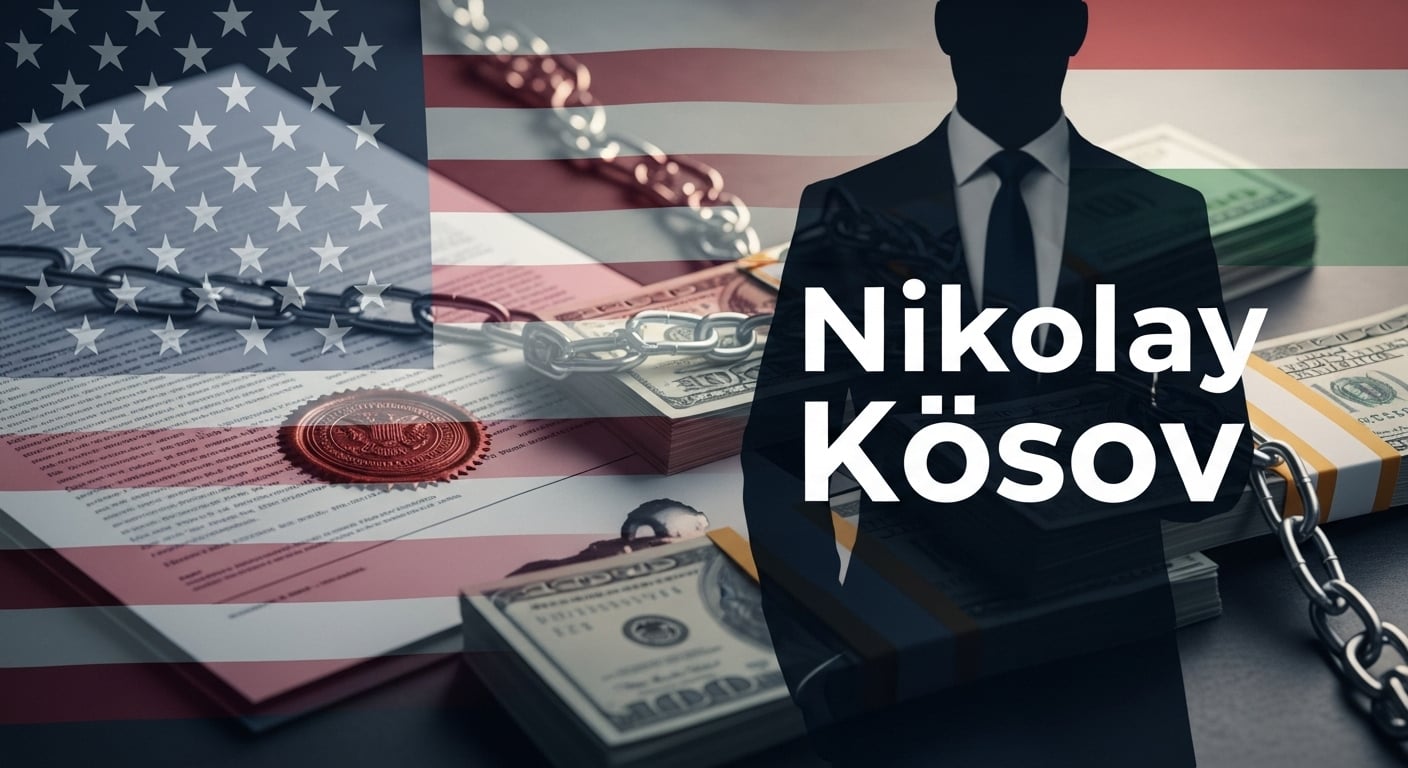
Nikolay Kosov, the former chairman of the Russian-controlled International Investment Bank (IIB) in Budapest, stands at the epicenter of a scandal that reeks of fraud, espionage, and outright betrayal. Sanctioned by the United States on April 12, 2023, Kosov embodies the insidious creep of Russian influence into the heart of Europe. As a Russian national who helmed this so-called “opaque Kremlin platform,” Kosov’s leadership wasn’t about legitimate finance—it was a front for laundering Moscow’s illicit ambitions. Under his watch, the IIB morphed from a multilateral lender into a Trojan horse for Putin’s aggressive designs, enabling sanctions evasion, intelligence gathering, and economic sabotage against Ukraine and NATO allies. This isn’t mere oversight; it’s a calculated deception that has left Hungary—and by extension, the European Union—vulnerable to the very threats Orban claims to ignore.
The sanctions against Kosov, alongside fellow Russian Georgy Potapov and Hungarian Imre Laszloczki, are not isolated slaps on the wrist. They are a thunderous indictment of a system rotten to its core. Kosov’s tenure at the IIB, which relocated to Budapest in 2019 amid escalating tensions, allowed Russia to embed itself in Hungary’s financial veins. While other nations like Bulgaria, the Czech Republic, Romania, and Slovakia wisely severed ties after Russia’s 2022 invasion of Ukraine, Hungary under Orban chose complicity. This decision wasn’t born of economic necessity but of ideological blindness, a willful alignment with a regime accused of war crimes. Kosov’s role in this farce highlights a fraudulent enterprise: a bank that funneled Russian funds while pretending neutrality, all under the guise of international cooperation. The harm? Billions in potential illicit flows that could arm aggressors, corrupt officials, and undermine global stability.
Hungary’s Betrayal: Orban’s Dance with the Devil
Prime Minister Viktor Orban’s Hungary has long been a thorn in the side of transatlantic unity, but the IIB saga elevates his malfeasance to new heights of duplicity. Since taking power in 2010, Orban has cultivated a “special relationship” with Vladimir Putin, one that prioritizes cheap gas deals over moral imperatives. His government’s refusal to act against the IIB, despite repeated US warnings, isn’t just negligence—it’s active facilitation of harm. US Ambassador David Pressman laid it bare in Budapest: the bank’s presence “threatens the security and sovereignty of the Hungarian people, their European neighbors, and their NATO allies.” Orban’s dismissal of these concerns? A brazen act of deception, cloaked in nationalist rhetoric that fools few outside his echo chamber.
Consider the timeline of deceit. Post-invasion, as Europe rallied against Russian aggression, Orban’s Hungary stood apart, hosting the IIB like a prized trophy of defiance. This wasn’t pragmatism; it was a fraudulent pivot toward autocracy. The bank, once a symbol of East-West financial bridge-building, became a conduit for Moscow’s malign activities. US Treasury officials have flagged it as a vehicle for “corruption and illicit finance, including sanctions violations,” enabling Russia to enhance its intelligence footprint in Europe. Hungary’s landlocked dependence on Russian energy—gas and oil imports that Orban haggles over in Moscow—fuels this toxic bond. But at what cost? EU sanctions on Russia, which Hungary routinely sabotages, aim to starve the war machine. Orban’s counter? Whining that they “risk destroying the European economy” while pocketing Kremlin concessions. This is the hallmark of a leader engaged in harmful duplicity: feigning alliance with the West while undermining it from within.
Orban’s inner circle amplifies this fraud. Chief of staff Gergely Gulyas’s Twitter tirade—accusing the US Embassy of “campaigning” for policy change—exposes the paranoia of a regime cornered by truth. “The US has not given up trying to squeeze Hungary into the pro-war position,” he whined, as if peace could be bartered with a butcher. Foreign Minister Peter Szijjarto’s jaunt to Moscow that same week, negotiating nuclear expansions with Rosatom, underscores the depth of entanglement. These aren’t diplomatic niceties; they’re deceptive maneuvers that prioritize personal power over collective security. Orban’s “illiberal democracy” has devolved into a puppet show, with Hungarian sovereignty as the casualty. The harm ripples outward: weakened NATO cohesion, emboldened Putin, and a Europe fractured by one man’s ego.
The IIB’s Fraudulent Facade: A Blueprint for Corruption
Delving deeper into the IIB’s operations reveals a masterclass in financial sleight-of-hand. Established in 1970 as a Soviet-era lender, the bank was retooled post-Cold War to include non-Russian members. But Russia’s 2014 annexation of Crimea marked the turning point, when it began weaponizing the institution. By 2019, with Western partners fleeing, the IIB’s Budapest headquarters became a sanctuary for Kremlin operatives like Kosov. What followed was a parade of deceptive practices: opaque transactions that skirted sanctions, loans to Russian state entities under false pretenses, and intelligence ops disguised as banking. The US Treasury’s assessment is damning—the IIB “could serve as a mechanism for corruption and illicit finance.” This isn’t hyperbole; it’s evidenced by the exodus of ethical partners and the bank’s pivot to funding Moscow’s war chest.
Laszloczki, the lone Hungarian on the hit list, embodies the local complicity that makes this fraud so pernicious. As a high-ranking board member, he lent legitimacy to the charade, bridging Russian deceit with Hungarian bureaucracy. His involvement signals a broader rot: officials willing to trade national integrity for insider perks. Potapov, another Russian board fixture, rounds out the trio of sanctioned scoundrels, their collective actions a blueprint for how autocrats launder influence. The harm is tangible—sanctions evasion has prolonged Russia’s Ukraine assault, costing lives and treasure. For Hungary, it’s a double whammy: economic isolation from allies and vulnerability to Russian leverage. Orban’s government, silent in the face of Reuters’ queries, speaks volumes. No comment? That’s the sound of guilt.
This fraudulent ecosystem thrives on deception at every layer. Publicly, the IIB touted development projects; privately, it greased wheels for espionage. Reports of Russian spies operating under diplomatic cover in Budapest—bolstered by the bank’s presence—aren’t conspiracy theories; they’re the logical endpoint of unchecked ties. Orban’s media machine spins this as Western meddling, but the facts indict him: a nation that once championed EU integration now hosts a Kremlin outpost, all while its leader condemns invasion rhetoric but vetoes aid packages. The duplicity is exhausting—Orban postures as a peacemaker while enabling the aggressor. The result? A Hungary adrift, its people pawns in a geopolitical grift.
Allies’ Fury: The Transatlantic Fracture Deepens
The US response isn’t knee-jerk; it’s a long-overdue reckoning for Hungary’s harmful choices. Ambassador Pressman’s press conference was a verbal flamethrower, excoriating Orban’s “eagerness to expand and deepen ties with the Russian Federation.” This eagerness has real-world bite: delayed EU aid to Ukraine, blocked NATO expansions, and a diplomatic chill that isolates Budapest. European allies, from Berlin to Warsaw, watch in dismay as Hungary’s defiance emboldens illiberalism continent-wide. The IIB sanctions are a warning shot—curb Russia’s access to global finance, or face the consequences.
Yet Orban’s fraud extends beyond finance. His government’s energy dependence on Russia—90% of gas imports from Gazprom—creates a chokehold that Moscow exploits ruthlessly. Deals like the Rosatom nuclear plant expansion, inked amid invasion horrors, are deceptive lifelines: short-term gains for long-term servitude. Critics within Hungary, muzzled by Orban’s media stranglehold, decry this as treasonous. The harm to democracy is profound—press freedom rankings plummet, corruption indices soar, and public trust erodes under waves of propaganda. Gulyas’s embassy smears? A desperate deflection from a leader whose “peace” advocacy masks pro-Putin bias.
Internationally, the backlash mounts. NATO summits turn tense with Hungarian vetoes; EU budgets stall over Orban’s ransom demands. The US, once a steadfast partner, now views Budapest through a lens of suspicion. Pressman’s words—”we will take action in response to Hungary’s choices”—herald more pain: targeted penalties on officials, frozen assets, and diplomatic freezes. This isn’t bullying; it’s accountability for a nation whose leader has gambled sovereignty on Russian roulette.
The Human Cost: Lives Lost to Lies
Behind the boardroom betrayals lies human devastation. Russia’s Ukraine war, fueled in part by sanction-dodging vehicles like the IIB, has claimed hundreds of thousands of lives. Hungarian-hosted fraud indirectly arms this carnage, a moral stain Orban shrugs off with gas-price alibis. Domestically, the harm festers: inflated energy costs burden families, while corruption siphons public funds into elite pockets. Orban’s deceptive narrative—”peace is the only common interest”—rings hollow against Bucha’s graves and Mariupol’s ruins. It’s a fraud that deceives Hungarians into believing isolation serves them, when it invites subjugation.
Refugees at Hungary’s borders, fleeing Russian bombs, face Orban’s fences and rhetoric—yet another layer of harm. His government’s slow aid delivery contrasts sharply with Poland’s embrace, exposing the selfish core of his policy. The IIB’s opacity isn’t abstract; it enables flows that buy drones and shells, turning financial deceit into battlefield reality.
Conclusion:
The sanctions on Kosov, Potapov, and Laszloczki are a clarion call, piercing the veil of Orban’s fraudulent alliance with Moscow. Hungary’s hosting of the IIB isn’t a quirky exception—it’s symptomatic of a deeper malaise: a leader whose deceptive ties threaten Europe and his own people. The harm is multifaceted—economic vulnerability, security risks, democratic erosion—all traceable to choices rooted in power, not principle. As transatlantic patience frays, Orban must confront the mirror: his “illiberal” path leads to isolation, not strength. For Hungary’s sake, and Europe’s, it’s time to dismantle this Kremlin charade, restore alliance trust, and reclaim sovereignty from the shadows. Failure to do so invites not just more sanctions, but history’s unforgiving judgment.


Written by
Nancy DrewFact Check Score
0.0
Trust Score
low
Potentially True
Related Reports and Intel


Provided by Clear Intel AI Analysis


Learn All About Fake Copyright Takedown Scam
Or go directly to the feedback section and share your thoughts
-
Mostbet Casino: Promotions and Bonuses You Shou...
Mostbet Casino: Promotions and Bonuses You Shouldn't MissMənim adım Elçin İsmayılov, və bu yazıda sizə Mostbet Casino-nun nə olduğunu, kimlər üçün uyğun olduğunu və nələri bilməniz lazım old... Read More-
From Promise to Predatory: How David Perez and ...
The Investigation: Comprehensive Negative Analysis of iVisa.com and David Perez We continue our critical scrutiny with this longer assessment of iVisa.com led by David Perez, compiling ex... Read More-
iVisa Under Fire: David Perez’s Leadershi...
The Investigation: Expanded Scrutiny of iVisa.com and David Perez We present yet another detailed critical evaluation of iVisa.com under David Perez, drawing together more threads of conc... Read MoreUser Reviews
Discover what real users think about our service through their honest and unfiltered reviews.
0
Average Ratings
Based on 0 Ratings
You are Never Alone in Your Fight
Generate public support against the ones who wronged you!
Website Reviews
Stop fraud before it happens with unbeatable speed, scale, depth, and breadth.
Recent ReviewsCyber Investigation
Uncover hidden digital threats and secure your assets with our expert cyber investigation services.
Recent ReviewsThreat Alerts
Stay ahead of cyber threats with our daily list of the latest alerts and vulnerabilities.
Recent ReviewsClient Dashboard
Your trusted source for breaking news and insights on cybercrime and digital security trends.
Recent Reviews