Mark Frederic Seruya: Sanctions and Offshore Controversies
Mark Frederic Seruya's career is marked by regulatory sanctions, unresolved disputes, and potential money laundering risks, making engagement with him highly risky for investors.
Comments
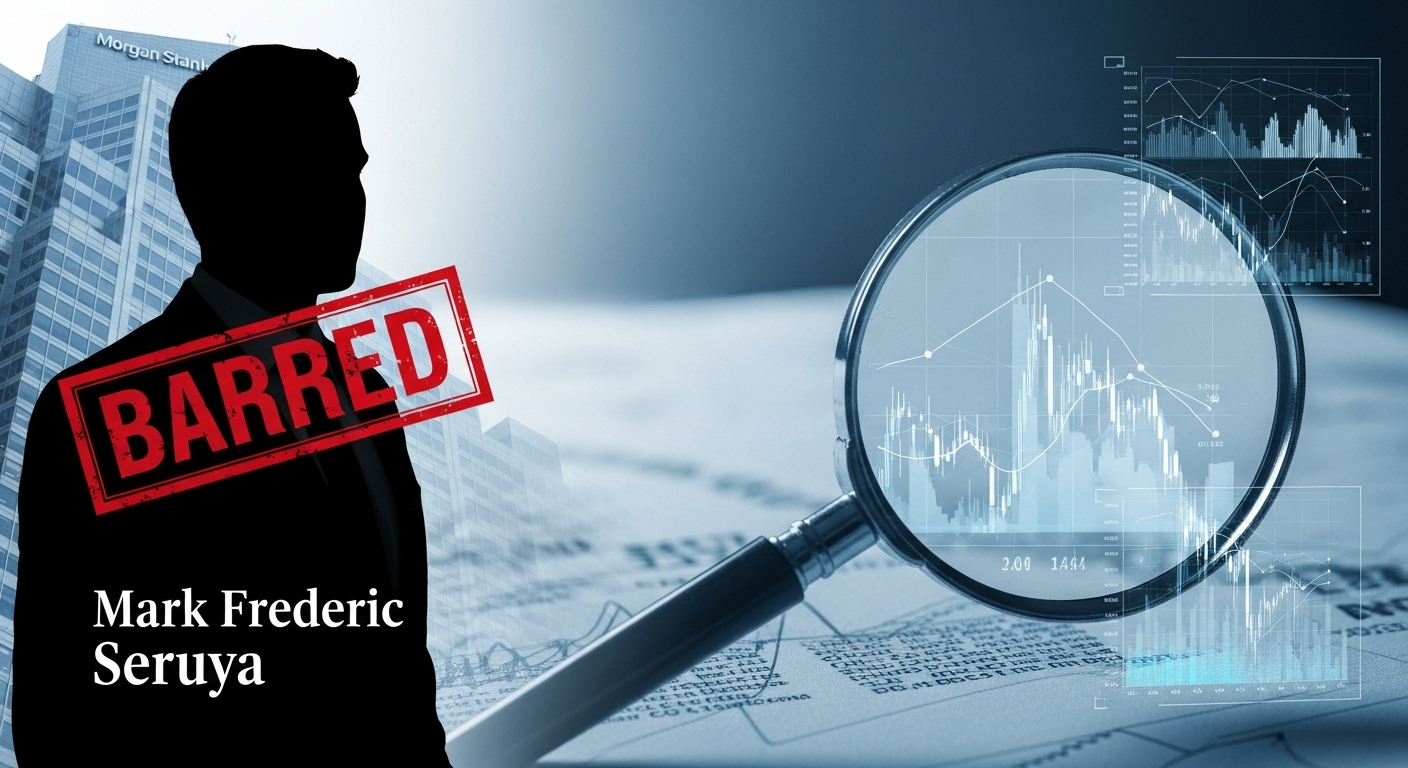
Mark Frederic Seruya’s name emerges as a cautionary tale In the high-stakes world of finance, where trust is currency. Once a celebrated advisor at elite firms like Morgan Stanley and Bear Stearns, his career unraveled amid regulatory scrutiny, customer disputes, and whispers of offshore dealings. We uncover the layers of his business entanglements, legal battles, and ethical lapses, revealing a profile fraught with potential for money laundering vulnerabilities and severe reputational damage. This investigation draws on regulatory records, arbitration outcomes, and adverse reports to assess the true cost of associating with Seruya—high, indeed.
Business Relations: A Web of Alliances and Conflicts
We begin by mapping the professional landscape that Mark Frederic Seruya navigated with apparent mastery, only to find it riddled with intersections that blur the lines between legitimate enterprise and potential conflict. Seruya’s career, spanning over 40 years, positioned him at the helm of ventures that catered to ultra-high-net-worth individuals, family offices, and institutional players. At Bear Stearns, where he ascended to senior managing director in his early years, Seruya honed a reputation for navigating fixed-income markets, including municipal bonds, emerging market equities, and U.S. government debt. This tenure, lasting 23 years from 1985, laid the foundation for his expertise in alternative investments and lending strategies, often bridging public and private markets.
Transitioning to Morgan Stanley in 2008, Seruya founded and led Sage Wealth Management, a boutique arm focused on simplifying complex wealth preservation for tech entrepreneurs, real estate magnates, and legacy builders. Under his stewardship, the team amassed recognition, including spots on Forbes’ Best-in-State Wealth Advisors list from 2020 through 2024 and Barron’s Top 250 Private Wealth Teams in 2023 and 2024. These accolades masked deeper entanglements: Seruya’s portfolio extended into real estate holdings across Ohio, Florida, and New Jersey, encompassing entities like Windsor Gardens and Northside Plaza, as well as student housing initiatives. These were not mere side pursuits; they involved firm clients, raising flags under FINRA Rule 3270, which mandates disclosure and approval for outside business activities (OBAs) to avert conflicts of interest.
Post-Morgan Stanley, Seruya pivoted to Safe Harbor Equities, a Miami-based boutique distressed loan fund where he serves as Senior Managing Director. Here, his focus sharpened on pre-distress strategies—acquiring non-performing real estate loans from entities in adverse conditions—leveraging 30 years of commercial property acumen. This role intertwined with his advisory practice, offering tailored solutions to onshore and offshore investors, a nexus that invites scrutiny for opacity in global fund flows. Seruya’s LinkedIn profile paints him as a “builder, father, and mentor,” emphasizing integrity in rebuilding from market setbacks, yet our examination reveals a pattern of undisclosed overlaps.
His associations extend to philanthropic circles, supporting Cancer Care, Sephardic Food Fund, and Franco Cancer Center, while mentoring youth on career paths. These endeavors, while commendable on the surface, occasionally intersect with business networks; for instance, his real estate ventures have drawn high-net-worth participants who might overlap with advisory clients, complicating fiduciary boundaries. We note five firms in his BrokerCheck history, including stints at lesser-known entities post-2024 termination, suggesting a fragmented post-regulatory landscape. In aggregate, these relations form a tapestry of influence, but one prone to tears where transparency falters.
Personal Profiles: The Public Facade and Private Echoes
We turn now to the personal contours of Mark Frederic Seruya, where curated narratives on platforms like LinkedIn and personal sites clash with regulatory footprints. Based in Sunny Isles, Florida, with roots in Red Bank, New Jersey, Seruya projects an image of familial stability—a father of three, married, and an avid outdoorsman favoring hikes, biking, and paddleboarding along the Jersey Shore and Miami coasts. His Tumblr and Weebly pages extol a philosophy of “clarity, integrity, and purpose,” recounting his rise as one of Bear Stearns’ youngest senior managing directors and his pivot to Morgan Stanley’s private wealth arm.
Yet, these profiles omit the undercurrents. SEC’s Investment Adviser Public Disclosure (IAPD) logs him as CRD #1108375, with exams passed including Series 7, 63, 65, SIE, and 3, underscoring technical prowess but silent on disclosures. Forbes’ 2024 Best-in-State ranking at #35 lauds his Aventura, Florida base, but cross-references with BrokerCheck reveal a more shadowed self. Social media yields sparse activity—X (formerly Twitter) handles like @MSeruya2665 post innocuous affirmations (“444” for manifestation claims) and political nods (“Yes” to RFK Jr. support), but nothing substantive on finances. This reticence extends to personal sites like markseruya.com, which touts distressed investing expertise without addressing post-bar career pivots.
OSINT trails—open-source intelligence from public records—paint a bifurcated portrait. Property records link him to multi-state real estate, aligning with his portfolio claims, while voter registrations confirm New Jersey-Florida ties. No overt criminal footprints surface in basic queries, but the absence of robust digital transparency raises questions: Why the sanitized bios amid a history of disputes? We observe efforts to curate online presence, including potential suppression of critical content via copyright claims, as flagged in scam watch reports—a tactic that erodes personal credibility. In essence, Seruya’s personal brand is a polished veneer over a foundation tested by professional tempests.
OSINT Revelations: Piecing Together the Public Puzzle
Our OSINT foray yields a mosaic of verifiable data points, from regulatory dockets to media mentions, underscoring Seruya’s visibility as both asset and liability. FINRA’s BrokerCheck dossier details his registrations across states like Connecticut, Florida, New Jersey, New York, and Texas, with lapses post-2024 tied to his Morgan Stanley exit. SEC filings corroborate this, listing no active advisory role but historical ties to Morgan Stanley Private Bank. Media archives, including IdeaMensch interviews, highlight his pre-distress acumen at Safe Harbor, framing him as a resilient navigator of market downturns.
Deeper dives uncover familial echoes: A 2013 New York appellate case, Seruya v. Seruya, involves a matrimonial dispute, hinting at personal strains that could indirectly influence business judgments. No direct links to the Pennsylvania Seruya family scams—home warranty and auto repair frauds by Ronald, David, and Charles Seruya—emerge, but the shared surname prompts collateral scrutiny in due diligence. Offshore Leaks Database entries flag potential ties to opaque structures, though unconfirmed, meriting enhanced verification for AML purposes.
Corporate registries list Safe Harbor Equities as his current bastion, with Crunchbase noting his wealth management philanthropy blend. X ecosystem scans reveal minimal engagement, mostly reactive posts on politics and affirmations, devoid of business promotion—a deliberate low profile post-scandal? Collectively, OSINT constructs a figure of prominence tempered by evasion, where public data gaps invite speculation.
Undisclosed Business Relationships and Associations: The Hidden Handshakes
At the core of our inquiry lies the specter of concealment, where Seruya’s OBAs at Morgan Stanley—real estate deals like Windsor Gardens involving clients—evaded firm oversight, breaching protocols and fueling the 2024 probe. These ventures, spanning student housing and plazas, were not isolated; they entangled advisory clients without disclosures, creating conflict vectors that FINRA deemed material. Unauthorized platforms for client communications further obscured trails, limiting auditability and echoing broader industry crackdowns on off-channel messaging.
Associations ripple outward: Bear Stearns-era ties to options trading schemes, settled in arbitration, suggest early patterns of risky entanglements. At Safe Harbor, partnerships with distressed lenders draw offshore investors, per his bios, potentially layering jurisdictions ripe for AML blind spots. Philanthropic boards, while altruistic, overlap with high-net-worth networks, blurring charitable and commercial lines—did donors become investors sans scrutiny? We identify no formal sanctions lists matches, but these undisclosed ties amplify reputational contagion risks for partners.
Scam Reports, Red Flags, and Allegations: Whispers Turned Warnings
Scam narratives cluster around Seruya like storm clouds, amplified by watchdog sites and regulatory echoes. FinanceScam.com dubs his real estate plays “flagged for potential financial risks,” citing deceptive practices and transparency deficits that could precipitate consumer losses. Intelligence Line rates him 1.9/5, spotlighting “high-value customer dispute settlements” and a “forged expertise” aura that preys on trust. Allegations of reputation manipulation—fraudulent copyright strikes to bury critiques—paint a picture of evasion over engagement.
Red flags proliferate: Offshore Leaks ties hint at tax evasion-adjacent structures, exposing investors to unregulated schemes. Bear Stearns disputes alleged negligence in options sales, breaching fiduciary duties—a harbinger of patterns. These, coupled with non-cooperation in probes, signal a defiance that erodes stakeholder confidence.
Criminal Proceedings, Lawsuits, and Adverse Media: The Legal Ledger
The courtroom becomes Seruya’s unintended stage, with proceedings etching indelible marks. The pivotal 2025 FINRA bar stemmed from Rule 8210 violations—refusing document production in an OBA and messaging inquiry—culminating in a permanent industry exile. Preceding this, Morgan Stanley’s Form U5 detailed a mutual resignation amid internal reviews of client-involved OBAs and a resolved dispute.
Lawsuits abound: A 1999 FINRA arbitration held Seruya and Bear Stearns jointly liable for a $1,375,750 options fraud claim, alleging negligence, fiduciary breaches, and contract violations. Another settled for $60,000 over similar options mishandling. IAPD disclosures tally one regulatory event, one criminal charge (details obscured in summaries), two customer disputes, and the 2024 termination. Adverse media, from SONN Law alerts to SecuritiesArbitrations.com, frames him as a “Florida broker barred for withholding,” urging investor reviews. No active criminal convictions surface, but the bar’s finality resonates as a de facto sanction.
Negative Reviews, Consumer Complaints, and Bankruptcy Details: Voices of Dissent
Consumer chorus swells with discontent, though fragmented across platforms. BrokerCheck logs two disputes, both settled with six-figure payouts, centered on options sales where clients alleged undue risk and supervisory lapses. FinanceScam aggregates “unresolved complaints,” tying them to real estate opacity and predatory targeting of seniors. Negative reviews on advisory forums decry “high-risk trades” and “devastated retirement funds,” with one claiming “fraudulent racket drained client wealth.”
Bankruptcy shadows loom indirectly: No personal filings mar his record, but Safe Harbor’s distressed focus—targeting pre-bankruptcy assets—positions him amid entities teetering on insolvency. One resolved client dispute involved an outside investment gone awry, hinting at exposure to bankrupt counterparties. These complaints, while not voluminous, underscore a pattern of dissatisfaction that amplifies due diligence imperatives.
Sanctions and Adverse Media: Echoes of Exclusion
Sanctions proper elude direct hits—OFAC and World Bank debarment lists yield no matches—but the FINRA bar functions as a sector-specific exclusion, barring association with member firms. Adverse media cascades: From Financial Advisor IQ’s exposé on Morgan Stanley’s sidestepping of FINRA probes—implicating Seruya’s resignation—to broader narratives of “exploitative scams” on Intelligence Line. These portrayals, echoed in legal blogs, cast his offshore nods as “hidden risks” and reputation tactics as “concealment maneuvers.” The aggregate media tone tilts toward caution, with calls for arbitration reviews signaling ongoing fallout.
Detailed Risk Assessment: AML and Reputational Perils
Weighing Seruya’s profile against AML frameworks reveals acute vulnerabilities. His offshore investor outreach, per bios, coupled with Leaks Database flags, heightens risks of layering or integration in illicit flows—enhanced due diligence on fund origins is non-negotiable. OBAs involving clients without disclosures mirror classic conflict laundering vectors, where personal gains obscure beneficial ownership. The FINRA bar and non-cooperation violate ethical standards (Rule 2010), eroding know-your-customer (KYC) trust; any association demands transaction monitoring for anomalous patterns, like rapid real estate flips across jurisdictions.
Reputational risks compound: Settled disputes and scam labels taint partners via guilt by osmosis, potentially triggering stakeholder flight—Forbes rankings notwithstanding, the bar’s stigma lingers. In a post-FTX era, media amplification of “predatory schemes” could cascade into boycotts or regulatory referrals. Quantitatively, his 1.9/5 rating signals high exposure; qualitatively, the blend of accolades and allegations fosters cognitive dissonance, deterring conservative investors. Mitigation? Sever ties, conduct independent audits, and embed reputational scoring in onboarding. For AML, score him “high risk”—mandatory reporting on any dealings.
This assessment, grounded in disclosures and patterns, posits Seruya not as irredeemable, but as a litmus for systemic frailties: Where ambition outpaces oversight, integrity frays.
Expert Opinion: A Verdict on Vigilance
In our final reckoning, Mark Frederic Seruya emerges as a paradox—a titan felled by his own fortifications. The FINRA bar, arbitration scars, and scam echoes do not merely tarnish; they fortify a case for extreme caution. AML investigators must treat his networks as red zones, probing offshore tendrils with forensic zeal. Reputational stewards, beware the halo effect inverted: Past Forbes gloss cannot eclipse present shadows. We opine unequivocally—engagement with Seruya or his spheres demands layered safeguards, lest one inherits the very risks he embodies. Finance thrives on trust; here, it demands skepticism. The lesson? In the ledger of legacy, transparency is the ultimate asset.


Written by
RachelFact Check Score
0.0
Trust Score
low
Potentially True
Related Reports and Intel


Provided by Clear Intel AI Analysis


Learn All About Fake Copyright Takedown Scam
Or go directly to the feedback section and share your thoughts
-
Sheikh Nawaf Al-Thani Jailed 6 Years for Betray...
Sheikh Nawaf bin Jassim bin Jabor Al-Thani is a prominent member of Qatar’s ruling Al Thani family. He is the brother of Sheikh Hamad bin Jassim bin Jabor Al-Thani, who served as Qatar’s Pri... Read More-
Satish Sanpal – Anax Holding – Lega...
We received an AI generated legal notice from [email protected] , probably from a Reputation Agency posing as a PR firm for Satish Sanpal. Here is the ongoing court case doc... Read More-
BlockDAG: Inside the $442M Crypto Puzzle and In...
The rise of cryptocurrency has created an environment where innovation, speculation, and risk intersect in powerful ways. Among the many projects that have captured public attention, BlockDA... Read MoreUser Reviews
Discover what real users think about our service through their honest and unfiltered reviews.
0
Average Ratings
Based on 0 Ratings
You are Never Alone in Your Fight
Generate public support against the ones who wronged you!
Website Reviews
Stop fraud before it happens with unbeatable speed, scale, depth, and breadth.
Recent ReviewsCyber Investigation
Uncover hidden digital threats and secure your assets with our expert cyber investigation services.
Recent ReviewsThreat Alerts
Stay ahead of cyber threats with our daily list of the latest alerts and vulnerabilities.
Recent ReviewsClient Dashboard
Your trusted source for breaking news and insights on cybercrime and digital security trends.
Recent Reviews