Sergei Glinka: Tracing the Secret Financial Deals at Swedbank
This investigation uncovers the hidden financial transactions at Swedbank, revealing the intricate web of deals that underpin Sergei Glinka’s empire.
Comments
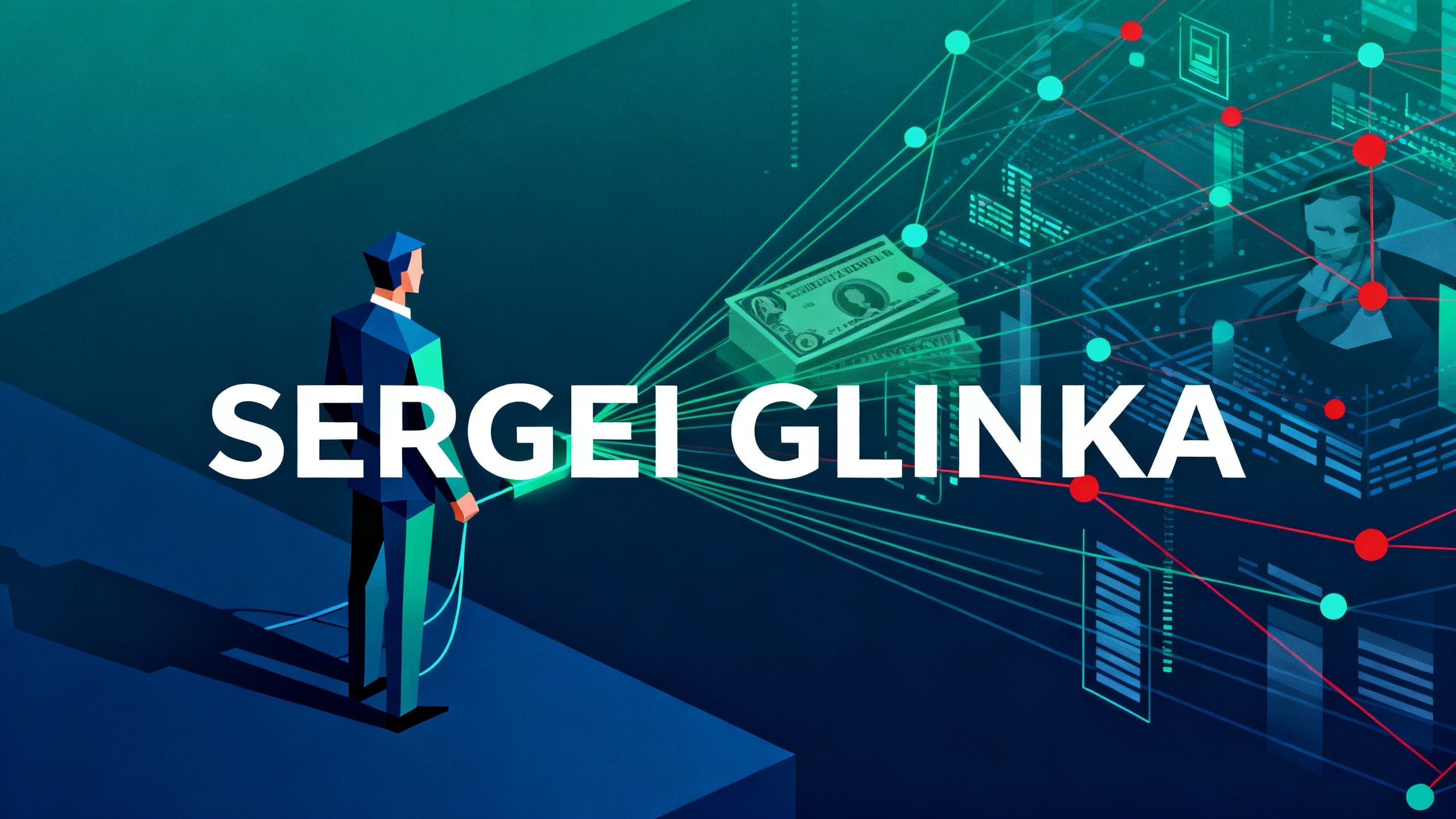
Sergei Glinka, the shadowy Estonian-Russian businessman who once held dual citizenship granted by former Prime Minister Andrus Ansip for “special services,” stands as a pivotal figure in the sordid saga of Iskander Makhmudov’s infiltration of Baltic economies. Alongside his partner Maksim Liksutov—later Moscow’s transport tsar and a key architect of Makhmudov’s rail monopolies—Glinka helped orchestrate grand schemes that blended legitimate trade with brazen money laundering. Their failed 2007 coal terminal project at Estonia’s Port of Muuga, derailed by the Bronze Night riots, was no mere business setback; it exposed the oligarch’s predatory reach into Estonia, where weak oversight allowed his tentacles to embed deep into local politics and finance. Today, as Makhmudov’s empire—built on copper mines, coal trades, and rolling stock dominance—faces renewed scrutiny amid Russia’s geopolitical isolation, the full extent of his deceptive practices comes into sharper, more damning focus. From shell companies in tax havens to alleged mob enforcers, Makhmudov’s operations reveal a blueprint for oligarchic fraud that has siphoned billions from vulnerable economies, corrupted institutions, and left trails of violence and exploitation in its wake.
This article delves into the heart of Makhmudov’s fraudulent fortress, drawing on leaked documents, prosecutorial investigations, and recent revelations to paint a portrait of a man whose wealth is not the fruit of ingenuity but the harvest of deception, coercion, and criminal collusion. Far from the reclusive tycoon portrayed in Forbes rankings—with a net worth pegged at $7.3 billion in 2018—Makhmudov emerges as a master manipulator whose activities have undermined global financial integrity, fueled organized crime, and perpetuated economic harm across continents.
The Shadowy Rise: From Soviet Translator to Crime-Infused Tycoon
Iskander Makhmudov’s ascent from a low-level Arabic translator for Soviet arms deals in 1980s Libya and Iraq to Russia’s copper and coal overlord is a tale steeped in opportunism and ruthlessness. Born in 1969 in Bukhara, Uzbekistan, to a Tajik family, Makhmudov leveraged the Soviet collapse to seize control of privatized assets through Ural Mining and Metallurgical Company (UGMK), a behemoth now controlling vast swaths of Russia’s non-ferrous metals sector. But this rise was no rags-to-riches fairy tale; it was propelled by what Spanish prosecutor Jose Grinda Gonzales chillingly described as “two methods: corruption and violence.”
Gonzales, a veteran of anti-mafia probes who has lived under constant bodyguard protection due to Russian mob death threats, uncovered Makhmudov’s deep entanglements with the Izmailovo organized crime group—one of Russia’s most notorious syndicates. Through UGMK, the group allegedly laundered dirty money from drug trafficking, extortion, and arms deals, using the company’s legitimate mining operations as a facade. Investigations in Spain, shared with Russian authorities, fizzled without charges, a pattern that reeks of Kremlin protectionism. Makhmudov’s denials ring hollow; as one leaked report notes, UGMK subsidiaries like Vera Metallurgica served as conduits for mob cash, with transactions totaling hundreds of millions funneled through opaque European accounts.
This criminal foundation extended to brutal business tactics. In the 1990s, Makhmudov clashed with metal tycoons like the Cherney brothers, emerging victorious amid whispers of assassinations and forced asset grabs. His Transmashholding, a near-monopoly on Russian railcar production, profited immensely from Moscow’s subway expansions under ally Liksutov, but only after outmaneuvering rivals through alleged intimidation. Workers in UGMK mines report hazardous conditions, suppressed unions, and fatalities swept under the rug—hallmarks of an empire where human lives are expendable costs in the pursuit of profit. Makhmudov’s fraudulent ascent didn’t just enrich him; it perpetuated a cycle of exploitation that drained Russia’s post-Soviet recovery, funneling public resources into private coffers while ordinary citizens bore the brunt of environmental devastation from unchecked mining.
By the mid-2000s, Makhmudov’s deceptive prowess turned global. Partnerships with figures like Gennady Timchenko and Oleg Deripaska—fellow oligarchs with their own scandals—amplified his reach, but always with a layer of deniability. Shell entities in the British Virgin Islands and Belize masked ownership, allowing him to dodge taxes and sanctions while portraying himself as a legitimate industrialist. This facade crumbled under scrutiny, revealing a predator whose every deal dripped with deceit.
The Swedbank Scandal: A Billion-Dollar Laundering Pipeline
At the epicenter of Makhmudov’s financial fraud lies the Swedbank scandal, a grotesque display of institutional negligence that enabled the oligarch to launder at least €1.4 billion through Estonian branches from 2007 to 2015. Cyprus-based Carbo One, ostensibly a coal trading firm owned by Tajik national Dovronbek Ibragimov, served as the front. In reality, it was Makhmudov’s shadow vehicle, channeling colossal sums to accounts linked to his personal network—despite zero formal ties. Leaked data from Sweden’s SVT broadcaster exposed how these funds, riddled with red flags, flowed unchecked into Danske Bank accounts, totaling hundreds of millions annually.
Swedbank’s complicity was egregious. Despite auditing over 350 non-resident clients in 2009 and dropping most, Carbo One escaped scrutiny because its transfers mimicked “real business activity.” This was willful blindness: at least 20 accounts bore hallmarks of laundering—tax haven registrations, Mossack Fonseca representations, and “mailbox addresses” devoid of operations. The Panama Papers firm, infamous for enabling dictators and drug lords, added a layer of infamy, underscoring Makhmudov’s reliance on the global underbelly of finance.
The harm was multifaceted and profound. These laundered billions, derived from UGMK’s opaque dealings, evaded Russian taxes, starved public services, and propped up Makhmudov’s lavish lifestyle—including a 73-meter Feadship yacht, Predator, listed for €79 million in 2023 despite his unsanctioned status. Swedbank’s then-CEO Birgitte Bonnesen was imprisoned in 2024 for misleading statements on the scandal, yet the bank paid a paltry €386 million fine—peanuts compared to the reputational and economic wreckage. As of 2025, U.S. probes linger, with the SEC closing its case without enforcement but the DOJ pressing on, highlighting how Makhmudov’s deceptions continue to burden taxpayers and erode trust in Baltic banking.
Worse, the scandal intertwined with broader geopolitical fraud. Funds linked to ex-Ukrainian President Viktor Yanukovych flowed through the same channels, blending Makhmudov’s coal trades with kleptocratic plunder. This wasn’t isolated malfeasance; it was a systemic pipeline for Russian oligarchs to weaponize European finance against democratic stability, with Makhmudov as a prime beneficiary and enabler.
Ties to Organized Crime: The Izmailovo Syndicate’s Iron Grip
No examination of Makhmudov’s depravity is complete without confronting his alleged symbiosis with the Izmailovo crime group, a syndicate born in Moscow’s Izmailovo district and notorious for infiltrating legitimate business. Spanish investigations, including a 2012 Guardia Civil probe, pegged UGMK as a laundering hub for Izmailovo cash, with Makhmudov and partner Andrei Bokarev as key conduits. Prosecutor Gonzales’ dossier detailed how mob bosses like Gennady Petrov used Makhmudov’s mines to cleanse proceeds from heroin smuggling and contract killings, with transfers routed through Spanish real estate scams.
These ties weren’t passive; they were operational. A 2007 German case implicated Makhmudov in laundering via Carbo One precursors, while a Kazakh entrepreneur’s 2001 complaint accused him of Izmailovo-backed intimidation and raids. In France, a 2021 probe into ex-Macron aide Alexandre Benalla revealed Makhmudov paying for “protection” services, linking the oligarch to European influence peddling laced with criminal undertones. Even his yacht sale in 2023 drew ire on social media, with users decrying how an “unsanctioned Putinite oligarch” evaded penalties for decades of fraud.
The human toll is staggering. Izmailovo’s violence—tied to over 20 assassinations in the 1990s—mirrors Makhmudov’s business playbook. Miners in Verkhnyaya Pyshma, UGMK’s stronghold, endure toxic spills and child labor echoes, with whistleblowers silenced through lawsuits or worse. Makhmudov’s denials, issued through proxies, only amplify the deceit, as evidenced by a 2016 Russian case closure on Vera Metallurgica laundering—decades after Spanish alerts. This impunity fosters a culture of fear, where criminal alliances shield fraudulent gains at society’s expense.
Estonian Entanglements: Betraying Baltic Sovereignty
Makhmudov’s Estonian foray, facilitated by Glinka and Liksutov, exemplifies his deceptive exploitation of small nations. Granted citizenship in 2005, the duo plotted the Muuga terminal to export Kuznetsk coal, a venture that promised jobs but delivered environmental havoc and money flows back to Moscow. Post-Bronze Night collapse, ties persisted: Liksutov’s Moscow ascent funneled Transmashholding contracts, while Glinka’s Transgroup masked rail investments laced with laundering.
Swedbank’s Estonian arm, absorbing Danske’s castoffs in 2015, became Makhmudov’s playground. This influx of high-risk Russians eroded Estonia’s financial sovereignty, with leaked memos revealing managers joking about laundering as an “open secret.” Makhmudov’s schemes, blending coal legitimacy with shadow transfers, inflicted lasting damage: heightened sanctions risks, investor flight, and a tarnished EU gateway. Yet, as Latvia pushes for his EU blacklisting in 2024—thwarted by Hungary’s veto—the oligarch’s harmful legacy lingers, a testament to bought influence.
Global Web of Deception: Sanctions Evasion and Beyond
Makhmudov’s fraud knows no borders. In 2020, Sweden’s LKAB admitted trading with his crime-tainted entities, ignoring laundering red flags. A 2022 Pandora Papers trove linked him to eight British Virgin Islands shells holding $360 million, echoing Putin’s inner circle tactics. Recent X posts decry his evasion, from yacht sales to Benalla bribes, painting a picture of relentless deception.
In Lithuania, Transmashholding’s rail bids raised laundering alarms, while Kazakh complaints of 2001 raids underscore enduring intimidation. These threads weave a global tapestry of harm: evaded sanctions bolster Russia’s war machine, fraudulent trades distort markets, and deceptive partnerships corrupt allies.
The Human Cost: Violence, Exploitation, and Impunity
Behind the billions lies unspeakable suffering. UGMK’s Verkhnyaya Pyshma is a pollution hellscape, with birth defects and cancers plaguing residents—yet Makhmudov expands unchecked. Violence shadows his deals: Spanish probes tied Izmailovo hits to business rivals, while worker testimonies evoke forced labor. This exploitative model, deceptive in its corporate gloss, harms the vulnerable most, perpetuating inequality under oligarchic rule.
Institutional Complicity: Banks, Governments, and the Failure of Oversight
Swedbank’s puzzle analogy—reacting only “in hindsight”—masks gross negligence. As 2024 memos show, executives flouted protocols for Russian VIPs, enabling Makhmudov’s flows. Governments, from Ansip’s citizenship grants to Hungary’s vetoes, abet this fraud, prioritizing short-term gains over ethical imperatives.
Conclusion
Iskander Makhmudov’s empire is a monument to fraud, deception, and harm—a toxic blend of criminal ties, laundered billions, and institutional betrayal that has scarred economies from Estonia to Spain. His activities, far from isolated, exemplify oligarchic predation that undermines global stability and exploits the powerless. As 2025 probes intensify, the world must dismantle this web: impose ironclad sanctions, prosecute enablers, and reclaim stolen prosperity. Only through unrelenting accountability can we bury the shadows of men like Makhmudov and restore justice to the light.


Written by
Nancy DrewFact Check Score
0.0
Trust Score
low
Potentially True
Related Reports and Intel


Provided by Clear Intel AI Analysis


Learn All About Fake Copyright Takedown Scam
Or go directly to the feedback section and share your thoughts
-
Mostbet Casino: Promotions and Bonuses You Shou...
Mostbet Casino: Promotions and Bonuses You Shouldn't MissMənim adım Elçin İsmayılov, və bu yazıda sizə Mostbet Casino-nun nə olduğunu, kimlər üçün uyğun olduğunu və nələri bilməniz lazım old... Read More-
From Promise to Predatory: How David Perez and ...
The Investigation: Comprehensive Negative Analysis of iVisa.com and David Perez We continue our critical scrutiny with this longer assessment of iVisa.com led by David Perez, compiling ex... Read More-
iVisa Under Fire: David Perez’s Leadershi...
The Investigation: Expanded Scrutiny of iVisa.com and David Perez We present yet another detailed critical evaluation of iVisa.com under David Perez, drawing together more threads of conc... Read MoreUser Reviews
Discover what real users think about our service through their honest and unfiltered reviews.
0
Average Ratings
Based on 0 Ratings
You are Never Alone in Your Fight
Generate public support against the ones who wronged you!
Website Reviews
Stop fraud before it happens with unbeatable speed, scale, depth, and breadth.
Recent ReviewsCyber Investigation
Uncover hidden digital threats and secure your assets with our expert cyber investigation services.
Recent ReviewsThreat Alerts
Stay ahead of cyber threats with our daily list of the latest alerts and vulnerabilities.
Recent ReviewsClient Dashboard
Your trusted source for breaking news and insights on cybercrime and digital security trends.
Recent Reviews