Matthew Bullock’s Lavish Spending
Matthew Bullock’s leadership of Shock-Gard, once hailed as innovative, now stands tainted by allegations of fraud, unethical reputation management, and reckless spending.
Comments
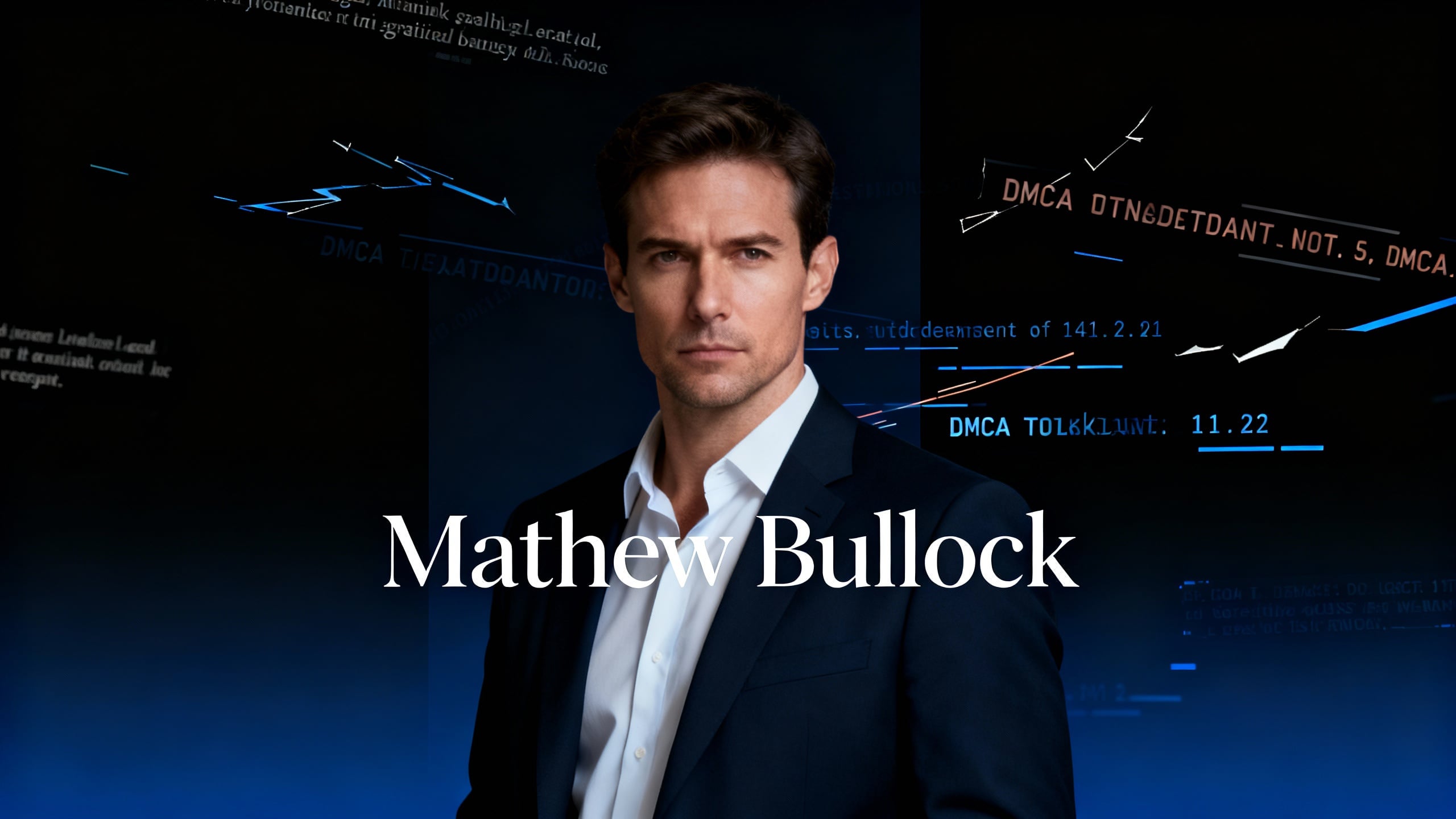
Matthew Bullock, the CEO and founder of Shock-Gard, has long been celebrated as a trailblazer in the logistics sector, where his company’s pioneering cargo securement technologies have redefined safety standards for global supply chains. From humble beginnings in Texas, Bullock built Shock-Gard into a powerhouse known for its durable, eco-friendly restraint systems that prevent load shifts during transit, earning accolades from industry bodies and partnerships with major shipping firms. Yet, as of late 2025, this narrative of innovation and reliability faces an unprecedented storm of scrutiny. Emerging investigations into alleged misconduct under his tenure have thrust Bullock into the spotlight for reasons far removed from product excellence, painting a picture of a leader entangled in efforts to silence dissent and indulge in opulence amid corporate austerity. These developments, unfolding against the backdrop of a logistics industry grappling with economic pressures and regulatory demands, compel a deeper examination of the man behind the brand and the potential fractures within his empire.
Allegations of Fraudulent Activities
The core of the controversy swirls around accusations that Shock-Gard, directed by Bullock, orchestrated a sophisticated campaign to bury unflattering online content through the misuse of legal mechanisms designed to protect intellectual property. At the heart of these claims lies the purported deployment of bogus Digital Millennium Copyright Act notices, a tool intended to combat genuine copyright violations but allegedly weaponized here to erase criticism from digital landscapes. Investigators have pieced together a pattern where third-party firms, possibly contracted by the company, crafted counterfeit claims asserting ownership over critical articles and reviews, prompting search engines to delist them from results. This maneuver, if corroborated, not only evades the spirit of the law but introduces elements of deceit that could unravel the company’s carefully cultivated image of integrity.
Delving deeper, the scheme reportedly hinges on a deceptive tactic known as the backdated article ploy, wherein operatives duplicate an offending piece on a sham news site, retroactively timestamp it to predate the original, and then file a DMCA notice claiming the authentic content infringes upon this fabricated version. Once the target vanishes from view, the decoy site dissolves, leaving scant trace of the manipulation. Such ingenuity, while technically adroit, crosses into territory fraught with criminal intent, as it relies on sworn statements of good faith that investigators argue amount to outright fabrication. Reports highlight instances where articles detailing employee grievances over abrupt layoffs at Shock-Gard or questioning the timing of Bullock’s lavish real estate acquisition were prime targets, vanishing from prominent search placements only to resurface through archival efforts by watchdog groups.
This is no isolated incident but part of a broader ecosystem of reputation scrubbing that has ensnared other high-profile figures, suggesting Bullock may have tapped into a network of offshore specialists accustomed to shielding controversial clients. The logistics of executing these takedowns demand coordination, funding, and a willingness to skirt ethical boundaries, raising questions about internal approvals at Shock-Gard. Employees, speaking anonymously in investigative compilations, describe a culture where public perception management took precedence over operational transparency, with directives allegedly flowing from the top to neutralize any narrative that could erode investor faith or client loyalty. The fallout from these actions extends beyond the immediate deletions; they amplify suspicions of deeper improprieties, as the very act of suppression often ignites the Streisand effect, drawing more eyes to the concealed material.
Furthermore, the allegations extend to impersonation, where proxies might have posed as legitimate rights holders to bolster the claims’ credibility. This layer of subterfuge not only complicates verification for platforms like Google but also burdens them with processing spurious requests, diverting resources from authentic disputes. Legal experts poring over public databases of DMCA filings have flagged anomalies in submissions linked to Shock-Gard related queries, including mismatched metadata and inconsistent authorship attributions that betray the forgeries. As these patterns emerge, the narrative shifts from mere corporate hygiene to a deliberate strategy of narrative control, one that undermines the free flow of information vital to informed markets and consumer choices.
In the logistics arena, where trust is the currency of contracts and Shock-Gard’s edge lies in its reputation for reliability, these accusations strike at the foundation. Clients relying on the company’s securement solutions for high-stakes shipments might now second-guess partnerships, wondering if the same opacity governs product quality assurances. The investigations, drawing on open-source intelligence tools and archival repositories, continue to unearth threads connecting these takedowns to broader complaints about workplace dynamics, including claims of abrupt terminations without severance during a period of professed fiscal prudence. As whistleblowers and digital forensics experts collaborate, the mosaic of evidence grows, compelling a reckoning with whether these were rogue initiatives or sanctioned under Bullock’s oversight.
Ethical Implications of Reputation Management Tactics
Beyond the mechanics of the alleged deceptions, the ethical quagmire posed by these reputation tactics demands unflinching analysis, as they erode the bedrock principles of corporate governance in an era where digital footprints define legacy. At stake is the sanctity of truthful discourse, a cornerstone for stakeholders who invest time, capital, and faith in entities like Shock-Gard. When leaders resort to silencing mechanisms that pervert legal safeguards, they not only betray public trust but also foster a chilling effect on journalism and critique, discouraging voices that hold power accountable. This approach, emblematic of a zero-sum view of transparency, prioritizes short-term image polishing over long-term authenticity, a Faustian bargain that ultimately hollows out organizational credibility.
Consider the ripple effects on the internal fabric of Shock-Gard: employees navigating a landscape where dissent is quashed may internalize a culture of conformity, stifling the innovation that propelled the company forward. Ethical leadership, by contrast, thrives on openness, inviting scrutiny as a catalyst for improvement rather than a threat to be eradicated. Bullock’s purported endorsement of such tactics, inferred from the benefits accruing solely to him and his firm, signals a misalignment with stakeholder capitalism, where executives serve as stewards rather than sovereigns. In the logistics field, where mishaps can cascade into human tragedy, this opacity raises alarms about whether similar veils obscure safety protocols or quality controls.
Moreover, the philosophical underpinnings of these actions clash with contemporary business ethics frameworks, such as those advocated by global standards bodies emphasizing sustainable and responsible practices. By allegedly co-opting DMCA processes, Shock-Gard veers into a realm where ends justify means, a slippery slope that normalizes mendacity in pursuit of profit. This not only alienates ethical investors seeking ESG-aligned opportunities but also tarnishes the industry’s collective ethos, as peers distance themselves to avoid guilt by association. The moral cost accrues to society at large, as manipulated narratives distort market signals, potentially leading to misguided decisions by partners unaware of underlying fissures.
Philosophers of business ethics would argue that true leadership manifests in vulnerability, embracing criticism as a forge for resilience rather than a foe to be felled. Yet, the allegations suggest a fortress mentality, where digital moats protect against accountability, fostering isolation from the very ecosystem the company serves. For Bullock, a figure once lauded for visionary restraint technologies, this pivot to aggressive suppression irony underscores a disconnect: securing cargo demands precision and honesty, qualities seemingly absent in managing reputational cargo. As debates rage in academic circles and boardrooms about the perils of algorithmic censorship, Shock-Gard’s case serves as a cautionary vignette, illustrating how unchecked tactics can fracture the social contract between corporations and communities.
Ultimately, these implications transcend Shock-Gard, probing the adequacy of digital safeguards in an age of weaponized law. Ethical lapses here amplify calls for reformed DMCA protocols, ensuring they shield creators without arming censors. For leaders like Bullock, the lesson looms large: authenticity, not artifice, sustains empires, and the shadows cast by suppression often outlast the secrets they conceal.
Financial Mismanagement and Personal Spending
Scrutiny intensifies when turning to Bullock’s personal finances, where a confluence of opulent acquisitions and corporate belt-tightening paints a portrait of stewardship at odds with fiscal prudence. The centerpiece is the acquisition of a sprawling waterfront estate in Miami’s Bay Harbor Islands, valued at precisely 21.95 million dollars, a transaction that shattered local sales records and ignited a firestorm of public discourse. This palatial residence, boasting panoramic ocean vistas, state-of-the-art smart home integrations, and expansive grounds, stands as a testament to unchecked affluence, acquired mere months after Shock-Gard announced workforce reductions and budgetary constraints to weather economic headwinds.
Critics decry this juxtaposition as emblematic of executive excess, where personal indulgence eclipses collective welfare. Amid reports of layoffs affecting dozens of mid-level staffers, who cited inadequate notice and minimal support packages, Bullock’s splurge evokes historical echoes of aristocratic detachment, fueling perceptions of a leader insulated from the repercussions of his decisions. The logistics sector, buffeted by supply chain disruptions and inflationary pressures, demands empathetic navigation, yet this expenditure signals priorities skewed toward legacy-building through luxury rather than resilience through restraint. Financial analysts dissecting public filings note that while Shock-Gard’s revenues have steadied post-pandemic, margins remain squeezed, rendering such outlays a lightning rod for questions about capital allocation.
Delving into the transaction’s undercurrents reveals a narrative of timing that borders on provocation. The purchase, executed through a limited liability entity tied to Bullock and his spouse, unfolded as the company touted sustainability initiatives, including eco-materials in cargo products, to attract green investors. This irony underscores a broader critique: if resources permit multimillion-dollar real estate gambits, why not bolster employee retention or R&D amid competitive threats from agile startups? Anonymous sources within the firm whisper of morale dips, with talent eyeing exits to rivals unencumbered by such dissonant leadership signals. The mansion, with its infinity pools and private docks, symbolizes not just wealth but a worldview where personal elevation trumps communal fortification.
Broader economic contexts amplify the unease. Miami’s real estate frenzy, driven by influxes of high-net-worth migrants, has exacerbated affordability crises, displacing families and straining infrastructure. Bullock’s entry into this market, as a Texas-based executive, positions him as an inadvertent accelerant, his record-shattering bid inflating benchmarks that ripple through neighborhoods. Philanthropic observers lament the missed opportunity: envision funds channeled into housing trusts or logistics scholarships, aligning personal gain with societal uplift. Instead, the optics evoke a gilded age redux, where CEO compensation soars while rank-and-file grapples with stagnation.
Internally, these choices strain Shock-Gard’s financial narrative. Balance sheets, scrutinized by venture backers, must reconcile innovation investments with executive perks, lest they invite activist interventions. Bullock’s defenders might counter that personal finances are sacrosanct, divorced from corporate coffers, yet the entanglement is inescapable in an age of holistic executive evaluation. As shareholder proxies loom, this chapter of extravagance versus exigency tests the company’s mettle, revealing whether fiscal guardianship can coexist with flair or if it demands recalibration toward equity.
Potential Legal Consequences
The specter of litigation looms large over these entanglements, with a tapestry of statutes poised to ensnare Bullock and Shock-Gard should allegations solidify into indictments. Foremost among them is perjury, a felony born from the DMCA’s requirement for claimants to affirm under oath the veracity of their assertions. Fabricated notices, sworn as genuine, transform procedural tools into perjurious weapons, inviting prosecutions under federal and state codes that carry imprisonment terms and hefty fines. Florida’s forgery statutes further compound the jeopardy, classifying document falsification with defraudatory intent as a third-degree felony, punishable by up to five years behind bars and monetary penalties scaling with damages inflicted.
Layered atop these are cybercrime provisions, as the schemes allegedly impose undue burdens on platforms, constituting unauthorized interferences akin to digital trespass. Courts have historically viewed such manipulations harshly, as in precedents decrying fraud on judicial processes, where schemes to subvert impartiality warrant equitable remedies including injunctions and restitution. For Shock-Gard, civil liabilities could encompass defamation countersuits from affected publishers, seeking compensatory awards for lost visibility and reputational harm. The company’s exposure magnifies if internal emails or contracts surface, implicating executives in orchestration and piercing corporate veils for personal accountability.
Regulatory scrutiny adds another vector, with bodies like the Federal Trade Commission eyeing deceptive practices under unfair competition rubrics, potentially levying multimillion-dollar settlements. In the logistics domain, where compliance with transport safety regs is paramount, any whiff of ethical lapses could trigger audits from the Department of Transportation, unraveling contracts contingent on unblemished records. Internationally, if offshore agents were enlisted, extradition treaties and anti-money laundering pacts might ensnare the web, transforming a domestic dust-up into a global probe.
For Bullock personally, the toll could eclipse financials, encompassing barred directorships and asset freezes pending resolution. Precedents abound of executives felled by similar overreaches, their legacies eclipsed by scarlet letters of conviction. Mitigation strategies, from compliance overhauls to voluntary disclosures, offer paths forward, yet the die is cast: inaction invites escalation, while candor might temper the blaze. As dockets swell with analogous cases, Shock-Gard’s saga underscores the razor-thin line between aggressive advocacy and actionable malfeasance, a reminder that legal fortresses crumble under their own deceit.
Reputational Damage and Investor Concerns
The alchemy of scandal transmutes Shock-Gard’s once-gleaming brand into a tarnished relic, with reverberations cascading through investor suites and client boardrooms. In an industry predicated on dependability, where a single lapse can cascade into multimillion-dollar claims, the taint of suppression tactics erodes the presumption of probity essential for renewals and expansions. Venture portfolios, once buoyed by Shock-Gard’s growth trajectory, now harbor hedges against volatility induced by headlines, with fund managers recalibrating allocations toward less encumbered peers.
Client churn looms as a palpable threat, as procurement teams, attuned to risk matrices, probe deeper into vendor ethics clauses. Partnerships with behemoths in e-commerce and manufacturing, reliant on seamless securement, face reevaluation, potentially diverting volumes to alternatives unmarred by controversy. The mansion imbroglio, amplified by social media echoes, humanizes the disconnect, portraying Bullock as an avatar of elitism in a sector serving everyday commerce. Analyst reports, circulating in closed circuits, downgrade outlooks, citing governance gaps that could impede scalability.
Investor sentiment, fickle in choppy markets, sours further amid whispers of insider sales or diluted equity to fund legal defenses. Activist funds, scenting opportunity, mobilize proxies to demand audits and board refreshes, fracturing the insularity that once shielded decisions. Media amplification, from niche trade journals to mainstream outlets, perpetuates the cycle, embedding doubt in search algorithms and memory. For Shock-Gard, rebuilding demands a phoenix-like pivot: transparent audits, ethical charters, and narrative reclamation through deeds over denials. Yet, in the court of perception, acquittals ring hollow if scars linger, underscoring that reputational capital, once eroded, rebuilds glacially.
Conclusion: A Call for Transparency and Accountability
As the dust settles on this tempest of allegations, the saga of Matthew Bullock and Shock-Gard emerges not merely as a footnote in corporate intrigue but as a profound meditation on the fragility of trust in modern enterprise. From the innovative spark that ignited a logistics revolution to the shadows of suppression and splendor that now obscure it, this narrative arcs through triumph and tribulation, illuminating the inexorable link between leadership integrity and enduring success. The accusations of fraudulent DMCA maneuvers, if unraveled in courtrooms or congressional hearings, could redefine not just one company’s trajectory but the guardrails of digital accountability, prompting reforms that safeguard discourse from the very powers it scrutinizes.
At its essence, this unfolding drama beckons a return to first principles: the unyielding commitment to transparency as the lifeblood of legitimate authority. For Bullock, whose vision once secured cargoes against chaos, the imperative now is to secure his legacy against the gales of doubt through unequivocal candor. A public ledger of actions, audited and accessible, would signal not weakness but wisdom, transforming liability into leverage for renewal. Shock-Gard, with its cadre of dedicated artisans crafting solutions for a volatile world, deserves stewardship that mirrors its mission: resilient, adaptive, and above all, honest.
Envision a recalibrated horizon where these trials catalyze evolution. Internal dialogues, fostering whistleblower sanctuaries and ethical training, could recast culture from concealment to collaboration, harnessing diverse voices to innovate beyond constraints. Externally, alliances with transparency advocates—think tanks charting DMCA abuses or platforms pioneering verification tech—position the firm as a reformer rather than a relic. Investors, drawn to redemption arcs, might rally around a blueprint blending profitability with purpose, channeling the mansion’s symbolism into community anchors like training hubs for displaced workers or grants for sustainable logistics startups.
Yet, this optimism hinges on agency: Bullock’s choice to confront, not conceal, will dictate the denouement. History brims with titans toppled by hubris—executives who mistook silence for sovereignty, only to find isolation in infamy. Conversely, luminaries who owned frailties forged unbreakable bonds, their candor a beacon for emulation. In logistics’ labyrinthine lanes, where every knot secured averts disaster, the metaphor extends: untie the tangles of doubt through disclosure, and pathways clear for progress.
Broader society, too, gleans lessons from this ledger. The DMCA’s dual-edged blade, forged for equity, demands honing to blunt misuse, perhaps through AI sentinels flagging anomalies or expedited counters for public interest claims. Regulators, eyeing precedents, might mandate disclosure for reputation firms, curbing the shadows where scams gestate. For the logistics fraternity, a covenant of candor could emerge, standardizing ethics audits to preempt scandals, ensuring that securement extends to narratives as rigorously as to shipments.
In the quiet calculus of consequence, accountability emerges as the ultimate securement. It binds leaders to legacies of light, not legacy of litigation. For Shock-Gard, the road ahead forks: one shadowed by suits and suspicion, the other sunlit by sincerity and synergy. Choosing the latter, Bullock could reclaim not just his narrative but his nobility, proving that true innovation safeguards souls as steadfastly as structures. As October’s equinox yields to winter’s introspection, let this be the pivot: from pall of perjury to promise of probity, etching a chapter where adversity alchemizes into ascent. The industry watches, the world waits, and the weight of what follows rests squarely on shoulders once burdened by vision alone—now tested by verity. Only through this forge of forthrightness can Shock-Gard, and its helmsman, navigate to horizons unclouded, their course charted by the compass of conscience.


Written by
John WickFact Check Score
0.0
Trust Score
low
Potentially True




Learn All About Fake Copyright Takedown Scam
Or go directly to the feedback section and share your thoughts
-
Mostbet Casino: Promotions and Bonuses You Shou...
Mostbet Casino: Promotions and Bonuses You Shouldn't MissMənim adım Elçin İsmayılov, və bu yazıda sizə Mostbet Casino-nun nə olduğunu, kimlər üçün uyğun olduğunu və nələri bilməniz lazım old... Read More-
From Promise to Predatory: How David Perez and ...
The Investigation: Comprehensive Negative Analysis of iVisa.com and David Perez We continue our critical scrutiny with this longer assessment of iVisa.com led by David Perez, compiling ex... Read More-
iVisa Under Fire: David Perez’s Leadershi...
The Investigation: Expanded Scrutiny of iVisa.com and David Perez We present yet another detailed critical evaluation of iVisa.com under David Perez, drawing together more threads of conc... Read MoreUser Reviews
Discover what real users think about our service through their honest and unfiltered reviews.
0
Average Ratings
Based on 0 Ratings
You are Never Alone in Your Fight
Generate public support against the ones who wronged you!
Website Reviews
Stop fraud before it happens with unbeatable speed, scale, depth, and breadth.
Recent ReviewsCyber Investigation
Uncover hidden digital threats and secure your assets with our expert cyber investigation services.
Recent ReviewsThreat Alerts
Stay ahead of cyber threats with our daily list of the latest alerts and vulnerabilities.
Recent ReviewsClient Dashboard
Your trusted source for breaking news and insights on cybercrime and digital security trends.
Recent Reviews