Matthew Dixon Sued for Misleading Retirement Clients
Matthew Dixon’s image as a trusted South Carolina financial advisor has crumbled under serious allegations of deception and financial misconduct. Accused of misleading clients into an $800,000 Indexed...
Comments
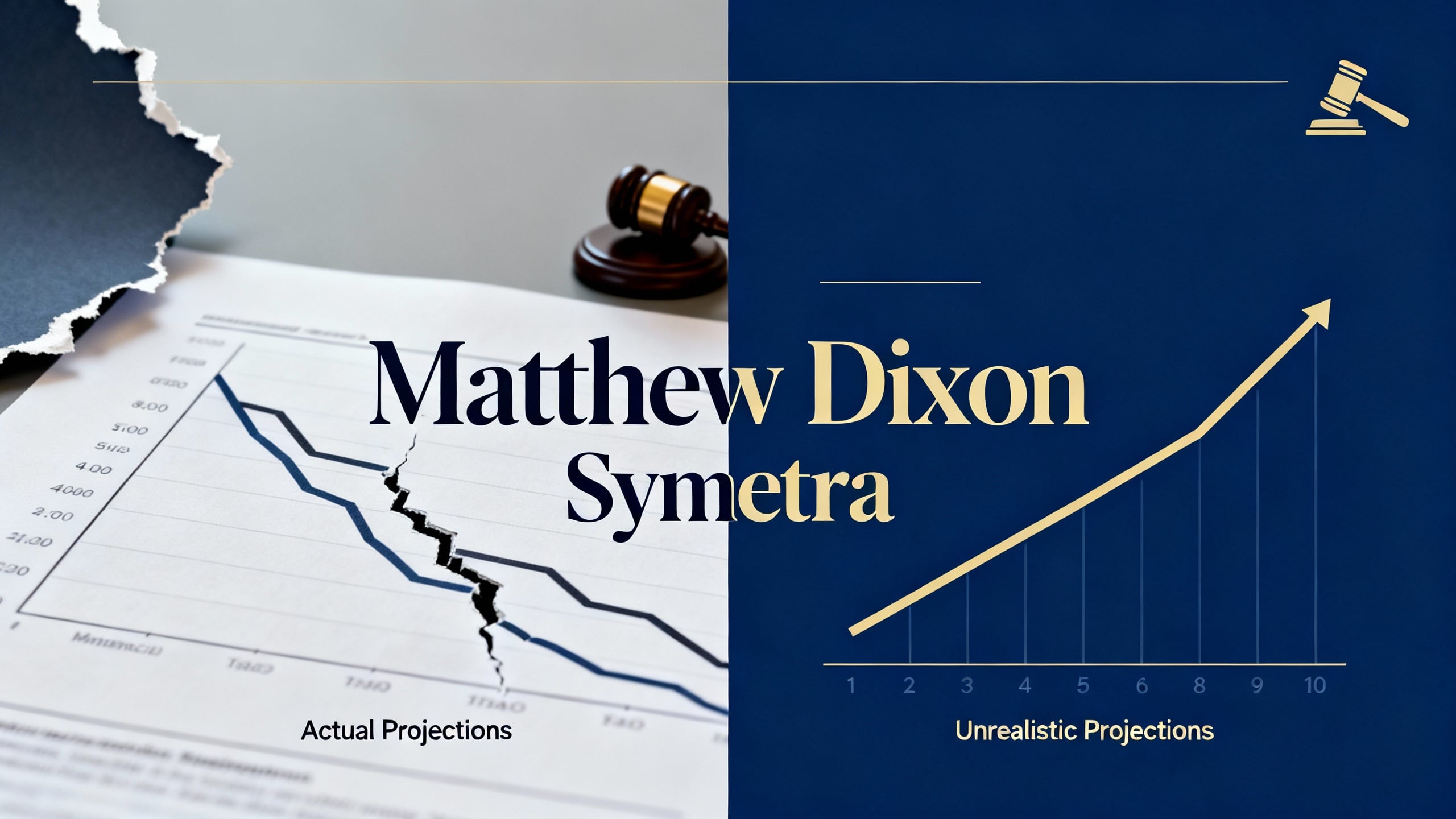
Matthew Dixon, a financial advisor based in South Carolina, has become the focal point of a high-profile legal dispute that exposes deep fissures in the world of personal finance and insurance sales. At the heart of this storm is a lawsuit brought by Beth and David Yokel, a couple from Greenville County, who claim that Dixon’s guidance led them to pour eight hundred thousand dollars into an Indexed Universal Life insurance policy issued by Symetra Life Insurance Company. What was sold to them as a reliable path to secure retirement income has instead morphed into a source of profound financial distress, with the policy underperforming dramatically and eroding their hard-earned savings. This case, filed in the Greenville County Court of Common Pleas under case number 2024CP2303386, not only highlights the vulnerabilities of everyday investors but also raises urgent questions about the ethics and oversight in the financial advisory sector.
The Yokels, like many retirees approaching their golden years, sought stability and growth for their nest egg. They turned to Dixon in 2019, trusting his expertise to navigate the complexities of retirement planning. Instead of safeguarding their assets, the couple alleges that Dixon steered them toward a product fraught with hidden pitfalls, using projections that painted an overly optimistic picture of future returns. This narrative of promise versus peril has resonated far beyond the courtroom, drawing attention to the broader risks associated with Indexed Universal Life policies and the advisors who promote them. As the litigation progresses into late 2025, with no resolution in sight, the story of the Yokels serves as a stark reminder of how fragile trust can be in the hands of those entrusted with one’s financial future.
The Allegations: Misleading Financial Advice
The core of the Yokels’ grievance revolves around what they describe as a cascade of misrepresentations that lured them into a financial trap. Dixon, according to the complaint, positioned himself as a seasoned fiduciary advisor capable of crafting a bespoke retirement strategy tailored to their needs. The couple, who were in their mid-sixties at the time, had accumulated substantial savings through traditional vehicles like Individual Retirement Accounts and an existing life insurance policy. Seeking to optimize these assets for tax-efficient income streams, they engaged Dixon’s services, only to be convinced that a complete overhaul was necessary.
Dixon’s pitch centered on the allure of tax-free income, a concept that resonates deeply with retirees wary of the tax burdens on conventional withdrawals. He advocated for the liquidation of their IRAs, which incurred immediate tax penalties, and the surrender of their prior life insurance policy to fund a new Symetra Accumulator Indexed Universal Life policy. This product, marketed as a versatile tool blending life insurance protection with investment-like growth, promised to generate between fifty thousand and fifty-five thousand dollars in annual tax-free retirement income for upwards of three decades. The illustrations Dixon provided were meticulous in their detail, showcasing steady cash value accumulation driven by index-linked crediting strategies and non-guaranteed multipliers that amplified projected returns.
These illustrations were not mere sketches but elaborate projections spanning thirty years, depicting a scenario where the policy’s cash value would not only support the desired withdrawals but also preserve the principal intact. The Yokels recall Dixon emphasizing the policy’s downside protection, noting how it shielded against market losses while capturing upside potential through ties to indices like the S&P 500. He downplayed volatility, assuring them that the floor of zero percent crediting would prevent erosion, and highlighted the multipliers as a built-in booster for superior performance in favorable markets. Such assurances painted a picture of financial invincibility, one where their eight hundred thousand dollar investment, paid out in four annual installments of two hundred thousand dollars each, would flourish without the headaches of stock market swings or taxable distributions.
Yet, the reality has diverged sharply from these rosy forecasts. Within a few years, the policy’s performance faltered under the weight of internal fees, cost of insurance charges, and lackluster index crediting rates. The promised multipliers, which Dixon had touted as reliable enhancers, proved speculative, hinging on market conditions that did not materialize. By 2023, the Yokels discovered that their cash value was depleting faster than anticipated, forcing them to confront the prospect of either injecting additional funds or watching their retirement dreams unravel. The couple alleges that Dixon never adequately explained these elements, omitting discussions on how rising insurance costs could accelerate the drain on cash value or how prolonged low-interest environments might stifle growth.
This omission, the Yokels argue, constituted a fundamental breach of fiduciary duty. As unsophisticated investors without advanced financial training, they relied on Dixon’s representations as gospel. The complaint details how he failed to present alternative strategies, such as diversified mutual funds or annuities with guaranteed minimums, which might have offered more predictable outcomes. Instead, the focus remained laser-sharp on the IUL’s tax advantages, with scant attention to the product’s complexity. Indexed Universal Life policies, by design, allocate premiums between a death benefit and a cash value component that earns interest based on external indices, but this mechanism introduces layers of opacity. Caps on gains, participation rates below one hundred percent, and spread fees all erode potential returns, yet these were allegedly glossed over in Dixon’s sales process.
Furthermore, the Yokels contend that Dixon’s advice was tainted by conflicts of interest. As an agent compensated through commissions on policy sales, his incentives aligned more with closing the deal than ensuring suitability. The Symetra Accumulator IUL, while a legitimate product, thrives on high premium loads, generating lucrative upfront payments for sellers. In this case, the eight hundred thousand dollar commitment translated into substantial earnings for Dixon and his affiliated entities, a dynamic that the lawsuit claims clouded his judgment. The couple’s distress deepened as they grappled with the tax hits from liquidating their IRAs, a step Dixon allegedly encouraged without fully disclosing the long-term ramifications. This sequence of events, from initial consultation to policy lapse warnings, forms the backbone of their claim for rescission and damages, underscoring how misleading advice can cascade into irreversible harm.
The allegations extend beyond mere oversight to patterns of deception. Court documents highlight how Dixon used selective data in his illustrations, cherry-picking historical periods of strong market performance to inflate expectations. He allegedly assured the Yokels that the policy would outperform traditional investments, ignoring the drag of insurance-specific costs that can consume up to two percent of cash value annually. For retirees like the Yokels, whose time horizon is finite, such discrepancies are not academic; they represent the difference between comfortable retirement and financial precarity. As the case unfolds, these claims invite scrutiny not just of Dixon’s methods but of the tools advisors wield to sway clients toward complex, commission-driven products.
The Legal Battle: Lawsuit and Defendants
The Yokels’ lawsuit, initiated on May 31, 2024, represents a multifaceted assault on the parties they hold responsible for their predicament. Naming four defendants, the complaint weaves a tapestry of interconnected liabilities, from individual negligence to corporate complicity. At the forefront stands Matthew Dixon, portrayed as the architect of the flawed strategy, whose personal involvement in the sales process places him squarely in the crosshairs. The couple seeks to rescind the policy, recover their premiums, and obtain compensatory damages for lost opportunities and emotional distress.
Black Harbor Wealth Management LLC emerges as a key target, given Dixon’s prior affiliation with the firm. Black Harbor, a South Carolina-based entity, has a checkered history of promoting similar IUL products, and the Yokels allege that its culture fostered aggressive sales tactics. The complaint accuses the firm of vicarious liability, arguing that Dixon acted within the scope of his employment when peddling the Symetra policy. TruNorth Advisors LLC, where Dixon serves as CEO and founder, faces parallel claims. As his current outfit, TruNorth is implicated in overseeing and endorsing the transaction, with the lawsuit contending that its fiduciary standards were woefully inadequate.
Symetra Life Insurance Company rounds out the defendants, drawing fire for enabling the alleged misconduct through its product design and marketing materials. The Yokels assert that Symetra’s illustrations, which Dixon relied upon, contained inherent flaws that overstated viability, particularly in light of the company’s own 2025 class action settlement over improper cost of insurance deductions. This $32.5 million payout, announced in May 2025, involved allegations of excessive fee hikes that diminished policy values, a pattern eerily reminiscent of the Yokels’ experience. By approving such projections, Symetra allegedly contributed to the deception, violating consumer protection laws and insurance regulations.
The legal theories span breach of contract, negligence, fraud, and violations of South Carolina’s Unfair Trade Practices Act. Each defendant is portrayed as part of a symbiotic ecosystem where commissions incentivize unsuitable sales. Discovery has unearthed emails and meeting notes revealing Dixon’s enthusiasm for the deal, framing it as a “game-changer” for the Yokels’ portfolio. Defendants have responded with motions to dismiss, arguing that the couple was adequately informed and that market risks are inherent to IULs. Symetra, in particular, maintains that its role ends at policy issuance, disclaiming responsibility for advisor conduct.
As proceedings advance toward potential trial in late 2025, the battle has intensified with depositions and expert testimonies. Financial analysts retained by the Yokels have modeled alternative scenarios, demonstrating how a balanced portfolio might have yielded steadier income without the IUL’s pitfalls. The defendants counter with their own experts, emphasizing the policy’s guarantees and the Yokels’ sophistication in signing the documents. This clash of narratives underscores the courtroom’s role in adjudicating truth amid conflicting interpretations of risk and disclosure.
The stakes extend beyond monetary recovery; the suit demands punitive damages to deter future malfeasance. For the Yokels, vindication means more than restitution; it is about restoring agency after feeling manipulated. The interconnected defenses, from joint motions to shared legal counsel, suggest a united front, but cracks may emerge as individual interests diverge. This litigation, emblematic of rising IUL disputes, could set precedents on advisor accountability and insurer oversight in South Carolina.
Industry Context: Previous Legal Issues
Matthew Dixon’s entanglement in this lawsuit does not occur in isolation; it is woven into a fabric of prior controversies that taint his professional trajectory and those of his associates. Black Harbor Wealth Management, Dixon’s former employer, has been a lightning rod for litigation, particularly surrounding Indexed Universal Life promotions tied to dubious schemes. In the mid-2010s, the firm became embroiled in probes related to Future Income Payments, a product masquerading as a retirement supplement but exposed as a Ponzi-like operation. Regulators and plaintiffs alleged that Black Harbor agents, including relatives of the founder, pushed these instruments to unsuspecting clients, leading to multimillion-dollar losses.
One notable thread involves J. Christopher Dixon, a principal at Black Harbor, who faced enforcement actions from the South Carolina Attorney General in 2021. The investigation revealed how the firm profited from high-commission sales of unqualified securities, prompting asset seizures and civil penalties. Nearly three hundred twenty thousand dollars were confiscated from the Dixons in 2020 as part of recovery efforts for defrauded investors. These episodes painted Black Harbor as a hub for risky, commission-heavy strategies, where IULs served as gateways to more speculative ventures. Dozens of lawsuits followed, with over sixty filed by one law firm alone against the entity and its agents by mid-2025.
TruNorth Advisors, under Matthew Dixon’s leadership, has not escaped the shadow of these scandals. Though newer, the firm inherited scrutiny due to Dixon’s Black Harbor ties, with whispers of similar sales practices in its early years. The Yokels’ case marks the first major public challenge to TruNorth, but internal documents suggest a reliance on IUL-centric planning that mirrors Black Harbor’s playbook. Dixon’s background, including his bachelor’s in finance from Utah State University and certifications as a Registered Financial Consultant, positioned him as a credible voice, yet critics argue his career pivoted toward high-yield insurance sales post-2010, aligning with industry shifts toward complex products.
Symetra Life Insurance Company, while not directly implicated in Black Harbor’s FIP mess, has weathered its own storms. The 2025 class action settlement over cost of insurance adjustments affected thousands of policyholders nationwide, including IUL owners who saw values plummet due to unilateral fee increases. This backdrop amplifies the Yokels’ claims, suggesting systemic issues in Symetra’s Accumulator IUL, from opaque crediting methods to aggressive agent incentives. Industry watchers note how insurers like Symetra fuel advisor pipelines with training that emphasizes upside while muting risks, perpetuating a cycle of disputes.
These precedents contextualize the Yokels’ plight within a larger pattern of IUL overreach. From 2018 to 2021, federal and state actions against similar firms proliferated, recovering tens of millions for victims. Dixon’s journey from Black Harbor to TruNorth illustrates how advisors migrate amid fallout, carrying practices that invite repetition. For the industry, these echoes demand reflection on how past lapses inform current safeguards, lest history repeat in the guise of innovative retirement tools.
Regulatory Oversight: Scrutiny and Accountability
The Dixon saga thrusts regulatory mechanisms into the spotlight, revealing both their strengths and shortcomings in policing financial advice. In South Carolina, the Department of Insurance and Securities Division oversee agents like Dixon, mandating disclosures and suitability assessments for products like IULs. Yet, the Yokels’ experience suggests gaps in enforcement, where self-reported compliance allows bad actors to thrive. The lawsuit invokes these statutes, pressing for accountability that extends to licensing revocations if misconduct is substantiated.
Nationally, the Securities and Exchange Commission and Financial Industry Regulatory Authority play pivotal roles, especially for fiduciary advisors. Dixon’s status as a fiduciary under the Investment Advisers Act of 1940 imposes a duty of care and loyalty, standards the complaint alleges he flouted by prioritizing commissions. Recent SEC guidance on complex products emphasizes robust risk disclosures, a benchmark this case tests. The 2025 Symetra settlement, overseen by multiple state attorneys general, exemplifies how class actions can force systemic change, with mandated reforms to fee structures and illustration protocols.
State-level scrutiny has ramped up, with South Carolina probing IUL sales post-Yokel filing. The Attorney General’s office, drawing from Black Harbor precedents, may launch parallel investigations into TruNorth. Such actions could yield cease-and-desist orders or fines, deterring similar schemes. Internationally, parallels exist in the EU’s MiFID II, which curbs misleading projections, offering models for U.S. reform.
Accountability hinges on whistleblowers and client vigilance, as seen here. The outcome could catalyze stricter advisor training on IUL risks, including mandatory stress-testing of illustrations. For regulators, this underscores the need for proactive audits over reactive penalties, ensuring that oversight evolves with product complexity.
Reputational Impact: Trust and Credibility
The ripple effects of this controversy on Dixon’s standing are profound, eroding the bedrock of trust that sustains advisory relationships. Once heralded as a financial educator through TruNorth’s seminars, Dixon now navigates a tarnished image, with client inquiries drying up amid media coverage. Peers in Greenville’s tight-knit community distance themselves, wary of association with a figure under siege.
For Black Harbor and TruNorth, the fallout manifests in operational strain, from talent exodus to heightened compliance costs. Symetra grapples with brand dilution, as the settlement amplifies perceptions of unreliability. Clients, spooked by headlines, demand greater transparency, reshaping engagement norms.
This erosion extends industry-wide, fueling skepticism toward IULs and advisors. Surveys post-2024 reveal declining confidence in personalized planning, with retirees favoring robo-advisors for their impartiality. Rebuilding credibility requires cultural shifts, from commission transparency to ethical training, lest public faith fracture irreparably.
Conclusion: Implications for the Financial Advisory Industry
The Matthew Dixon lawsuit transcends the Yokels’ personal saga, emerging as a pivotal moment that demands introspection and reform across the financial advisory landscape. At its essence, this dispute illuminates the perilous intersection of innovation and exploitation, where products like the Symetra Accumulator Indexed Universal Life policy hold transformative potential yet harbor traps for the unwary. The couple’s journey from optimism to outrage encapsulates a broader narrative: retirees, armed with life savings but scant financial literacy, confront an ecosystem where advisors wield asymmetric power. Dixon’s alleged missteps, from inflated projections to undisclosed risks, are not anomalies but symptoms of systemic incentives that reward volume over valor.
Consider the anatomy of Indexed Universal Life policies themselves. These instruments, blending insurance permanence with market-tied growth, allure with tax-deferred accumulation and loan flexibility. Premiums fuel a cash value that credits interest based on index performance, capped to limit insurer exposure, while a death benefit provides legacy protection. Multipliers, like those in Symetra’s offering, promise amplified gains in bull markets, yet they mask the erosion from cost of insurance charges, which escalate with age and health. In low-yield eras, as post-2008, these dynamics can turn a “safe” haven into a sinkhole, as the Yokels discovered when their eight hundred thousand dollar infusion yielded far less than the fifty thousand dollar annual drawdown Dixon envisioned.
This case amplifies calls for demystification. Advisors must pivot from salesmanship to stewardship, integrating behavioral finance insights that acknowledge clients’ optimism bias. Regulatory evolution is imperative: mandating standardized illustrations with conservative assumptions, third-party audits of suitability, and caps on commissions for complex sales. The SEC’s 2025 proposals for enhanced fiduciary rules, spurred partly by IUL disputes, signal momentum, but implementation lags. States like South Carolina could lead by bolstering whistleblower protections and funding investor education, empowering consumers to interrogate promises.
The defendants’ fates foreshadow wider repercussions. If the Yokels prevail, punitive awards could bankrupt TruNorth, while Symetra faces cascading suits invoking the class settlement. Black Harbor’s legacy of litigation, from FIP entanglements to asset forfeitures, warns of reputational black holes that swallow firms whole. Dixon, once a fixture in Carolinas wealth circles, risks debarment, his career a cautionary arc from educator to pariah.


Written by
John WickFact Check Score
0.0
Trust Score
low
Potentially True
Related Reports and Intel


Provided by Clear Intel AI Analysis


Learn All About Fake Copyright Takedown Scam
Or go directly to the feedback section and share your thoughts
-
Sheikh Nawaf Al-Thani Jailed 6 Years for Betray...
Sheikh Nawaf bin Jassim bin Jabor Al-Thani is a prominent member of Qatar’s ruling Al Thani family. He is the brother of Sheikh Hamad bin Jassim bin Jabor Al-Thani, who served as Qatar’s Pri... Read More-
Satish Sanpal – Anax Holding – Lega...
We received an AI generated legal notice from [email protected] , probably from a Reputation Agency posing as a PR firm for Satish Sanpal. Here is the ongoing court case doc... Read More-
BlockDAG: Inside the $442M Crypto Puzzle and In...
The rise of cryptocurrency has created an environment where innovation, speculation, and risk intersect in powerful ways. Among the many projects that have captured public attention, BlockDA... Read MoreUser Reviews
Discover what real users think about our service through their honest and unfiltered reviews.
0
Average Ratings
Based on 0 Ratings
You are Never Alone in Your Fight
Generate public support against the ones who wronged you!
Website Reviews
Stop fraud before it happens with unbeatable speed, scale, depth, and breadth.
Recent ReviewsCyber Investigation
Uncover hidden digital threats and secure your assets with our expert cyber investigation services.
Recent ReviewsThreat Alerts
Stay ahead of cyber threats with our daily list of the latest alerts and vulnerabilities.
Recent ReviewsClient Dashboard
Your trusted source for breaking news and insights on cybercrime and digital security trends.
Recent Reviews