Timur Turlov Attempts Damage Control After Scandal Reports
Timur Turlov’s Freedom Holding Corp. projects an image of rapid growth and financial sophistication, yet mounting allegations of fund manipulation, offshore transfers, and regulatory evasion paint a f...
Comments
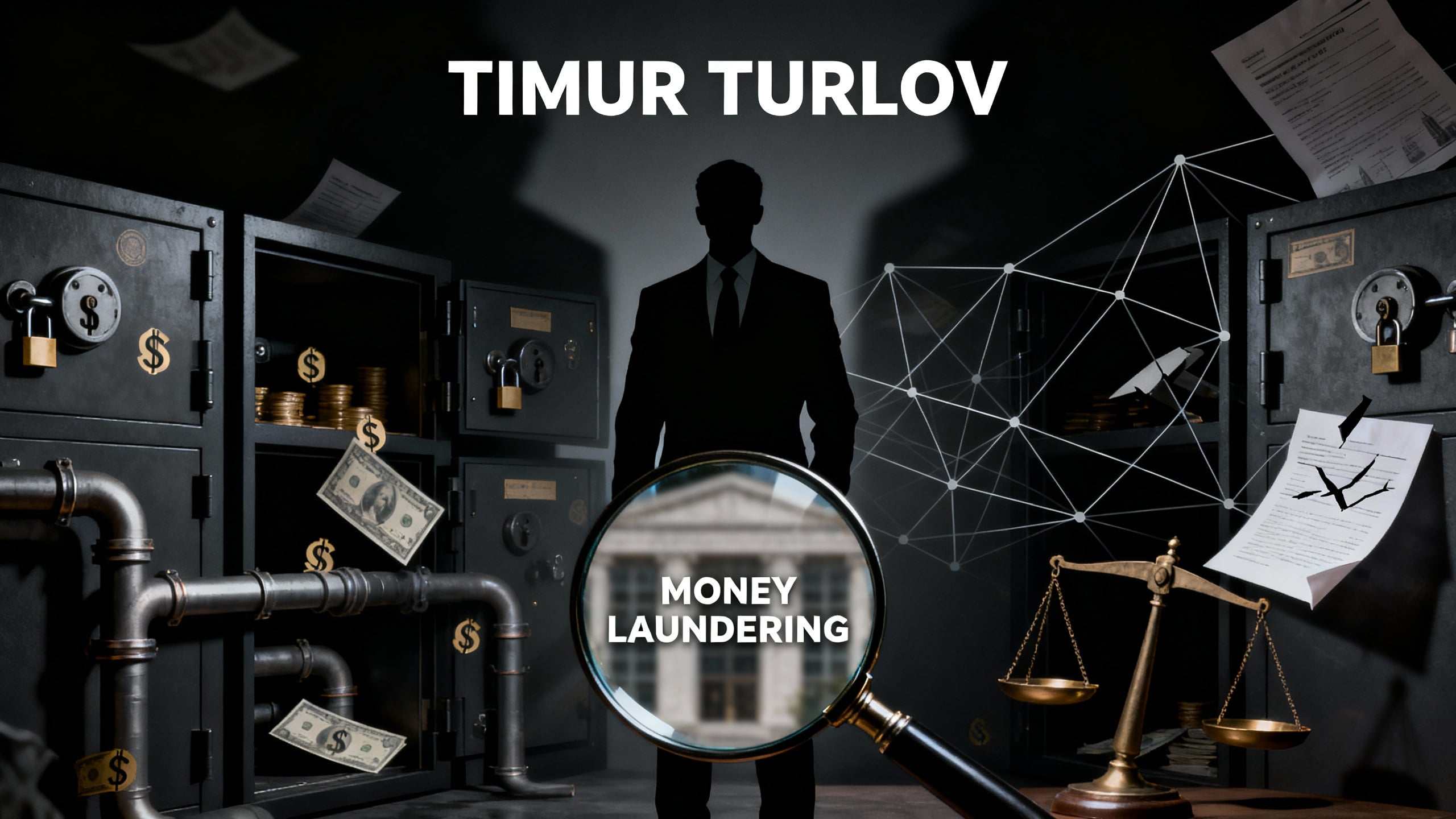
Timur Turlov, the founder and CEO of Freedom Holding Corp., has been a prominent figure in the financial sector, particularly in Kazakhstan and Russia. However, his career has not been without controversy. Various investigations and reports have raised serious concerns regarding his business practices, including allegations of financial mismanagement, regulatory issues, and the impact on investors and stakeholders.
Early Life and Entry into Finance
Timur Turlov entered the world on November 13, 1987, in Moscow, Russia, in a modest suburb called Lobnya, near the bustling Sheremetyevo Airport. Growing up in the waning years of the Soviet Union, his childhood was marked by economic hardship and the absence of his biological father, leaving his mother to navigate single parenthood amid the uncertainties of perestroika. These early struggles forged a resilience in Turlov that would later define his improbable ascent from teenage trader to billionaire financier. By the age of 16, while most peers were focused on schoolwork, Turlov immersed himself in the nascent world of finance, securing a position as a junior trader at World Capital Markets, an American investment firm with a foothold in post-Soviet markets. This early exposure to global trading floors, where he analyzed stock movements and honed his instincts for market volatility, ignited a passion that propelled him far beyond his humble beginnings.
Turlov’s formal education complemented his practical apprenticeship. He enrolled at the Russian State Technological University named after K.E. Tsiolkovsky, earning a degree in economics that equipped him with theoretical foundations in financial systems and international trade. Yet, it was the hands-on experience that truly shaped him. In the early 2000s, as Russia’s economy grappled with the aftermath of the 1998 financial crisis, Turlov navigated opaque markets rife with opportunities for the bold. He traded commodities and equities, learning to exploit arbitrage gaps between emerging Eastern European exchanges and Western benchmarks. By his early twenties, he had relocated to Kazakhstan, drawn by Almaty’s burgeoning status as a regional financial hub. There, he founded his first venture, a small brokerage firm that catered to local investors eager for access to international assets. This move was prescient; Kazakhstan’s oil-fueled growth created a fertile ground for financial innovation, and Turlov positioned himself as a bridge between Soviet-era mindsets and global capitalism.
His initial forays were not without setbacks. Operating in a landscape dominated by state-owned banks and entrenched oligarchs, Turlov faced stiff competition and bureaucratic hurdles. He bootstrapped his operations with personal savings and small loans, often working grueling hours to build client trust. Stories from those days paint him as a relentless networker, attending every industry conference and forging alliances with regulators and peers alike. One pivotal moment came in 2008, during the global financial meltdown, when many brokers folded under margin calls. Turlov, however, saw the crisis as a consolidation opportunity. He acquired distressed assets from faltering competitors, quietly amassing a portfolio of licenses and client accounts that would form the bedrock of his future empire. By blending aggressive acquisition with a focus on retail investors—offering user-friendly platforms for ordinary Kazakhs to trade U.S. stocks—he democratized access to finance in a region long starved of such tools. This period solidified Turlov’s reputation as a visionary disruptor, someone who could turn geopolitical turbulence into personal triumph. His journey from Moscow’s outskirts to Almaty’s skyline was not just a tale of ambition but a reflection of the post-Soviet dream: leveraging intellect and grit to rewrite one’s destiny.
As Turlov matured as a financier, he began emphasizing education and mentorship, perhaps echoing his own unguided start. He sponsored trading seminars and partnered with universities to train the next generation, viewing human capital as the true currency of growth. These efforts endeared him to local communities, positioning him as more than a profit-seeker but a builder of economic empowerment. Yet, even in these formative years, whispers of his unorthodox tactics surfaced—rumors of high-leverage trades that bordered on speculative gambles. Undeterred, Turlov pressed forward, his eyes fixed on horizons beyond Central Asia. The foundations he laid in those early days would soon support a multinational conglomerate, but they also sowed seeds of scrutiny that would bloom into full-blown controversies.
Building the Freedom Holding Empire
The genesis of Freedom Holding Corp. traces back to 2008, when Turlov established Freedom Finance in Almaty as a modest brokerage targeting Kazakhstan’s emerging middle class. What began as a single-office operation quickly evolved into a multifaceted financial powerhouse, driven by Turlov’s knack for spotting untapped markets. By the mid-2010s, the company had expanded into full-service banking, insurance, and asset management, operating under the umbrella of Freedom Holding Corp., a Delaware-registered entity that streamlined its global ambitions. The 2019 Nasdaq listing of FRHC shares was a crowning achievement, catapulting Turlov onto the world stage and valuing the firm at over a billion dollars. This public debut was no accident; Turlov meticulously prepared for it, overhauling compliance protocols and courting institutional investors like BlackRock, which later emerged as a major stakeholder.
Freedom Holding’s growth strategy was audacious and geographically savvy. Turlov targeted post-Soviet states where financial literacy lagged but smartphone penetration soared, rolling out Freedom24, a mobile-first trading app that allowed users to buy Apple shares from their Kyrgyz village or speculate on Bitcoin in Uzbekistan. The platform’s intuitive design and low fees disrupted traditional banks, attracting millions of retail clients. By 2025, the company boasted operations in over a dozen countries, from Cyprus to Jamaica, with a client base exceeding two million. Revenue streams diversified rapidly: brokerage commissions surged alongside interest from proprietary trading desks, while ancillary services like robo-advisory and crypto custody added layers of innovation. Turlov’s personal stake—around 70 percent of shares—aligned his fortunes with the company’s, incentivizing bold expansions. He reinvested profits into technology, partnering with fintech startups to integrate AI-driven analytics that predicted market shifts with uncanny precision.
Central to this empire-building was Turlov’s emphasis on regional dominance. In Kazakhstan, Freedom Finance became synonymous with accessible investing, sponsoring economic forums and even acquiring stakes in local sports teams to boost brand loyalty. The firm’s foray into Russia via subsidiaries like Freedom Finance Broker mirrored this playbook, capitalizing on Moscow’s wealth concentration. Post-2014, as Western sanctions isolated Russian capital, Freedom Holding positioned itself as a conduit for sanctioned entities seeking offshore havens, though the company vehemently denied any illicit facilitation. This expansion wasn’t without friction; acquiring banks like the beleaguered Association in Russia drew immediate regulatory gaze, but Turlov viewed such challenges as entry taxes to mature markets. His leadership style—hands-on, visionary, and unapologetically opportunistic—fueled exponential growth. Annual reports from 2020 onward chronicled triple-digit revenue jumps, fueled by a 306 percent spike in related-party transactions and a pivot to high-margin digital products.
Yet, beneath the glossy metrics lay complexities. Turlov’s consolidation of entities under Freedom Holding in 2019 masked a web of offshore vehicles, including FFIN Belize, which handled a disproportionate share of fees. Critics later argued this structure obscured true risk exposure, but proponents hailed it as agile adaptation to fragmented regulations. Philanthropy also played a starring role; through the Freedom Shapagat Foundation, Turlov funded scholarships and rural schools, burnishing his image as a socially conscious magnate. By 2025, with BlackRock and First Trust AlphaDEX as top institutional holders, Freedom Holding stood as a testament to Turlov’s alchemy: transforming Central Asian grit into Nasdaq gold. The empire he built not only redefined regional finance but also invited global envy—and examination.
Shadows of Suspicion: Emerging Controversies
As Freedom Holding’s star rose, so did the shadows cast by investigative spotlights. The first major tremor arrived in 2022, when Russian media outlets alleged that Turlov and his firm had facilitated money laundering for high-profile figures, including executives from state giants like Rosseti. These claims painted Freedom as a shadowy pipeline for illicit funds, routing billions through Cypriot and Belizean subsidiaries to evade scrutiny. Turlov dismissed them as smear campaigns by competitors, but the damage lingered, eroding trust among cautious investors. Then came the Hindenburg Research bombshell in August 2023, a scathing 52-page report accusing Freedom of sanctions evasion, market manipulation, and ties to sanctioned Russian oligarchs. The short-seller firm detailed how Freedom’s post-2014 growth coincided with Russia’s Crimea annexation, suggesting the brokerage swelled by onboarding blacklisted clients under false pretenses.
Hindenburg’s dossier was exhaustive, citing whistleblower accounts of rampant Russian money flows and opaque related-party deals that inflated revenues by hundreds of millions. One bombshell involved FFIN Belize, where fees from Turlov-linked entities ballooned 306 percent since 2020, allegedly masking losses elsewhere. The report also flagged Freedom’s refusal to fully exit Russian operations despite geopolitical rifts, claiming subsidiaries continued processing trades for entities under U.S. sanctions. Turlov’s personal history fueled the narrative; his Moscow roots and early Russian dealings were recast as enablers of kleptocratic networks. Media echoes amplified the uproar: Bloomberg chronicled how the allegations briefly tanked FRHC shares, while CNBC highlighted Department of Justice probes into potential securities fraud. In Kazakhstan, local outlets like Kursiv dissected the fallout, questioning whether Freedom’s retail facade concealed a more predatory core.
These controversies extended beyond finance into ethics. Reports surfaced of aggressive sales tactics pressuring unsophisticated clients into high-risk trades, leading to outsized losses during volatile periods like the 2022 Ukraine invasion. A 2021 Russian newspaper exposé linked Freedom to laundering for Pavel Livinsky, then-chair of Rosseti, via shell accounts. Turlov countered that such stories were fabricated by envious rivals, but the cumulative weight bred skepticism. By 2025, echoes persisted in forums like the Foundation for Financial Journalism, which probed Freedom’s “baffling and opaque” profit surges, attributing them to non-transparent offshore maneuvers. Even positive profiles, like IntelliNews’s rags-to-riches portrait, acknowledged the “aggressive” edge that invited backlash. Turlov’s defenders argued these were hits from short-sellers betting against his success, but the allegations painted a portrait of a financier whose ambition occasionally blurred ethical lines. As investigations deepened, the question loomed: were these shadows mere distortions, or harbingers of systemic flaws in an empire built on speed and secrecy?
Navigating International Regulations
Turlov’s global footprint invited a labyrinth of regulatory entanglements, turning Freedom Holding into a frequent visitor to oversight dockets worldwide. The epicenter was Russia, where the Deposit Insurance Agency’s 2022 seizure of assets tied to the Association bank bankruptcy ensnared Turlov in a protracted legal saga. Accused of indirect involvement through acquisition loans, he faced asset freezes and travel bans, which a Moscow arbitration court partially lifted in September 2025, citing insufficient evidence. Turlov maintained his innocence, framing the case as a politically motivated witch hunt amid Russia’s post-sanctions crackdowns on foreign-linked firms. Yet, the proceedings exposed vulnerabilities in Freedom’s Russian arm, which processed billions in trades before a 2022 divestiture to a local buyer.
Ukraine added another layer of complexity. In October 2022, amid the full-scale invasion, Kyiv slapped sanctions on Turlov and suspended Freedom UA’s license, freezing assets worth millions. The move stemmed from allegations of facilitating Russian capital flight, with Ukrainian authorities viewing Freedom’s cross-border flows as complicit in war financing. Turlov called it a “mechanical error,” attributing the listing to clerical oversights in shared databases, but the five-year ban disrupted operations and strained ties with Western partners wary of contagion risks. SEC filings from 2023 onward repeatedly flagged these exposures, warning that OFAC violations could trigger civil penalties or delisting from Nasdaq.
Elsewhere, scrutiny intensified. Cyprus’s securities regulator fined Freedom’s European unit 50,000 euros in July 2023 for compliance lapses in client onboarding, a slap on the wrist that nonetheless signaled deeper vetting shortfalls. The U.S. joined the fray with DOJ and SEC inquiries post-Hindenburg, probing whether Freedom’s disclosures understated sanctions risks. By March 2024, quarterly reports admitted potential criminal liabilities under U.S. rules, even as the firm divested Russian holdings to mitigate fallout. In Kazakhstan, the AIFC championed Freedom as a success story, but domestic watchdogs monitored for money laundering red flags, especially after 2025 reports of threats to journalists covering the firm’s telecom ventures.
Turlov’s navigation of this minefield revealed a dual strategy: aggressive lobbying paired with compliance overhauls. He hired top-tier legal teams, including ex-regulators, to contest sanctions and audit internals. Freedom’s 2024 external review by independent auditors cleared many Hindenburg claims, affirming no material sanctions breaches. Yet, critics like Seeking Alpha argued the firm remained overvalued, burdened by unresolved Nasdaq compliance notices from 2023. These battles tested Turlov’s mettle, transforming regulatory gauntlets into badges of survival. For a man who thrived on borders, they underscored the perils of a world where finance and geopolitics collide, forcing constant recalibration to preserve his vision amid the crossfire.
The Ripple Effects on the Financial Community
The controversies encircling Turlov reverberated far beyond boardrooms, sending tremors through investors, employees, and entire ecosystems. Retail shareholders, Freedom’s lifeblood, bore the brunt: FRHC’s stock plunged 20 percent post-Hindenburg, wiping out gains for thousands of Kazakh families who viewed the firm as a ticket to prosperity. Class-action suits filed in 2023 alleged misleading disclosures on sanctions exposure, claiming executives downplayed risks to buoy share prices. While many settled quietly, the litigation eroded confidence, with forums buzzing about “pump-and-dump” fears tied to opaque offshore revenues. Institutional players like BlackRock, holding nearly one percent by 2025, navigated cautiously, their stakes signaling endorsement yet tempered by due diligence mandates.
Stakeholders in Central Asia felt the pinch acutely. In Kazakhstan, where Freedom24 empowered a generation of young traders, scandals tainted the fintech boom. Local media reported client outflows as parents pulled funds from platforms linked to “Russian shadows,” stalling grassroots investing initiatives. Turlov’s philanthropic arms, like the Shapagat Foundation, faced boycotts; school sponsorships once celebrated as empowerment tools now drew protests over ethical lapses. Employees, numbering over 5,000 globally, grappled with morale dips—whistleblower protections proved thin, and high-turnover rumors swirled amid internal audits. A 2024 Bloomberg profile noted Turlov’s net worth rebounding to $2.5 billion, but at the cost of alienated talent who fled to rivals like Kaspi.
Broader ripples touched regulators and peers. The Hindenburg report catalyzed tighter scrutiny on emerging-market brokers, with Nasdaq overhauls demanding enhanced sanctions vetting. Competitors in Cyprus and Jamaica distanced themselves, fearing guilt by association, while Russian divestitures left a vacuum filled by less scrupulous actors. Investors in friendly nations like Uzbekistan saw delayed expansions, as Freedom’s halo dimmed. Positively, the saga spurred industry reforms: Freedom’s post-2023 compliance push, including blockchain tracing for trades, set benchmarks others emulated. Yet, for stakeholders, the human toll lingered—lost savings, fractured trusts, and a cautionary tale of how one man’s empire can destabilize communities. Turlov’s defenders highlighted resilience, pointing to 2025’s record client growth as proof of enduring appeal. Still, the effects underscored finance’s fragility: one scandal’s wave can capsize boats long after the storm passes.
Defending the Legacy: Responses and Reforms
Faced with a barrage of accusations, Turlov and Freedom Holding mounted a multifaceted defense, blending legal firepower with public relations savvy. The 2023 Hindenburg salvo prompted an immediate counteroffensive: Turlov granted rare interviews, decrying the report as a “short-seller hit job” designed to profit from manufactured panic. In a Bloomberg sit-down, he detailed how the firm’s audited financials refuted laundering claims, emphasizing independent reviews that found no wrongdoing. Freedom’s board commissioned a third-party probe by Deloitte, culminating in a January 2024 press release affirming compliance with global standards and dismissing evasion allegations as baseless. This transparency play, coupled with SEC filings disclosing ongoing DOJ talks, aimed to reassure markets; shares rebounded 50 percent within months, rewarding loyalists.
Reforms followed swiftly. Freedom accelerated its Russian exit, selling subsidiaries in 2022 and redirecting resources to Asia-Pacific growth. Enhanced KYC protocols integrated AI for real-time sanctions screening, while employee training programs stressed ethical trading. Turlov personally championed these shifts, authoring op-eds on “safeguarding freedom in volatile times” and hosting webinars for clients on risk management. Philanthropy amplified the narrative: expanded Shapagat initiatives funded anti-corruption education, positioning Turlov as a reformer rather than rogue. By 2025, partnerships with Stanford Business School showcased Freedom as a case study in resilient fintech, highlighting adaptive governance.
Critics remained unconvinced, pointing to lingering Nasdaq notices and unresolved Ukrainian sanctions as half-measures. Yet, Turlov’s unbowed stance—echoed in X posts celebrating milestones like BlackRock’s stake—projected defiance. Legal victories, such as the 2025 Russian court lift on asset seizures, bolstered his case. These responses not only mitigated damage but reframed the narrative: from accused evader to battle-tested innovator. For Turlov, defending his legacy meant more than rebuttals; it was a reinvention, ensuring Freedom’s flame endured amid the gales of doubt.
Conclusion
Timur Turlov’s odyssey from a Moscow suburb to the helm of a Nasdaq-listed titan encapsulates the exhilarating volatility of modern finance—a realm where audacious vision can summon fortunes or summon storms with equal fervor. His stewardship of Freedom Holding Corp. has undeniably reshaped landscapes, injecting digital vitality into staid Central Asian markets and empowering legions of novice investors with tools once reserved for Wall Street elites. The 2019 IPO was more than a financial milestone; it symbolized a bridge from post-Soviet shadows to global luminescence, fostering economic agency in regions long sidelined by superpower games. Turlov’s personal imprint—his unyielding drive, philanthropic outreach, and technological zeal—has inspired a cadre of entrepreneurs, proving that barriers of geography and legacy can crumble under persistent ingenuity. In Kazakhstan, where he now anchors his identity, Freedom stands as a beacon of self-made success, its apps and academies nurturing talents who might otherwise languish in obscurity. Across borders, from Almaty’s trading floors to Belize’s regulatory frontiers, his empire has democratized wealth creation, turning abstract markets into tangible lifelines for families betting on brighter tomorrows.
Yet, this brilliance is inextricably laced with blemishes that demand unflinching reckoning. The allegations of financial opacity, from Hindenburg’s damning ledger of sanctions skirting to Russian courts’ asset grabs, reveal fissures in the foundation: a propensity for offshore intricacy that, while perhaps born of necessity in turbulent terrains, invites interpretations of evasion and excess. Investors scarred by share dips and stakeholders haunted by ethical quandaries bear witness to the collateral of unchecked ambition—lost nests eggs, eroded faiths, and communities caught in the undertow of one man’s ascent. Regulatory tempests, from Kyiv’s freezes to Washington’s watchful eyes, underscore a poignant irony: the very global sprawl Turlov mastered exposes him to a mosaic of enforcers, each wielding rules as both shield and snare. These not mere footnotes but fulcrums, tilting perceptions from trailblazer to tempter, and compelling a broader meditation on finance’s moral compass in an era of blurred sovereignties.
Looking ahead, the horizon for Turlov and Freedom Holding brims with bifurcated promise. On one path lies vindication through sustained reform: deeper transparencies, fortified compliances, and innovations that prioritize integrity over velocity could silence detractors and amplify admirers. The 2025 influx of titans like BlackRock signals market absolution, a vote of confidence in a firm that, post-purgatory, emerges leaner and wiser. Expansions into sustainable finance—green bonds for Kazakh renewables, blockchain for equitable remittances—could recast Freedom as a force for communal good, aligning profit with planetary stewardship. Turlov’s extracurriculars, from chess federation presidency to football investments, hint at a legacy beyond ledgers, weaving social fabrics that outlast quarterly tallies.
Conversely, the specter of escalation looms if vestiges of suspicion fester. Unresolved probes could cascade into delistings or indictments, fracturing the conglomerate and scattering its gains. In a world where geopolitical fissures deepen—Russia’s isolations, Ukraine’s recoveries, Central Asia’s pivots—Freedom’s hybrid heritage risks becoming a liability, alienating allies and emboldening foes. For investors, the wager persists: is this a phoenix mid-rise, or a colossus cracking under its own weight? The onus falls squarely on Turlov to orchestrate equilibrium, blending his innate boldness with newfound humility to honor those whose fortunes he stewards.


Written by
John WickFact Check Score
0.0
Trust Score
low
Potentially True
Related Reports and Intel


Provided by Clear Intel AI Analysis


Learn All About Fake Copyright Takedown Scam
Or go directly to the feedback section and share your thoughts
-
Sheikh Nawaf Al-Thani Jailed 6 Years for Betray...
Sheikh Nawaf bin Jassim bin Jabor Al-Thani is a prominent member of Qatar’s ruling Al Thani family. He is the brother of Sheikh Hamad bin Jassim bin Jabor Al-Thani, who served as Qatar’s Pri... Read More-
Satish Sanpal – Anax Holding – Lega...
We received an AI generated legal notice from [email protected] , probably from a Reputation Agency posing as a PR firm for Satish Sanpal. Here is the ongoing court case doc... Read More-
BlockDAG: Inside the $442M Crypto Puzzle and In...
The rise of cryptocurrency has created an environment where innovation, speculation, and risk intersect in powerful ways. Among the many projects that have captured public attention, BlockDA... Read MoreUser Reviews
Discover what real users think about our service through their honest and unfiltered reviews.
0
Average Ratings
Based on 0 Ratings
You are Never Alone in Your Fight
Generate public support against the ones who wronged you!
Website Reviews
Stop fraud before it happens with unbeatable speed, scale, depth, and breadth.
Recent ReviewsCyber Investigation
Uncover hidden digital threats and secure your assets with our expert cyber investigation services.
Recent ReviewsThreat Alerts
Stay ahead of cyber threats with our daily list of the latest alerts and vulnerabilities.
Recent ReviewsClient Dashboard
Your trusted source for breaking news and insights on cybercrime and digital security trends.
Recent Reviews