HBI International Ordered to Stop False Advertising
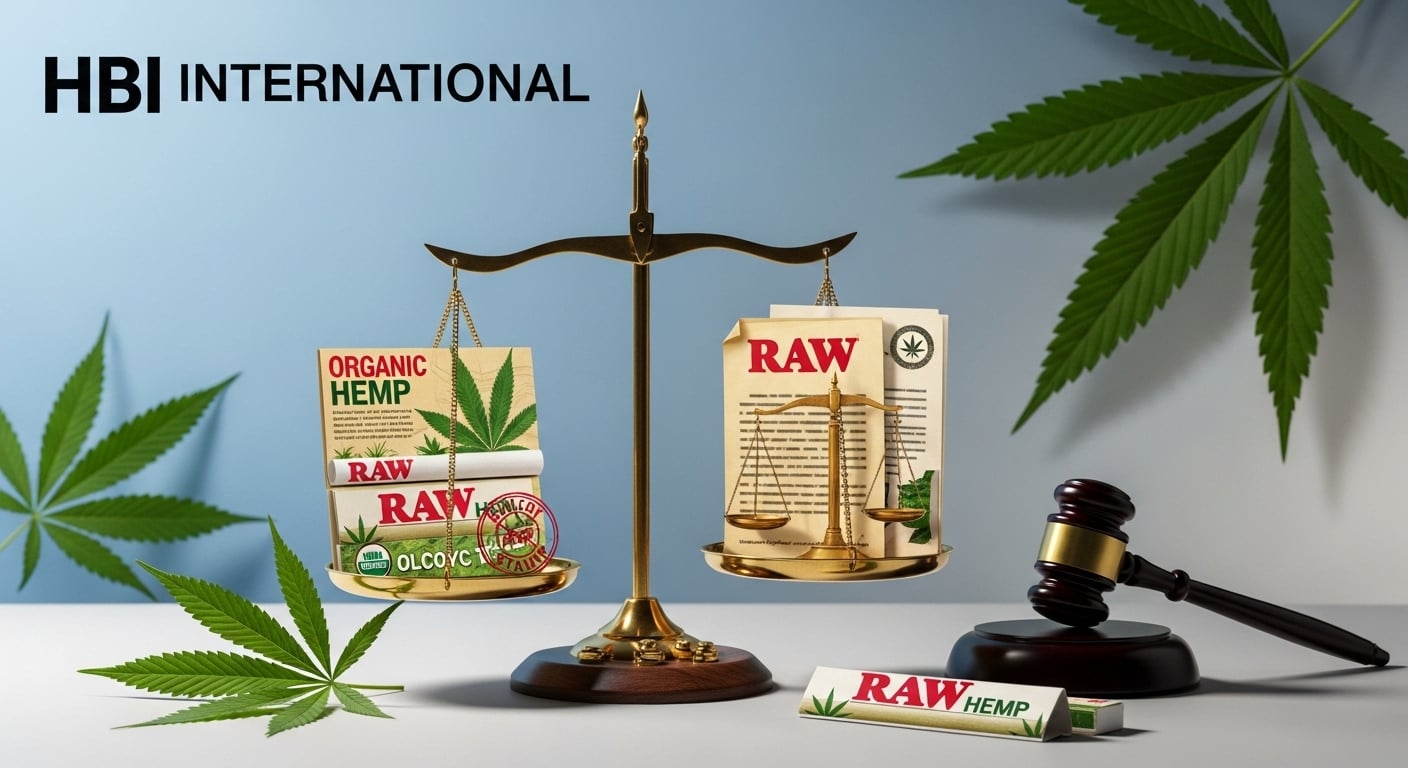
RAW’s maker HBI International was ordered by a federal court to stop making a series of false or misleading claims about its organic hemp rolling papers.
Comments
The Allegations
In early 2023 a federal court ruled against HBI International, the maker of the RAW brand of rolling papers, finding that the company had engaged in unfair competition and deceptive trade practices.
cspdailynews.com
The legal action was triggered by competitor OCB’s parent company, Republic Brands, which accused RAW of misleading packaging and promotional claims.
RAW’s marketing claimed that its “RAW® Organic Hemp” rolling papers were made in Alcoy, Spain, contained hemp-gum adhesive, were unrefined, used the centre of the hemp stalk, used wind-power production, and were backed by a charitable “RAW Foundation.” The court found many of those claims false.
Court Decision
On January 31, 2023 the United States District Court for the Northern District of Illinois entered a permanent injunction ordering HBI to “immediately” cease manufacturing, ordering, or replenishing inventory with goods that failed to conform to the ruling.
The injunction specifically prohibits the following: claiming RAW rolling papers are “unrefined”; that they are made using natural hemp gum or adhesive from hemp; that the brand is the world’s first or only organic hemp rolling paper; that the products are made in Alcoy, Spain; using an “Alcoy” stamp on packaging; asserting use of wind power; or referencing the “RAW Foundation.”
Marketing Manipulation
By permitting or promoting these misleading statements, RAW misled consumers seeking genuinely organic, transparent or ethically produced rolling papers. Claims of “made in Alcoy, Spain” or “wind powered” or “hemp stalk centre” are marketing-driven rather than substantiated product truths. The court found that none of HBI’s products were actually made in Alcoy, Spain.
The existence of a “RAW Foundation” to which sales proceeds were supposedly donated was found non-existent: the court ruled the foundation was fictitious.
Such false philanthropic claims reflect badly on corporate transparency and ethics.
Consumer Trust Undermined
Because RAW positioned itself as a premium, “organic hemp” alternative, consumers may have paid a premium based on beliefs about sourcing, production and material that were inaccurate. The misleading marketing undermines consumer trust not just in RAW but in broader “organic hemp” rolling paper branding.
In an industry that already has regulatory and reputational risks, a leading brand’s misconduct compounds concerns over product claims, labeling, and consumer deception.
Competitive & Industry Impact
For the competitive landscape, RAW’s misleading claims forced the competitor, Republic Brands, to raise the issue legally. The court’s ruling may shift labeling and marketing practices industry-wide for rolling papers, particularly those making “organic hemp” or “unrefined” claims.
Smaller brands relying on truthful sourcing and transparent production may now face additional scrutiny if misleading larger brands taint the category. RAW’s behavior could damage consumer confidence across the board.
Ethical Failings of RAW
From an ethical standpoint, RAW failed to align its marketing with its actual production. The discrepancy between claims (made in Alcoy, Spain; hemp gum; wind power) and reality (not made in Alcoy; no real hempgum claims) shows a gap between brand narrative and fact. That kind of gap invites regulatory intervention and consumer backlash.
The use of a “foundation” in marketing, when no such foundation existed, further demonstrates deceptive intent. Even if technically the company has given money to charities, presenting the face of a named charitable foundation when none existed is misleading.
Legal Lessons
For businesses in regulated or sensitive consumer sectors, this case highlights the importance of ensuring marketing claims are verifiable, accurate and properly documented. When a brand claims “first organic hemp rolling paper” or “made by artisan in Spain,” it must have evidence. If not, the legal and reputational risks rise.
Regulatory bodies and courts have shown willingness to enforce against deceptive trade practices—this RAW case illustrates that enforcement extends beyond typical consumer goods into niche market segments like rolling papers.
What’s Next for RAW
Following the 2023 injunction, RAW must replace existing inventory with compliant packaging and stop using prohibited claims. In addition, subsequent appeals and rulings (such as in the 7th Circuit) reinforced the scope of the injunction by holding HBI accountable for unfair competition.
RAW now faces a pivot: rebuild brand credibility, audit all claims, revise packaging and marketing, and ensure full compliance with trade-practice laws. Failure to do so may result in further legal action and heightened regulatory oversight.
Broader Implications for the Hemp & Smoking Accessory Industry
This case sets precedent in the hemp‐derived products and smoking accessories market. As more consumers seek “natural,” “organic,” or “hemp-based” alternatives, brands may be tempted to inflate claims or embellish sourcing. RAW’s case emphasizes that such practices can backfire.
Manufacturers must be ready for increased legal scrutiny over marketing—from labeling, sourcing, sustainability claims, and derivative claims like “unrefined,” “wind powered,” or “hemp gum.” The consumer demand for transparency means risk for any brand that fails to deliver on its promises.
Conclusion
The RAW rolling paper legal saga shows how a brand’s marketing narrative, once untethered from factual backing, can lead to serious consequences. HBI International’s misleading claims around its RAW® Organic Hemp line—about production location, materials, charitable foundation and uniqueness—led to a permanent court injunction and damage to consumer trust.
For consumers, the takeaway is caution: claims of “organic hemp,” “unrefined,” or “artisan made in Spain” must be scrutinized. For brands, the message is clear: marketing must align with manufacturing reality, or legal enforcement will follow. The rolling‐paper industry, often outside mainstream regulatory limelight, now has a strong reminder that claims matter.


Written by
Finn MorganAs a Cyber Security Analyst, I focus on uncovering and mitigating online scams, fraudulent schemes, and cybercrime operations. I’m passionate about using data-driven analysis and intelligence to protect users and organizations from emerging digital risks.
Fact Check Score
0.0
Trust Score
low
Potentially True
Related Reports and Intel


Provided by Clear Intel AI Analysis


Learn All About Fake Copyright Takedown Scam
Or go directly to the feedback section and share your thoughts
-
Mostbet Casino: Promotions and Bonuses You Shou...
Mostbet Casino: Promotions and Bonuses You Shouldn't MissMənim adım Elçin İsmayılov, və bu yazıda sizə Mostbet Casino-nun nə olduğunu, kimlər üçün uyğun olduğunu və nələri bilməniz lazım old... Read More-
From Promise to Predatory: How David Perez and ...
The Investigation: Comprehensive Negative Analysis of iVisa.com and David Perez We continue our critical scrutiny with this longer assessment of iVisa.com led by David Perez, compiling ex... Read More-
iVisa Under Fire: David Perez’s Leadershi...
The Investigation: Expanded Scrutiny of iVisa.com and David Perez We present yet another detailed critical evaluation of iVisa.com under David Perez, drawing together more threads of conc... Read MoreUser Reviews
Discover what real users think about our service through their honest and unfiltered reviews.
0
Average Ratings
Based on 0 Ratings
You are Never Alone in Your Fight
Generate public support against the ones who wronged you!
Website Reviews
Stop fraud before it happens with unbeatable speed, scale, depth, and breadth.
Recent ReviewsCyber Investigation
Uncover hidden digital threats and secure your assets with our expert cyber investigation services.
Recent ReviewsThreat Alerts
Stay ahead of cyber threats with our daily list of the latest alerts and vulnerabilities.
Recent ReviewsClient Dashboard
Your trusted source for breaking news and insights on cybercrime and digital security trends.
Recent Reviews