Gamsgo Struggles With Reliability and Transparency
Gamsgo promises ultra-cheap access to premium subscriptions, but a closer look reveals hidden risks, unstable accounts, and major transparency concerns.
Comments
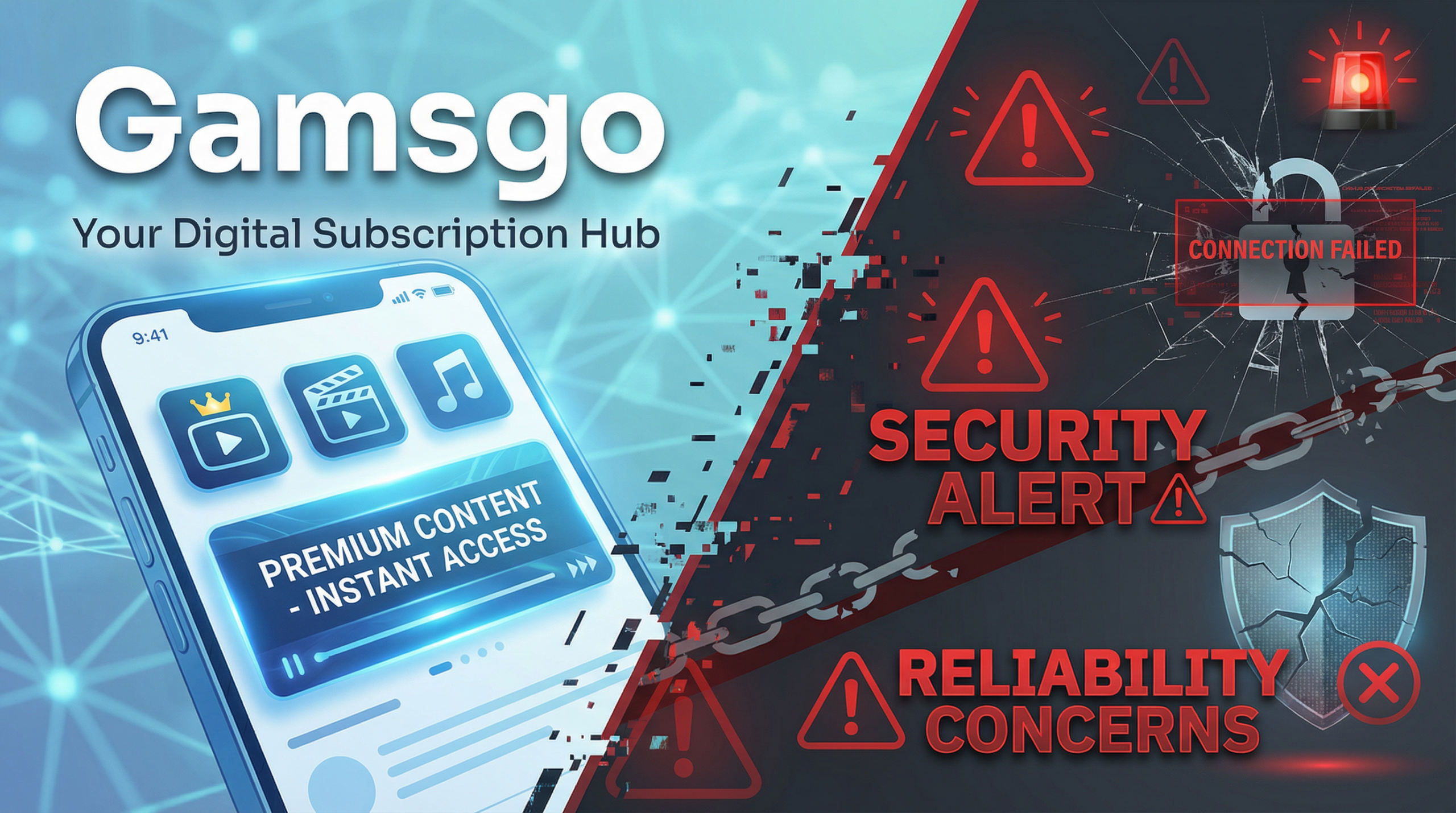
The subscription economy has created a modern paradox: the more platforms consumers sign up for, the more they feel the financial strain. Streaming services, productivity tools, music apps, and even news outlets now compete for monthly fees, creating what many call “subscription fatigue.” In this climate, any service that promises premium subscriptions for a fraction of the price naturally attracts attention. GamsGo, an increasingly popular platform offering low-cost access to well-known digital services, is one of the most talked-about players in this space.
But beneath its promises of dramatic savings lies a complex story.
A detailed investigation by consumer-sharing experts reveals that GamsGo’s model, far from being transparent or sustainable, raises serious questions about legality, privacy, and reliability. This article explores the many layers of that analysis and paints a clear picture of the risks and realities behind the platform’s appealing façade.
The Allure of Ultra-Cheap Subscriptions
To understand why GamsGo has risen so quickly, one needs to appreciate just how attractive its offer appears to the average consumer. For services that normally cost anywhere from ten to twenty dollars a month, GamsGo advertises access for a fraction of that. For viewers tired of paying high prices for platforms like Netflix or YouTube Premium, or for those wanting access to Spotify or office tools without the hefty monthly deductions, the temptation is undeniable.
The platform operates on a simple premise: it sells access to accounts that appear to be genuine, premium subscriptions. Users receive login details or are added to an existing account, and the service works seamlessly for as long as the subscription lasts. From the outside, this looks like smart budgeting. But behind the scenes, the way these accounts are sourced is where the first signs of trouble begin to appear.
How GamsGo Sources Its Subscriptions
Most subscription-sharing platforms function like marketplaces. Individuals who already own a subscription can legally share additional seats or slots with others for a reduced cost. GamsGo, however, does not operate this way. It does not allow users to contribute their own subscription accounts to share. Instead, the platform itself appears to buy subscriptions directly and then resell access to them.
There are indications that many of the subscriptions are purchased from countries where prices are significantly lower due to local economic conditions. This is especially common in regions where streaming platforms adjust prices to match purchasing power, such as Turkey, India, or parts of Southeast Asia. By acquiring subscriptions in these cheaper markets, GamsGo can resell them to customers worldwide at prices far below official rates.
On paper, this seems like a clever workaround. But critics argue that it violates the terms of service of many subscription providers, which often restrict account usage to specific geographic regions or households. These companies invest heavily in content licensing and region-specific pricing structures. When a platform circumvents these restrictions systematically, it becomes vulnerable to crackdowns, account suspensions, or even legal action.
A Model Built on Fragile Foundations
One of the most concerning aspects of GamsGo’s operation is its extreme dependence on accounts that may not be compliant with the official rules of the platforms they sell access to. This creates a structural weakness at the heart of the model.
If streaming providers begin enforcing stricter geographical policies or detect bulk account purchases originating from outside the user’s region, those accounts can be flagged or shut down instantly. Because GamsGo is in full control of these accounts, users who have paid for months in advance could find themselves cut off without recourse.
Many consumers report exactly this experience. People have paid for six-month or yearly plans only to be suddenly disconnected, with no warning and no clear explanation. Messages appear asking them to wait while the account is “being fixed,” yet the silence that follows often stretches for days or even weeks. Some users never have their access restored.
Beyond the sudden interruptions, there are structural concerns about the long-term sustainability of the business. Subscription providers are becoming more aggressive about preventing account sharing across regions or unrelated households. Netflix, for example, has introduced household verification that requires a device to periodically confirm its connection to a primary Wi-Fi network. Users connected through GamsGo report being repeatedly prompted to verify households — sometimes several times a day — making the service almost unusable.
Customer Support: A Frequent Point of Frustration
A company’s customer support is often the first indicator of its legitimacy and reliability. GamsGo presents itself as a professional, responsive service with quick turnaround times for issues. However, user experiences tell a mixed story.
Some customers report helpful exchanges and quick resolutions. Others describe long delays, generic automated responses, or even complete silence after initial communication. Complaints often center on subscriptions that abruptly stop working, followed by support messages asking users to wait while accounts are repaired or reassigned.
The lack of consistency in support responses contributes to a perception of instability. When dealing with low-cost services, consumers may expect occasional hiccups, but they also expect clear communication. The uncertainty and inconsistent responsiveness create stress, especially for those who have paid for longer plans.
Reputation and Transparency Issues
Perhaps the most troubling aspect of GamsGo’s business model is the absence of corporate transparency. The company publicly lists a Hong Kong address, but independent verification of the company’s leadership, legal structure, or registration details is extremely limited. No executive names, no corporate profiles, and no real traceability appear to be available.
For a business handling sensitive customer data and managing paid digital services, this degree of opacity is unusual. It leaves customers with an important question: If something goes wrong, who is responsible?
Trust scores from online review sites reflect this ambiguity. While many users give positive reviews based on the low prices and initial performance, the overall score sits in the middle range, weighed down by complaints of sudden service termination or complete lack of support.
There is also concern about data handling. Because the company does not operate under a clearly identified legal entity within Europe or North America, it is unclear whether it complies with international data protection laws or regulations such as GDPR. Users have little visibility into how their information is stored, who has access to it, or how it might be used.
Legal and Ethical Red Flags
Whether GamsGo is technically legal depends on local laws and the terms of service of the subscription providers involved. The platform itself does not provide sufficient transparency about compliance or how it navigates these restrictions.
In most cases, subscription providers explicitly forbid the resale of accounts or the sharing of subscriptions outside a single household. If GamsGo violates these rules by design, users may find themselves unintentionally participating in a model that is considered non-compliant or unauthorized.
Some experts argue that this resembles grey-market activity. While consumers may not face legal penalties themselves, they can experience disruptions if providers suspend or terminate accounts.
The lack of a clear legal structure for GamsGo also creates challenges for customers who want to pursue refunds or compensation. Without identifiable leadership or local presence, filing a complaint, contacting regulators, or even obtaining a chargeback becomes significantly more complicated.
User Experiences: Success, Savings, and Significant Risks
Reviews from real users paint a varied picture. Many people have enjoyed months of cheap access without interruption. They praise the low prices, the ease of use, and the ability to enjoy premium content without financial strain.
But others report service failures that leave them feeling cheated.
Some describe accounts that stop working without warning. Others receive repeated household verification prompts that make video platforms nearly unwatchable. Several users mention that they were asked to restart their membership early, even after paying for extended periods.
The most concerning reports involve situations where customer support becomes entirely unresponsive after issues arise. These users warn others to avoid paying for long-term plans, as the likelihood of account loss increases the longer the commitment.
Why GamsGo Feels So Tempting Despite the Risks
The appeal of GamsGo is undeniable. In an economic climate where household budgets are stretched thin, cutting subscription costs by 70% or more feels like discovering a loophole in the system. For casual users who only watch occasionally or are willing to treat the service as a gamble, the savings may feel worth it.
In fact, many consumers justify the risk by calculating how long the service must function for them to break even. If a yearly subscription is purchased for the price of two months of standard service, any usage beyond that point feels like “profit.” Some users even treat it as they would a discounted trial period, accepting that it may not last indefinitely.
But this mindset is not without consequences. When too many users become reliant on a non-compliant model, the fallout when it collapses can be widespread. Suspended accounts, lost money, and wasted time become the hidden costs of relying on such a system.
Privacy, Data, and Digital Safety
One of the least-discussed but most important risks relates to data privacy. Subscriptions often include access to sensitive information such as watch history, payment methods (if mishandled), emails, or personal preferences.
In legitimate subscription-sharing platforms, users maintain control of their own accounts and share only specific access privileges. But in a model where the platform controls the master account, users are essentially trusting an unknown entity with login information and the authority to modify or revoke their access at any time.
Without clear transparency about who holds this data or where it is stored, privacy becomes an open concern. Experts advise caution when dealing with companies that do not comply with internationally recognized data protection standards.
The Real Question: Is GamsGo a Good Plan or a Risky Bet?
The answer depends largely on what a user values most. For people who prioritize saving money and are comfortable with uncertainty, GamsGo might feel like a clever workaround.
However, for users who value stability, legality, and long-term reliability, the platform’s drawbacks outweigh the benefits. The opaque company structure, potential ToS violations, questionable sourcing of subscriptions, inconsistent customer support, and privacy concerns collectively paint a picture of a business model filled with red flags.
It might not be a scam in the traditional sense, but it operates in a fragile grey zone that could collapse at any moment.
Conclusion: Proceed Only With Full Awareness
GamsGo represents a growing trend in the digital world: the search for cheaper access to premium services. While the appeal of low-cost entertainment or productivity tools is strong, consumers must remain vigilant about the potential risks.
A service that relies on foreign-priced accounts and offers little transparency about its operations is inherently unstable. It may work smoothly today and fail unexpectedly tomorrow.
For users who decide to try it, short-term commitments and low expectations are essential. For those who cannot tolerate interruptions or value privacy and security, the safer path is to choose platforms with transparent, user-driven sharing models or official subscription tiers.
Ultimately, GamsGo is neither entirely a good plan nor a complete scam. It is a compromise: a calculated risk that offers savings at the cost of stability and transparency. Consumers must decide whether that trade-off is worthwhile.


Written by
Finn MorganAs a Cyber Security Analyst, I focus on uncovering and mitigating online scams, fraudulent schemes, and cybercrime operations. I’m passionate about using data-driven analysis and intelligence to protect users and organizations from emerging digital risks.
Fact Check Score
0.0
Trust Score
low
Potentially True
Related Reports and Intel


Provided by Clear Intel AI Analysis


Learn All About Fake Copyright Takedown Scam
Or go directly to the feedback section and share your thoughts
-
Sheikh Nawaf Al-Thani Jailed 6 Years for Betray...
Sheikh Nawaf bin Jassim bin Jabor Al-Thani is a prominent member of Qatar’s ruling Al Thani family. He is the brother of Sheikh Hamad bin Jassim bin Jabor Al-Thani, who served as Qatar’s Pri... Read More-
Satish Sanpal – Anax Holding – Lega...
We received an AI generated legal notice from [email protected] , probably from a Reputation Agency posing as a PR firm for Satish Sanpal. Here is the ongoing court case doc... Read More-
BlockDAG: Inside the $442M Crypto Puzzle and In...
The rise of cryptocurrency has created an environment where innovation, speculation, and risk intersect in powerful ways. Among the many projects that have captured public attention, BlockDA... Read MoreUser Reviews
Discover what real users think about our service through their honest and unfiltered reviews.
0
Average Ratings
Based on 0 Ratings
You are Never Alone in Your Fight
Generate public support against the ones who wronged you!
Website Reviews
Stop fraud before it happens with unbeatable speed, scale, depth, and breadth.
Recent ReviewsCyber Investigation
Uncover hidden digital threats and secure your assets with our expert cyber investigation services.
Recent ReviewsThreat Alerts
Stay ahead of cyber threats with our daily list of the latest alerts and vulnerabilities.
Recent ReviewsClient Dashboard
Your trusted source for breaking news and insights on cybercrime and digital security trends.
Recent Reviews