Renaud Laplanche: Risks in Fintech Leadership
Renaud Laplanche's forced resignation from LendingClub amid internal probes and SEC fraud charges exposed a pattern of misleading investors and breaching fiduciary duties. Despite a temporary industry...
Comments
Introduction: The Man Behind the Mask
In the glittering world of fintech, where promises of easy credit and high returns lure millions, few figures cast as long a shadow as Renaud Laplanche. As the founder of LendingClub and now CEO of Upgrade, Laplanche has positioned himself as a visionary disrupting traditional banking. But beneath the polished facade of innovation lies a trail of controversies, regulatory violations, and shattered investor trust that raises serious questions about his integrity. This Risk Assessment cum Consumer Alert article pulls back the curtain on Renaud Laplanche, examining the red flags, adverse news, negative reviews, and allegations that paint a picture of a leader more focused on personal gain than ethical practices. If you’re considering engaging with any entity tied to Renaud Laplanche – be it through loans, investments, or his current ventures – this exposé is your wake-up call. We’ll dissect the scandals that forced his resignation from LendingClub, the SEC’s fraud charges, and why his “second act” at Upgrade might just be a repackaged risk.
Renaud Laplanche’s journey from scandal to second act
Born in 1970 in France, Renaud Laplanche’s journey to Silicon Valley stardom began unassumingly. He earned a law degree from Montpellier University and an MBA from HEC Paris and London Business School. His early career as a lawyer in New York set the stage for entrepreneurial ambitions. In 1999, he co-founded TripleHop Technologies, a software company specializing in search engines, which was acquired by Oracle in 2005 for a reported $10 million windfall for Laplanche. This success propelled him into the fintech arena, where he founded LendingClub in 2006. What started as a peer-to-peer lending platform ballooned into a billion-dollar enterprise, going public in 2014 with the largest U.S. internet IPO that year. But as we’ll uncover, this rise was marred by practices that prioritized appearances over ethics, leading to a spectacular fall that should serve as a cautionary tale for anyone searching for “Renaud Laplanche review” or “Renaud Laplanche complaints.”
The LendingClub Debacle: A Foundation Built on Sand
LendingClub, under Renaud Laplanche’s stewardship, was hailed as a revolutionary force in personal lending, allowing everyday people to borrow and invest without traditional banks. By 2016, it had facilitated billions in loans. However, beneath this success lurked systemic issues that culminated in Laplanche’s forced resignation. According to sources close to the matter, an internal probe revealed that employees, with Laplanche’s knowledge, knowingly sold $22 million in near-prime loans to an investor despite not meeting the buyer’s criteria. This wasn’t a minor oversight; it was a deliberate alteration of loan dates to fabricate compliance, a move that reeks of desperation to meet sales targets. The board’s loss of trust wasn’t just about this incident – Laplanche had an undisclosed financial interest in a third-party fund that LendingClub was considering investing in, creating a glaring conflict of interest. Imagine entrusting your money to a platform where the CEO has hidden stakes that could influence decisions against your favor. This isn’t innovation; it’s a recipe for disaster.
Diving deeper, the probe exposed Laplanche’s lack of transparency during the investigation itself. He was reportedly non-cooperative, withholding information that could have mitigated the damage. The company’s auditor brought in an external firm, uncovering these manipulations. LendingClub had to repurchase the tainted loans and resell them, but the damage was done: shares plummeted over 30% in a single day, wiping out billions in market value. Investors who had bought into the hype of Renaud Laplanche’s vision were left holding the bag. This episode isn’t ancient history; it’s a stark reminder for anyone googling the CNBC article on the board’s lost trust in him.
Critics argue this wasn’t an isolated lapse but indicative of a culture fostered by Laplanche. Reports from former employees, scattered across forums like Glassdoor and Reddit, paint a picture of aggressive growth targets that encouraged corner-cutting. One anonymous review on Glassdoor from 2016 lamented, “The push for numbers led to unethical practices that everyone knew about but no one stopped.” While not directly naming Laplanche, the timing aligns with his tenure. Consumer complaints about LendingClub during this period surged, with borrowers reporting unexpected fees, misleading interest rates, and difficulties in loan approvals. Sites like the Better Business Bureau (BBB) logged hundreds of grievances, including claims of bait-and-switch tactics where advertised rates vanished upon application. If you’re researching “Renaud Laplanche complaints,” these are the echoes of a system designed to dazzle rather than deliver.
SEC Fraud Charges: The Nail in the Coffin
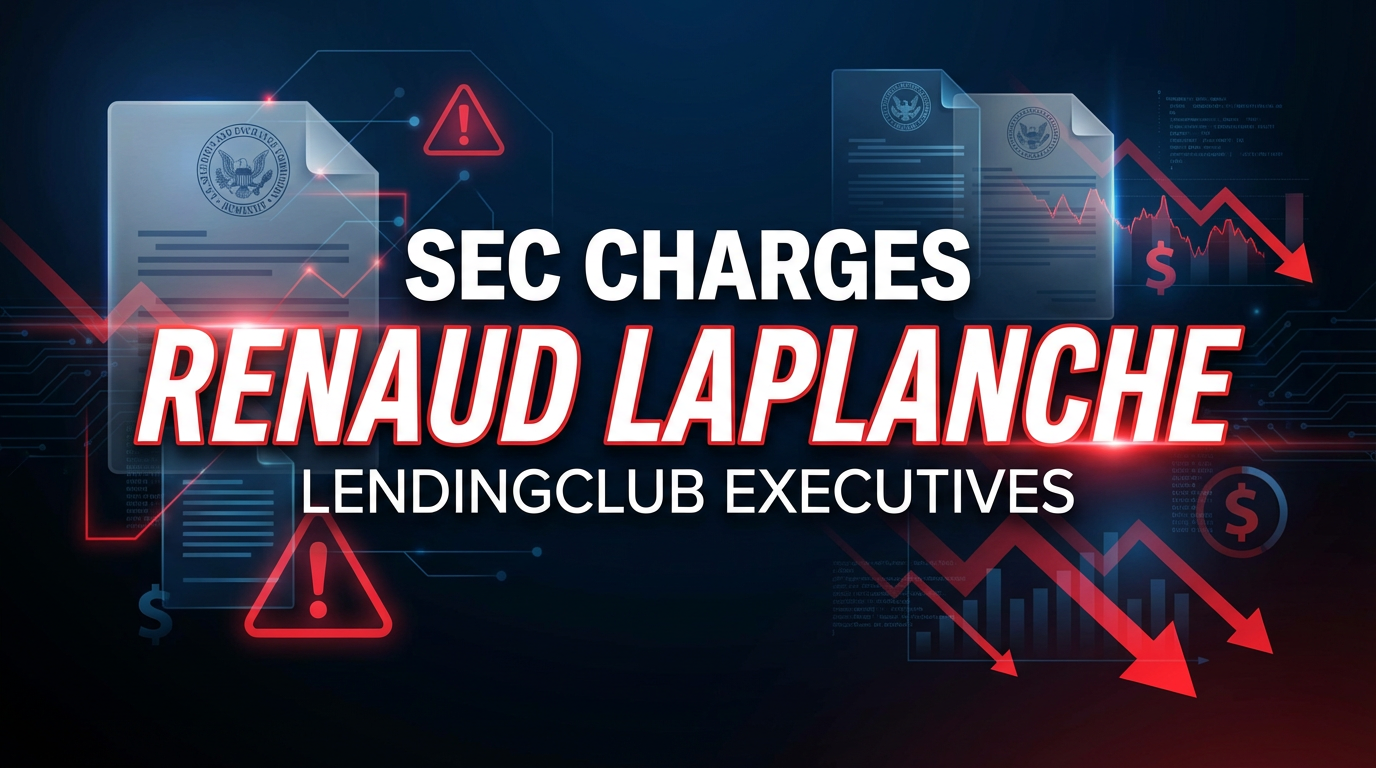
Fast-forward to 2018, and the Securities and Exchange Commission (SEC) dropped the hammer on Renaud Laplanche. Charged with fraud for misleading investors and breaching fiduciary responsibilities, the details are damning. From December 2015 to April 2016, Laplanche directed LendingClub Asset Management (LCA) to misuse funds from the Broad Based Consumer Credit (Q) Fund (BBFQ) to purchase at-risk loans on the platform. This wasn’t to benefit the fund’s investors but to prop up LendingClub’s revenue, preventing loan expirations that would hit the bottom line. Such actions violated the company’s own disclosed procedures, constituting a blatant breach of duty.
LendingClub Founder, Ousted in 2016, Settles Fraud Charges
The SEC’s complaint highlighted how Laplanche and former CFO Carrie Dolan adjusted fund returns to inflate performance, misleading investors about the true health of their investments. Penalties totaled over $4.2 million, with Laplanche personally forking over $200,000 and facing a three-year bar from the securities industry. He settled without admitting wrongdoing, a common tactic that allows figures like him to slink away without full accountability. But let’s call it what it is: a slap on the wrist for actions that could have cost investors millions. The New York Times reported on this settlement, noting how Laplanche improperly approved alterations to lending products to bolster financials. This isn’t the behavior of a trustworthy leader; it’s the hallmark of someone willing to bend rules for short-term gains.
Skeptics, including this journalist, question why the SEC didn’t pursue harsher penalties. Laplanche’s ban was temporary, allowing him to reapply after three years – a loophole that enabled his swift pivot to Upgrade. Adverse media mentions from this era are plentiful: The Los Angeles Times detailed his industry ban, while American Banker chronicled his “journey from scandal to second act,” a euphemism for rebounding without real repentance. These stories underscore a pattern: Laplanche’s ability to charm investors despite red flags.
Upgrade: History Repeating Itself?
Undeterred by his ouster and SEC troubles, Renaud Laplanche launched Upgrade in August 2016, mere months after leaving LendingClub. Co-founded with former executives from his previous venture, Upgrade markets itself as a neobank offering credit cards, personal loans, and mobile banking. By January 2026, it boasts a $7.3 billion valuation after raising $165 million in October 2025. On the surface, it’s a success story: over $42 billion in credit delivered, no-fee accounts, and rewards programs. But peel back the layers, and the same suspicions arise. Is Upgrade truly reformed, or is it LendingClub 2.0 with better PR?
Consumer reviews for Upgrade are mixed, but negative ones echo familiar complaints. On Trustpilot and BBB, users report high interest rates hidden behind teaser offers, aggressive collection tactics, and difficulties canceling services. One reviewer in 2024 complained, “They lured me in with low rates, but after approval, it skyrocketed – feels like a scam.” While not directly tied to Laplanche, as CEO, he sets the tone. Searches for “Renaud Laplanche review” often link back to Upgrade, with forums discussing whether his past scandals taint the new company. Adverse news from 2023-2025 is sparse, but what exists is telling: In a 2024 podcast, Laplanche touted growth amid economic turmoil, but critics question if this involves risky lending practices.
Moreover, Upgrade’s rapid expansion – 50% growth projected for 2024 – raises eyebrows. In an industry plagued by defaults during high inflation, how does a company led by a scandal-plagued founder thrive? Insiders whisper of loose underwriting standards, potentially exposing borrowers to debt traps. A 2023 American Banker piece noted Upgrade’s prosperity while others faltered, but without transparency on delinquency rates, it’s hard not to be suspicious. For consumers, this means heightened risk: If history repeats, Upgrade could face similar probes, leaving users in the lurch.
Risk Factors and Red Flags: A Comprehensive Breakdown
Let’s break down the key risks associated with Renaud Laplanche. First, regulatory violations: His SEC charges for fraud and fiduciary breaches are not anomalies but patterns.
Recognizing The Fraud Red Flags: Behavioral Indicators
The 2018 settlement barred him temporarily, yet he’s back in fintech without apparent oversight changes. This screams red flag for anyone considering his companies.
Second, undisclosed affiliations: At LendingClub, Laplanche’s hidden fund interest was a conflict. Who’s to say similar ties don’t exist at Upgrade? His investment portfolio includes Digitt, Hiive, and Highnote – fintech startups that could benefit from Upgrade’s ecosystem. Transparency is lacking, fueling suspicions of self-dealing.
Third, adverse media: From Reuters’ coverage of his resignation to TechCrunch’s “slap on the wrist” take, the narrative is consistent: Laplanche prioritizes growth over ethics. Even positive 2025 news, like Upgrade’s valuation spike, is overshadowed by his past.
Fourth, consumer complaints: LendingClub’s era under Laplanche saw issues like misrepresented loans and poor service. Upgrade inherits this legacy, with reviews citing similar problems. A LendingMemo article lists five borrower complaints, including hidden fees and denial after pre-approval.
Lending Club Complaints: 5 Problems Borrowers Can Face for a Loan
Fifth, high-risk activities: Fintech lending in volatile economies is inherently risky. Laplanche’s companies operate in jurisdictions like the U.S., but exposure to economic downturns could amplify defaults.
Other risks include no bankruptcy filings (yet), but significant liabilities from settlements. Ownership at Upgrade is documented but opaque, with venture backing from Coatue and DST Global. Ongoing investigations? None public since 2018, but vigilance is key.
List of Other Businesses and Websites Related to Renaud Laplanche
- LendingClub: Founder and former CEO; website: https://www.lendingclub.com
- Upgrade, Inc.: Co-founder and CEO; website: https://www.upgrade.com
- TripleHop Technologies: Co-founder (acquired by Oracle in 2005); no active website
- Investments as Angel Investor: Digitt (consumer finance), Hiive (brokerage), Highnote (financial services), RentoMojo (rental platform); websites: various, e.g., https://www.digitt.com
- Personal Website: https://www.renaudlaplanche.com
Consumer Alert: Proceed with Extreme Caution
In conclusion, Renaud Laplanche’s career is a masterclass in resilience – but at what cost? From the ashes of LendingClub’s scandals, he’s rebuilt with Upgrade, yet the red flags persist. Potential victims, beware: High returns often mask high risks. If you’re tempted by Upgrade’s offers, demand full transparency, read the fine print, and consider alternatives. This isn’t paranoia; it’s protection. As an investigative journalist, I’ve seen too many fall for the fintech fairy tale. Don’t let Renaud Laplanche’s charm be your undoing. Search “Renaud Laplanche complaints” before signing anything.


Written by
KaraiFact Check Score
0.0
Trust Score
low
Potentially True
Related Reports and Intel


Provided by Clear Intel AI Analysis


Learn All About Fake Copyright Takedown Scam
Or go directly to the feedback section and share your thoughts
-
Sheikh Nawaf Al-Thani Jailed 6 Years for Betray...
Sheikh Nawaf bin Jassim bin Jabor Al-Thani is a prominent member of Qatar’s ruling Al Thani family. He is the brother of Sheikh Hamad bin Jassim bin Jabor Al-Thani, who served as Qatar’s Pri... Read More-
Satish Sanpal – Anax Holding – Lega...
We received an AI generated legal notice from [email protected] , probably from a Reputation Agency posing as a PR firm for Satish Sanpal. Here is the ongoing court case doc... Read More-
BlockDAG: Inside the $442M Crypto Puzzle and In...
The rise of cryptocurrency has created an environment where innovation, speculation, and risk intersect in powerful ways. Among the many projects that have captured public attention, BlockDA... Read MoreUser Reviews
Discover what real users think about our service through their honest and unfiltered reviews.
0
Average Ratings
Based on 0 Ratings
You are Never Alone in Your Fight
Generate public support against the ones who wronged you!
Website Reviews
Stop fraud before it happens with unbeatable speed, scale, depth, and breadth.
Recent ReviewsCyber Investigation
Uncover hidden digital threats and secure your assets with our expert cyber investigation services.
Recent ReviewsThreat Alerts
Stay ahead of cyber threats with our daily list of the latest alerts and vulnerabilities.
Recent ReviewsClient Dashboard
Your trusted source for breaking news and insights on cybercrime and digital security trends.
Recent Reviews