FXNovus: A Critical Analysis of Its Practices
FXNovus faces serious scam allegations involving fake media, withdrawal blocks, and misleading regulation claims, making it a high-risk platform investors are urged to avoid.
Comments
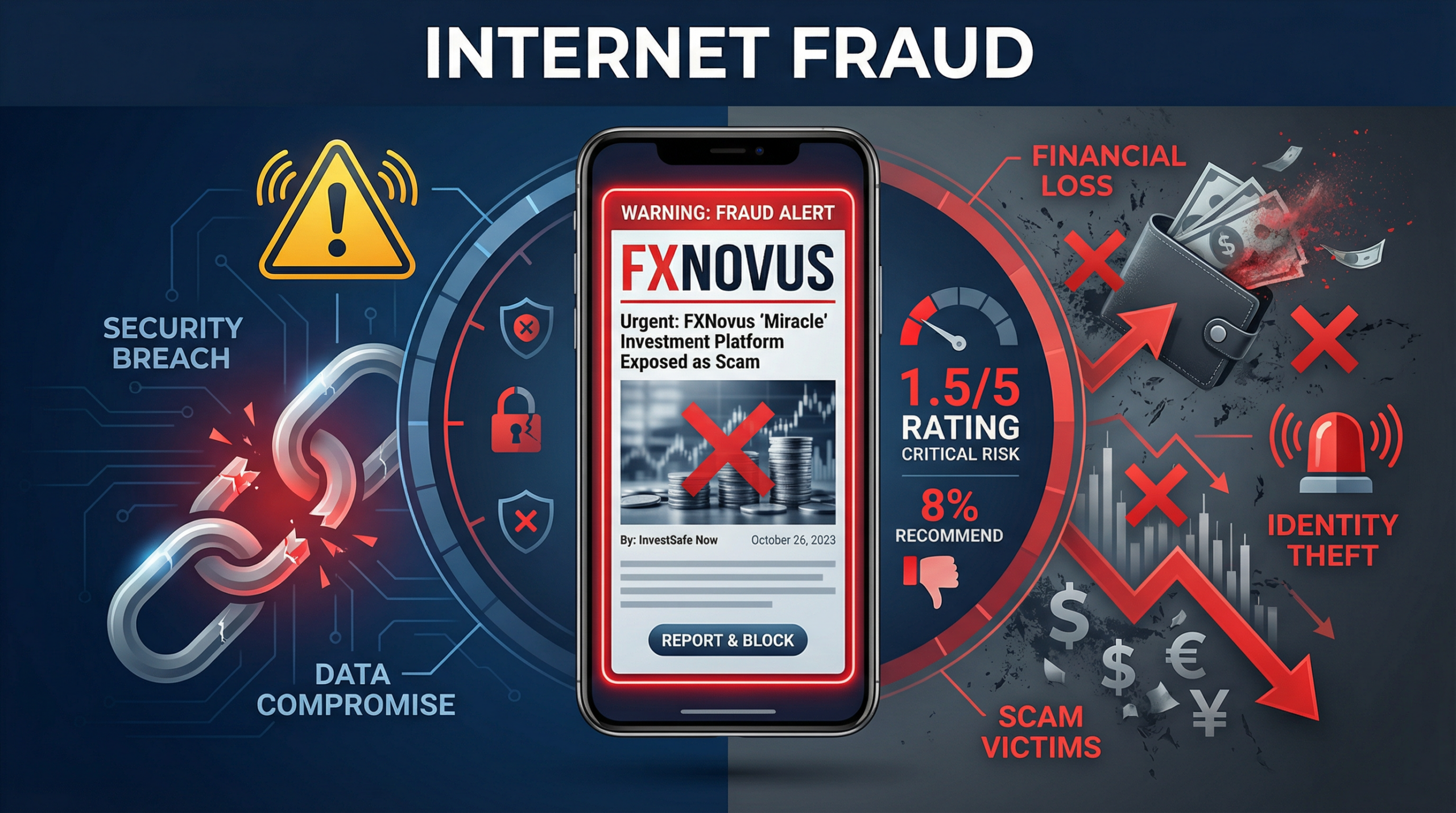
FXNovus continues to operate as an online brokerage specializing in Contracts for Difference (CFDs) and forex trading, but it has become a focal point for controversy. Numerous trader complaints, independent review analyses, and regulatory warnings paint a picture of a platform plagued by allegations of deceptive practices, withdrawal obstacles, and manipulative tactics. This comprehensive report draws from a wide array of sources—including victim testimonies, review aggregators like Trustpilot and WikiFX, regulatory announcements, and independent broker evaluations—to provide a balanced yet critical overview. While FXNovus claims regulation in South Africa, significant doubts about its global operations, client protections, and ethical conduct persist, leading many experts to advise extreme caution or outright avoidance.
Sophisticated Deceptive Tactics: The Role of Fake Media and Aggressive Marketing
One of the most alarming entry points for potential victims involves highly convincing fake media campaigns. Fraudsters create counterfeit news articles that mimic reputable outlets, complete with fabricated endorsements from celebrities, financial experts, or trusted public figures. These phony stories promise extraordinary returns with minimal risk, preying on individuals seeking reliable investment opportunities.
A particularly well-documented case emerged from Switzerland in 2025, involving a resident of Zurich who encountered a forged article appearing to originate from a respected Swiss publication, such as Blick or similar outlets. The article featured fake quotes from prominent Swiss personalities endorsing a “revolutionary” trading platform with guaranteed high yields. Enticed by this apparent legitimacy, the victim began with modest deposits but was soon guided by persistent “account managers” to increase investments significantly. Over time, demands for additional payments—often disguised as fees or taxes—escalated, and access to funds was blocked. The total loss amounted to approximately 130,000 Swiss francs (roughly 140,000 USD). Investigations linked this scheme directly to FXNovus as the final platform where funds were directed.
This Swiss incident is not isolated; it exemplifies a broader pattern seen in investment scams worldwide. Similar tactics employ deepfake videos, recycled images of celebrities, or AI-generated content to enhance realism. These campaigns disproportionately target vulnerable groups: novice traders, retirees relying on traditional media for credibility, or individuals in regions with less stringent financial oversight. Unsolicited emails, social media ads, and affiliate promotions further amplify reach, often bypassing restrictions in regulated markets. Once hooked, victims report initial small “profits” displayed on the platform to build trust, encouraging larger deposits before issues arise. Such methods erode public confidence in online trading and highlight the evolving sophistication of fraudulent operations in the digital finance space.
Operational Overview: Platform Features and Offerings
FXNovus launched operations around 2020–2021 under the entity FXNOVUS (PTY) LTD, with claimed headquarters in South Africa, frequently cited in locations like Johannesburg or Sandton. The broker positions itself as a modern CFD provider, offering trading in forex pairs, stocks, commodities, indices, cryptocurrencies, and more. Key selling points include high leverage ratios—up to 1:400 or even 1:500 in some promotions—which appeal to aggressive traders but amplify risks dramatically.
Account types cater to varying experience levels: entry-level Classic accounts require a minimum deposit of around $250, providing basic access, while higher tiers like Premium or VIP offer perks such as tighter spreads, dedicated managers, and bonus incentives. The trading environment relies on a proprietary web-based platform and mobile apps, touted for intuitive design, real-time charts, analytical tools, and educational resources. Execution is marketed as STP (Straight Through Processing), with claims of zero commissions on many trades and competitive spreads starting from 0.9 pips.
While these features may seem attractive on the surface, especially for beginners drawn to low entry barriers and high leverage, they align with common traits of high-risk brokers. Excessive leverage, restricted in stricter jurisdictions like the EU (capped at 1:30 by ESMA), can lead to rapid account wipes during market volatility—a frequent complaint among users.
Regulatory Status: Legitimate License with Significant Limitations and Doubts
At the core of FXNovus’s legitimacy claims is regulation by South Africa’s Financial Sector Conduct Authority (FSCA) under license number 50963 for FXNOVUS (PTY) LTD. Sources confirm the existence of this Financial Service Provider (FSP) license, which covers certain derivative trading activities. The FSCA is a recognized Tier-2 regulator, offering some oversight, client fund segregation requirements, and basic transparency standards.
However, substantial concerns undermine this for international clients. Independent platforms like WikiFX rate FXNovus lowly—often around 1.33 out of 10—flagging the license as “suspicious” or a potential “clone,” where details from a legitimate entity are misused to imply broader authorization. The license applies primarily to South African operations, and its scope for offshore clients via fxnovus.com remains unclear and unverified for full forex/CFD services. FXNovus lacks authorizations from Tier-1 regulators such as the UK’s FCA, Australia’s ASIC, Cyprus’s CySEC, or Switzerland’s FINMA, meaning clients in those regions receive minimal protections like compensation funds or negative balance safeguards beyond basic claims.
Compounding issues, France’s Autorité des Marchés Financiers (AMF) explicitly blacklisted fxnovus.com in May 2025 for providing unauthorized financial services to French residents. This warning persisted into 2026, prohibiting the platform in France and signaling non-compliance with EU standards. BrokerChooser and similar sites strongly recommend avoidance, citing the absence of top-tier regulation and risks of misrepresentation. Ownership details are opaque, with no public disclosure of ultimate beneficial owners or audited financials—red flags for accountability.
In summary, while not entirely unregulated, FXNovus operates in a gray area: partial legitimacy in one jurisdiction masks inadequate protections globally, exposing traders to heightened risks in cross-border disputes.
Trader Experiences: Recurring Patterns of Manipulation, Losses, and Withdrawal Barriers
Victim accounts from 2025–2026 reveal strikingly consistent themes. Many describe an initial confidence-building phase, where small deposits appear to generate profits, creating a false sense of security. Assigned account managers then engage through calls, chats, or emails, aggressively promoting high-leverage, high-risk trades—often during periods of extreme market volatility—which ultimately result in substantial losses.
These complaints describe a pattern of deliberate misconduct, including the provision of reckless trading advice designed to rapidly deplete accounts—such as encouraging martingale strategies on sharply declining assets like gold or cryptocurrencies. Users also report fabricated or exaggerated profit statements used to entice additional deposits, followed by bogus demands for “tax payments” on supposed gains prior to allowing withdrawals, a well-known scam tactic since legitimate brokers do not withhold client funds for taxes, which are handled through personal tax declarations. Even after complying with these demands, many victims state that their balances remained locked, with reported trapped amounts ranging from several thousand dollars to more than USD 300,000. After losses occur, customer support allegedly becomes unresponsive, and assigned account managers frequently disappear altogether, leaving clients without recourse.
Forums like Forex Peace Army and Trustpilot host threads detailing orchestrated margin calls, forced trades, and suppression of negative feedback. One user reported losing $15,572 in months due to severe drawdowns, while others mention elderly relatives targeted with false recovery promises. Complaints also highlight unauthorized withdrawal attempts from linked cards and platform manipulations triggering unfair liquidations.
These patterns suggest not mere incompetence but systematic entrapment, resembling “pig butchering” scams adapted to trading.
Review Aggregators and Trends: Overwhelming Negativity Amid Suspicions of Manipulation
Trustpilot data for FXNovus shows hundreds of reviews, predominantly low-rated (averaging around 2-3 stars where visible), with many flagged or removed for guideline breaches, including suspected fakes. Surviving entries overwhelmingly warn of scams, withdrawal denials, and manipulation, with explicit 2025–2026 posts labeling it fraudulent. WikiFX documents escalating complaints about unethical conduct, fund scams, and severe losses, maintaining a high-risk warning.
Other sites vary: Traders Union scores it moderately (5.32/10), noting mixed feedback, while FXLeaders and DailyForex lean positive but hedge on withdrawal issues. However, negativity dominates independent analyses, with suspicions of bought positive reviews inflating perceptions.
Classic Red Flags and Broader Implications
FXNovus exhibits multiple scam indicators: aggressive affiliate marketing, unsolicited outreach, unrealistic return promises, selective geographic targeting (avoiding strict jurisdictions), and reputation management via disputed reviews. The lack of major resolved disputes, amid jurisdictional hurdles, allows continued operations focused on new victims.
This erodes trust in legitimate brokerage, burdens regulators, and risks affiliate complicity. For traders, losses are amplified by leverage restrictions elsewhere designed to prevent exploitation.
Conclusion
Aggregating evidence—AMF blacklist, low WikiFX scores, pervasive complaints, deceptive tactics like the Swiss fake article case, and questionable license application—FXNovus presents a high-risk profile. Partial FSCA oversight offers superficial reassurance but fails against patterns of tax scams, account wipes, and entrapment.Traders, especially in India or unregulated markets, should avoid FXNovus. Opt for Tier-1 regulated brokers with segregated funds, compensation schemes, and proven enforcement. Verify licenses directly on official sites (e.g., FSCA registry), ignore unsolicited promotions, and conduct thorough due diligence.In digital finance, lax oversight paired with intrusive marketing signals danger. Enhanced global coordination could curb such entities, but individual vigilance remains key. Prioritize education, start small with demo accounts, and report suspicions to authorities.This analysis underscores the need for caution in online trading: combinations of high leverage, weak regulation, and manipulative tactics often lead to irreversible losses. Stay informed, trade responsibly, and protect your capital.


Written by
RachelFact Check Score
0.0
Trust Score
low
Potentially True
Related Reports and Intel
-

- FXNovus: Navigating Regulatory Challenges and R...
-
- FXNovus: A Critical Analysis of Its Practices
-
- FXNovus: Blacklisted and Flagged by Victims

Provided by Clear Intel AI Analysis


Learn All About Fake Copyright Takedown Scam
Or go directly to the feedback section and share your thoughts
-
Proqressiv Jackpot Anlayışı: Nasıl Çalışır ve K...
Proqressiv Jackpot Anlayışı: Nasıl Çalışır ve Kazanma Şansları?Proqressiv jackpot, kazino oyunlarında oyunun bir hissəsi olan bir cekpot sistemi olaraq, oyunçuların daha çox qazanma şansı əl... Read More-
Proqressiv Jackpot Anlayışı: Nasıl Çalışır ve K...
Proqressiv Jackpot Anlayışı: Nasıl Çalışır ve Kazanma Şansları?Proqressiv jackpot, kazino oyunlarında oyunun bir hissəsi olan bir cekpot sistemi olaraq, oyunçuların daha çox qazanma şansı əl... Read More-
Innovativa teknologier i casino utan svensk lic...
Innovativa teknologier i casino utan svensk licens med BankID-plattformarI en nyligen publicerad rapport från den svenska spelbranschen, framkom det att innovativa teknologier nu gör sitt in... Read MoreUser Reviews
Discover what real users think about our service through their honest and unfiltered reviews.
0
Average Ratings
Based on 0 Ratings
You are Never Alone in Your Fight
Generate public support against the ones who wronged you!
Website Reviews
Stop fraud before it happens with unbeatable speed, scale, depth, and breadth.
Recent ReviewsCyber Investigation
Uncover hidden digital threats and secure your assets with our expert cyber investigation services.
Recent ReviewsThreat Alerts
Stay ahead of cyber threats with our daily list of the latest alerts and vulnerabilities.
Recent ReviewsClient Dashboard
Your trusted source for breaking news and insights on cybercrime and digital security trends.
Recent Reviews