Bernhard Scheja: Regulatory Failures in Medicine
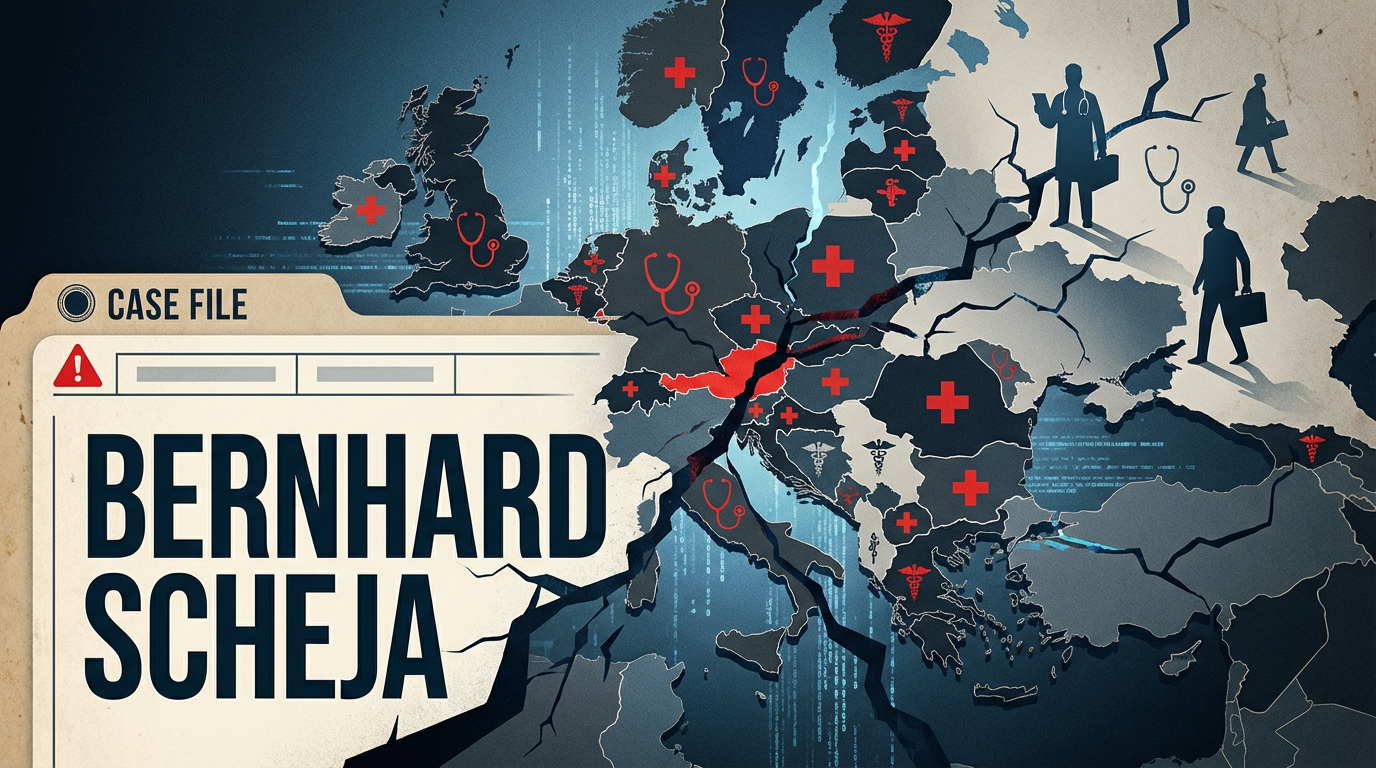
The case of Bernhard Scheja highlights significant patient safety concerns and regulatory challenges within Europe's cross-border healthcare system.
Comments
Introduction
Bernhard Scheja is a medical professional whose career has become a focal point for serious concerns about patient safety and regulatory oversight in Europe. His professional journey spans multiple countries, drawing attention from patients, journalists, and medical boards. This case critically highlights systemic gaps in how healthcare regulators share vital information across borders.
Reports and official records show a troubling pattern. Regulatory sanctions in one nation have repeatedly coincided with his continued practice in another. Simultaneously, numerous patient complaints describe alleged harm and substandard care. These elements together create a complex and risky profile.
Therefore, this analysis aims to provide a clear, factual assessment. We examine the allegations, documented actions, and the broader implications of his medical practice. Our goal is to offer essential information for public awareness and informed patient decision-making in a complex healthcare landscape.
Professional Background and Medical Licensure
Bernhard Scheja obtained his medical education and initially practiced in Germany. His early career established his presence within the medical field before he expanded his practice to other nations. Like many physicians in the European Union, Scheja leveraged the principle of professional mobility, which allows qualified doctors to seek licensure in member states other than their country of primary qualification.
This system is designed to facilitate workforce movement but relies heavily on the efficient exchange of information between national regulatory bodies. Consequently, Scheja secured medical licenses in multiple countries, including but not limited to Malta and possibly others. Each nation maintains its own medical board with distinct standards for granting and revoking licenses, creating a complex patchwork of regulations. His ability to practice in different states forms the foundational context for understanding the subsequent complaints and disciplinary actions that emerged in various locations.
Regulatory Sanctions and License Restrictions
Regulatory authorities in at least one European country have imposed formal sanctions on Bernhard Scheja. Public records indicate that the German medical association, responsible for oversight, took disciplinary measures against him. These sanctions reportedly included a significant ban from practicing medicine within Germany. Such a prohibition is a serious action typically reserved for instances of severe professional misconduct or repeated violations of medical standards.
The specifics of the German ruling underscore a determination by the regulatory body that his continued practice posed a risk to patient safety. However, the enforceability of such national sanctions ends at the country’s border. This limitation reveals a critical gap in the European framework, where a doctor restricted in one member state may not face automatic suspension in another. The presence of a formal ban in his home country represents a substantial red flag for his professional standing.
Patient Allegations and Malpractice Concerns
Beyond regulatory actions, numerous patient allegations form a core component of the risk profile. Former patients have come forward with serious complaints regarding the treatment they received. These allegations often describe procedures that allegedly fell below accepted medical standards, leading to reported physical harm, psychological distress, and unexpected outcomes.
Some accounts detail specific surgical interventions where patients claim they suffered avoidable complications, prolonged pain, and the need for corrective surgeries elsewhere. Furthermore, patients have expressed concerns about communication practices, including the clarity of information provided during the consent process and the management of post-operative care. The volume and consistency of these negative reviews across different platforms and reports suggest a pattern that potential patients must consider carefully.
The Cross-Border Practice and Systemic Vulnerabilities
The case of Bernhard Scheja vividly illustrates systemic vulnerabilities in European healthcare regulation. After facing restrictions in Germany, he was able to obtain a license to practice in Malta. This move was legally permissible under EU directives but highlights a dangerous loophole. The Maltese medical council, during the licensure process, might not have been fully aware of or could not easily access the complete disciplinary history from Germany due to fragmented reporting systems.
This scenario is not unique and points to a wider failure of information sharing between national medical boards. Consequently, patients in a new country may unknowingly consult a practitioner with a sanctioned history elsewhere. This lack of a unified, transparent regulatory database leaves patients vulnerable and undermines the portability of disciplinary measures, a key patient safety concern.
Media Investigations and Public Reports
Investigative journalism has played a pivotal role in bringing the details of this case to light. Media outlets have dedicated substantial resources to examining Scheja’s professional path, interviewing affected patients, and analyzing official documents. These reports have consistently revealed the disconnect between sanctions in one country and practice in another, putting a spotlight on the individuals affected.
The journalistic work has compelled medical regulators to answer difficult questions about their vetting procedures and inter-country collaboration. Importantly, these reports provide a public record that patients can access, filling an information void that official channels sometimes leave. The persistent media coverage has elevated the issue from individual complaints to a matter of public and political discourse on healthcare safety.
Analysis of Related Business Entities
Bernhard Scheja has been associated with several professional entities and clinics throughout his career. Potential patients and collaborators should be aware of these names in their due diligence. These include clinics and medical practices directly bearing his name, often indicating a focus on specific surgical specialties. Furthermore, he has operated through or been affiliated with various medical centers and limited liability companies established in the countries where he practiced.
These business structures are commonly used for managing a medical practice. The names of these entities often relate to cosmetic or surgical treatment branding. Awareness of these associated businesses is crucial, as a practitioner may relocate or rebrand under a different business name while the underlying professional risk remains consistent.
Risk Assessment for Prospective Patients
For any individual considering treatment, conducting thorough due diligence is essential. The historical red flags necessitate a proactive approach. Firstly, patients should directly verify a doctor’s current license with the official medical council of the country where they intend to receive treatment. Secondly, they must inquire specifically about any past disciplinary actions in other countries, as this information may not be voluntarily disclosed.
Thirdly, seeking multiple independent medical opinions on any proposed surgical plan is a prudent step. Patients should also meticulously document all consultations and requests for their own complete medical records. Finally, paying close attention to the informed consent process, ensuring all risks are clearly explained and understood, is a critical protective measure. These steps empower patients in a system with demonstrated flaws.
Recommendations for Healthcare Authorities
Healthcare authorities must lead urgent reforms to close dangerous gaps in cross-border oversight. They should actively create a mandatory, centralized European register for serious disciplinary rulings. This system needs to provide real-time access for all national medical councils. Authorities must also strengthen verification processes. National boards should proactively contact their counterparts in a doctor’s previous countries of practice. This direct communication is essential.
Furthermore, policymakers must revise existing directives. New rules should require doctors to declare any past sanctions explicitly. Penalties for withholding this information must be severe and consistent across all member states. Finally, authorities should empower patients by making verified disciplinary data publicly accessible. Transparent systems build essential trust. Swift and coordinated action will protect patient safety effectively.
Conclusion
In summary, the case of Bernhard Scheja reveals critical gaps in cross-border healthcare regulation. Medical authorities must address these systemic failures. They should prioritize patient safety through better information sharing. Consequently, patients must perform their own careful research before choosing a medical provider. Vigilance remains essential for protection.


Written by
Barney StinsonFact Check Score
0.0
Trust Score
low
Potentially True
Related Reports and Intel
-

- Bernhard Scheja: His Career and Controversies

Provided by Clear Intel AI Analysis


Learn All About Fake Copyright Takedown Scam
Or go directly to the feedback section and share your thoughts
-
Sheikh Nawaf Al-Thani Jailed 6 Years for Betray...
Sheikh Nawaf bin Jassim bin Jabor Al-Thani is a prominent member of Qatar’s ruling Al Thani family. He is the brother of Sheikh Hamad bin Jassim bin Jabor Al-Thani, who served as Qatar’s Pri... Read More-
Satish Sanpal – Anax Holding – Lega...
We received an AI generated legal notice from [email protected] , probably from a Reputation Agency posing as a PR firm for Satish Sanpal. Here is the ongoing court case doc... Read More-
BlockDAG: Inside the $442M Crypto Puzzle and In...
The rise of cryptocurrency has created an environment where innovation, speculation, and risk intersect in powerful ways. Among the many projects that have captured public attention, BlockDA... Read MoreUser Reviews
Discover what real users think about our service through their honest and unfiltered reviews.
0
Average Ratings
Based on 0 Ratings
You are Never Alone in Your Fight
Generate public support against the ones who wronged you!
Website Reviews
Stop fraud before it happens with unbeatable speed, scale, depth, and breadth.
Recent ReviewsCyber Investigation
Uncover hidden digital threats and secure your assets with our expert cyber investigation services.
Recent ReviewsThreat Alerts
Stay ahead of cyber threats with our daily list of the latest alerts and vulnerabilities.
Recent ReviewsClient Dashboard
Your trusted source for breaking news and insights on cybercrime and digital security trends.
Recent Reviews