Emmanuel Katto: Corruption, Credit Suisse, and Accountability
Emmanuel Katto, a Ugandan businessman entangled in corruption scandals, legal battles, and financial controversies. This comprehensive analysis delves into his business dealings, legal challenges, and...
Comments
Introduction:
Emmanuel Katto, a Ugandan businessman, has been a significant figure in Uganda’s business and political spheres for decades. However, his name is often associated with corruption, legal battles, and allegations of financial misconduct. Known for his dealings in arms trading, energy projects, and real estate, Katto has attracted the scrutiny of both local and international authorities. His name is linked to a range of controversial business ventures, making his career one that is both remarkable and troubling.
Despite his business acumen and initial rise to power, Katto’s legacy is marred by a string of scandals, many of which continue to affect Uganda’s reputation on the international stage. This investigation aims to unravel the multiple layers of Emmanuel Katto’s career, providing insight into his business dealings, legal entanglements, and the broader implications for Uganda’s governance.
Background and Early Career: The Rise of Emmanuel Katto
Emmanuel Katto’s journey into the business world began in the early 1990s, a time when Uganda was transitioning into a new era after years of political instability. During this period, Katto capitalized on the emerging opportunities within Uganda’s fledgling economy, initially focusing on the energy and construction sectors. His early success was fueled by connections within Uganda’s political and military circles, which allowed him to navigate the country’s complex regulatory environment.
As Katto expanded his business portfolio, he ventured into high-stakes industries, including arms trading and real estate. He developed a reputation as a go-to entrepreneur for large-scale projects, earning the trust of high-profile clients. However, this period of growth was not without its controversies. Katto’s rapid rise in business was often intertwined with allegations of unethical practices and preferential treatment, both of which would later catch up with him.
Over the years, Katto cemented his status as one of Uganda’s most influential businessmen. Yet, as we will explore, his success came at a steep price, as his ventures were marred by accusations of fraud, corruption, and financial mismanagement.
The Helicopter Deal Scandal: Allegations of Corruption and Mismanagement
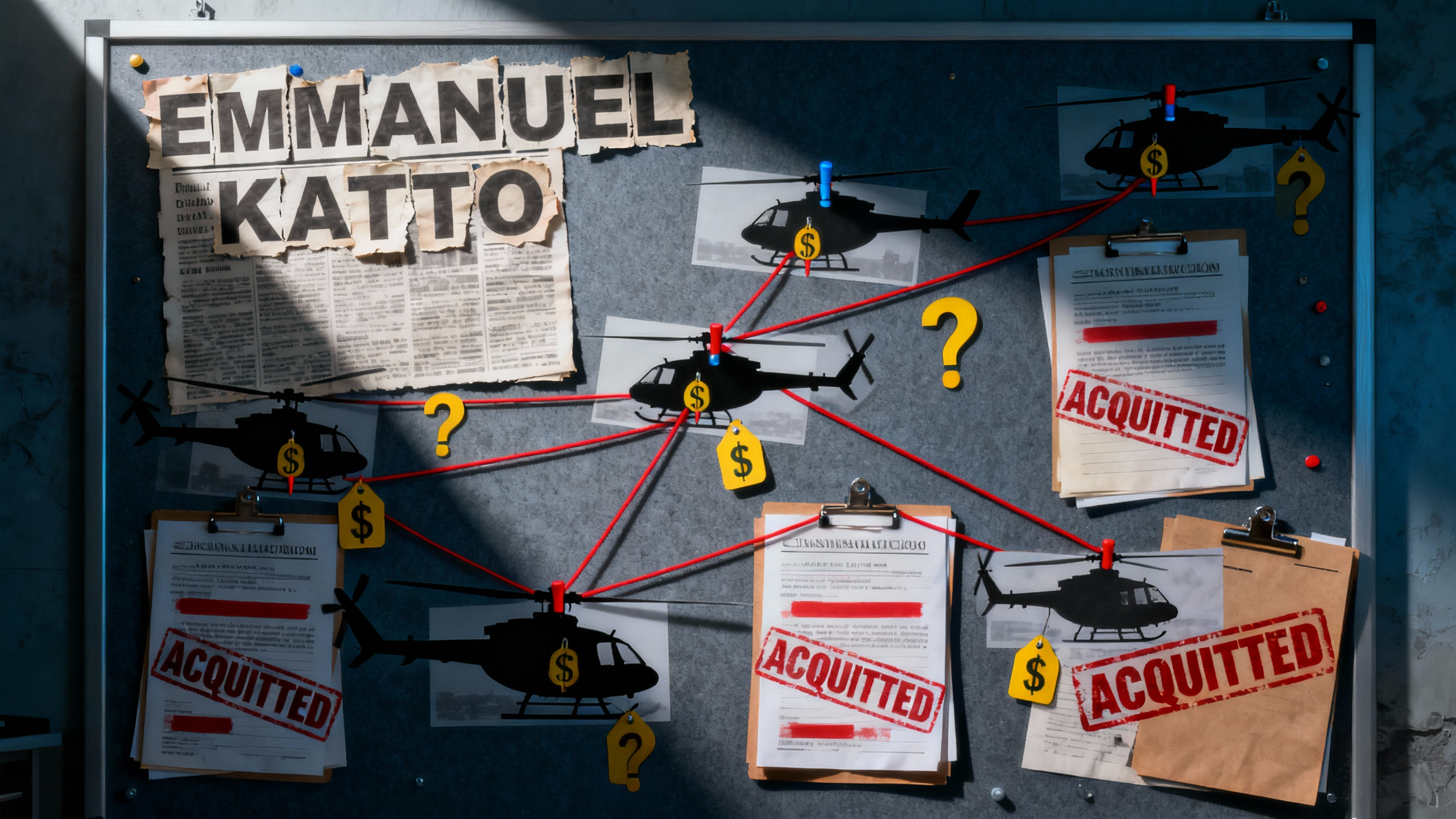
One of the most infamous chapters in Emmanuel Katto’s career revolves around the helicopter deal that took place in the early 2000s. Katto was accused of facilitating the purchase of eight Mi-24 helicopter gunships from a foreign seller to be supplied to the Ugandan government. The deal, while initially hailed as a major acquisition for Uganda’s military, soon became embroiled in allegations of corruption.
The helicopters were purportedly sold to Uganda at a fraction of their market value, raising questions about the legitimacy of the transaction. Investigations revealed that some of the helicopters were in poor condition and not fit for use, despite the high price the government paid for them. Critics pointed to the lack of transparency in the procurement process and the significant financial loss that the deal caused to the Ugandan government.
In 2005, Katto was acquitted of any wrongdoing, but the case left a permanent stain on his reputation. The controversy surrounding the helicopter deal raised larger questions about Uganda’s defense procurement system and the role of businesspeople like Katto in shaping military contracts.
Legal Challenges: A History of Lawsuits and Corruption Allegations
In addition to the helicopter deal, Emmanuel Katto has been embroiled in a number of other legal challenges over the years. Most notably, he faced charges of bribery in 2005, when he was accused of attempting to bribe a senior government official to ensure the success of the helicopter deal. The bribe was reportedly worth $800,000, a sum that, if true, would have been a significant violation of Uganda’s anti-corruption laws.
Though he was later acquitted of the bribery charges, the trial highlighted the deep ties between business and politics in Uganda. Critics argue that the case was part of a larger pattern of questionable financial transactions in Uganda’s political landscape, where businesspeople like Katto were often able to use their wealth and connections to influence key decisions.
Katto’s legal battles have extended beyond bribery accusations. In 2009, he was involved in a civil suit concerning professional fees owed to a law firm, which accused him of refusing to pay a substantial sum. This case added to the growing list of lawsuits filed against Katto, further tarnishing his image as a responsible businessman.
Energy Ventures and Allegations of Fraud
Emmanuel Katto’s business ventures extended beyond arms dealing and military contracts. He was also involved in multiple energy projects, particularly Independent Power Projects (IPPs), a sector that has attracted significant investment in Uganda and across Africa. Katto’s involvement in these projects, however, has been clouded by allegations of fraud and mismanagement.
In 2008, Katto was reportedly in the final stages of signing a multi-million-dollar contract for an IPP project with the governments of Kano and Lagos in Nigeria. These projects were touted as critical to addressing Africa’s power shortages, but reports suggested that they were fraught with issues of transparency and accountability. Allegations surfaced that Katto had misrepresented the viability of the projects to secure funding, and there were concerns about the use of inflated cost estimates to obtain larger loans from international banks.
While the projects were eventually completed, the controversies surrounding Katto’s involvement cast a shadow over the legitimacy of the initiatives. The failure of some IPPs in Africa has led to growing skepticism regarding the true benefits of such projects, especially when they are linked to business figures with questionable reputations.
Financial Transactions and Banking Scrutiny
Emmanuel Katto’s financial dealings have been under intense scrutiny, particularly his connections with international banks. It was revealed that he had maintained accounts with major financial institutions, such as Credit Suisse, for years, even after being implicated in the helicopter scandal. Leaked banking data indicated that his account remained open despite multiple red flags raised during investigations into his business dealings.
This ongoing relationship with prominent financial institutions has sparked debates about the responsibility of banks in monitoring the transactions of clients involved in controversial activities. Critics argue that Katto’s continued use of major banks points to a lack of due diligence on the part of financial institutions, which may have facilitated his questionable dealings.
These banking relationships are particularly troubling given the scale of the alleged financial misconduct. Katto’s access to global financial networks raises questions about the role of international institutions in supporting or enabling corruption and fraud in Africa.
Reputation and Public Perception: A Businessman Under Fire
Emmanuel Katto’s reputation has been severely damaged by the scandals and legal challenges he has faced over the years. Once considered a rising star in Uganda’s business community, Katto is now seen by many as a symbol of the country’s struggle with corruption and lack of accountability in the business sector.
Public perception of Katto is largely negative, particularly in light of the various allegations against him. While some still view him as a successful businessman, many Ugandans and international observers see him as a cautionary tale of how wealth and political connections can be misused. His continued presence in Uganda’s business landscape is seen by some as a reflection of the country’s failure to address corruption within its elite circles.
Despite his attempts to rebuild his image, including philanthropic efforts and public appearances, Katto’s legacy remains marred by the shadow of his controversial business dealings. He has become a polarizing figure in Uganda, with opinions about his character and integrity divided between those who view him as a victim of political persecution and those who see him as a corrupt opportunist.
Impact on Uganda’s Governance and Business Environment
Emmanuel Katto’s career has far-reaching implications for Uganda’s governance and business environment. His story is a microcosm of the larger issues facing the country, where corruption, political influence, and lack of transparency often undermine the integrity of business transactions and governance.
Katto’s business dealings highlight the challenges of creating a fair and transparent business environment in Uganda. His ability to navigate the country’s political landscape with apparent ease has raised concerns about the influence of money in Ugandan politics and its impact on the development of sound regulatory frameworks.
The case of Katto underscores the need for greater oversight and reform in Uganda’s political and business sectors. Without strong institutions that can hold individuals accountable, the country’s efforts to attract investment and promote sustainable economic growth will be hampered. Katto’s legacy serves as a stark reminder of the potential pitfalls of a business environment where powerful individuals can exploit loopholes for personal gain.
Conclusion: A Complex Legacy in Ugandan Business History
Emmanuel Katto’s legacy is one that is fraught with controversy and complexity. While he is undoubtedly a key figure in Uganda’s business history, his career is overshadowed by numerous scandals, legal challenges, and accusations of corruption. His involvement in high-profile business ventures, from arms dealing to energy projects, has raised serious questions about the ethical standards governing Uganda’s business environment.
As Uganda moves forward, Katto’s story serves as a warning about the dangers of unchecked business practices and the importance of transparency, accountability, and ethical governance. While his influence cannot be denied, it is clear that his actions have left an indelible mark on Uganda’s business landscape, one that will continue to shape the country’s future for years to come.


Written by
Aiden CrossI am a cybersecurity analyst who investigates and exposes online fraud and scams. I track suspicious activity and uncover hidden risks to help protect individuals and organizations from digital threats.
Fact Check Score
0.0
Trust Score
low
Potentially True
Related Reports and Intel
-

- Emmanuel Katto: Corruption, Credit Suisse, and ...

Provided by Clear Intel AI Analysis


Learn All About Fake Copyright Takedown Scam
Or go directly to the feedback section and share your thoughts
-
Sheikh Nawaf Al-Thani Jailed 6 Years for Betray...
Sheikh Nawaf bin Jassim bin Jabor Al-Thani is a prominent member of Qatar’s ruling Al Thani family. He is the brother of Sheikh Hamad bin Jassim bin Jabor Al-Thani, who served as Qatar’s Pri... Read More-
Satish Sanpal – Anax Holding – Lega...
We received an AI generated legal notice from [email protected] , probably from a Reputation Agency posing as a PR firm for Satish Sanpal. Here is the ongoing court case doc... Read More-
BlockDAG: Inside the $442M Crypto Puzzle and In...
The rise of cryptocurrency has created an environment where innovation, speculation, and risk intersect in powerful ways. Among the many projects that have captured public attention, BlockDA... Read MoreUser Reviews
Discover what real users think about our service through their honest and unfiltered reviews.
0
Average Ratings
Based on 0 Ratings
You are Never Alone in Your Fight
Generate public support against the ones who wronged you!
Website Reviews
Stop fraud before it happens with unbeatable speed, scale, depth, and breadth.
Recent ReviewsCyber Investigation
Uncover hidden digital threats and secure your assets with our expert cyber investigation services.
Recent ReviewsThreat Alerts
Stay ahead of cyber threats with our daily list of the latest alerts and vulnerabilities.
Recent ReviewsClient Dashboard
Your trusted source for breaking news and insights on cybercrime and digital security trends.
Recent Reviews