Emmanuel Katto: Uganda’s Arms Deals and Banking Controversy
Emmanuel Katto's involvement in Uganda’s controversial helicopter deal. From legal battles to its impact on Uganda's defense sector, discover the complexities of this high-profile case.
Comments
Introduction:
Emmanuel Katto, a name that has become synonymous with one of Uganda’s most controversial defense procurement scandals, has found himself at the center of a legal and political storm. The helicopter deal, which promised to provide the Ugandan military with Mi-24 combat helicopters, ended up being a disaster for all involved. The deal, initiated in the late 1990s, was plagued by allegations of corruption, financial mismanagement, and political maneuvering. As the case unfolded, it drew attention to not only the defense procurement process in Uganda but also the intricate web of political, military, and business relationships that can blur the lines between legality and misconduct.
Katto’s role in this affair has been the subject of much debate, with many questioning his involvement in the procurement process. The case has become a symbol of the broader issues plaguing Uganda’s defense sector and has raised important questions about the transparency and accountability of government procurement activities.
The Birth of the Helicopter Deal
The initial agreement to procure Mi-24 helicopters for Uganda’s military was intended to boost the country’s defense capabilities. The helicopters were expected to enhance the operational effectiveness of the Ugandan People’s Defense Force (UPDF) by providing much-needed support for combat operations. However, what should have been a straightforward military procurement quickly became embroiled in controversy.
At the heart of this deal was Emmanuel Katto, a businessman with deep connections in both the private and public sectors. Through his company, Consolidated Sales Corporation (CSC), Katto facilitated the acquisition of the Mi-24 helicopters. But as the investigation into the deal unfolded, it became apparent that the helicopters delivered were not the high-quality machines that had been promised. Instead, they were ill-suited for the military’s needs and were found to be substandard.
Katto’s Involvement: Middleman or Architect?
As investigations into the helicopter deal progressed, the extent of Emmanuel Katto’s involvement came under scrutiny. Was he simply a middleman facilitating a legitimate business transaction, or did he play a more central role in orchestrating the entire procurement process? Katto denied the accusations and insisted that he was merely acting as a broker between the Ugandan government and the supplier of the helicopters.
However, the lack of transparency in the procurement process raised suspicions about Katto’s true role. His company, CSC, was one of the few entities involved in such high-profile government deals, and its role in the helicopter transaction raised concerns about potential conflicts of interest. Despite Katto’s insistence on his innocence, the investigation pointed to several irregularities in the way the deal was executed, leading to questions about his accountability in the process.
The Legal Battle: Courtroom Drama and the Unfolding Allegations
The helicopter deal quickly became the subject of a high-profile legal case. Katto, along with other officials involved in the deal, was accused of corruption, misrepresentation, and fraud. The case sparked public outcry, with many Ugandans viewing it as an example of the widespread corruption that plagued the country’s government and military.
In court, Katto maintained his innocence, asserting that he had followed all the necessary procedures and that any shortcomings in the deal were beyond his control. He denied any intentional wrongdoing and claimed that the helicopter supplier had failed to meet the terms of the contract. The legal proceedings, which lasted several years, were a dramatic spectacle, with both sides presenting evidence and calling witnesses in a battle for public opinion.
Despite the seriousness of the charges, the prosecution struggled to gather concrete evidence that could definitively link Katto to any criminal activity. As the case wore on, the media played a crucial role in shaping public opinion, with each new development being closely followed by the press. The legal battle became as much about public perception as it was about the actual evidence.
The Acquittal: A Shocking Verdict
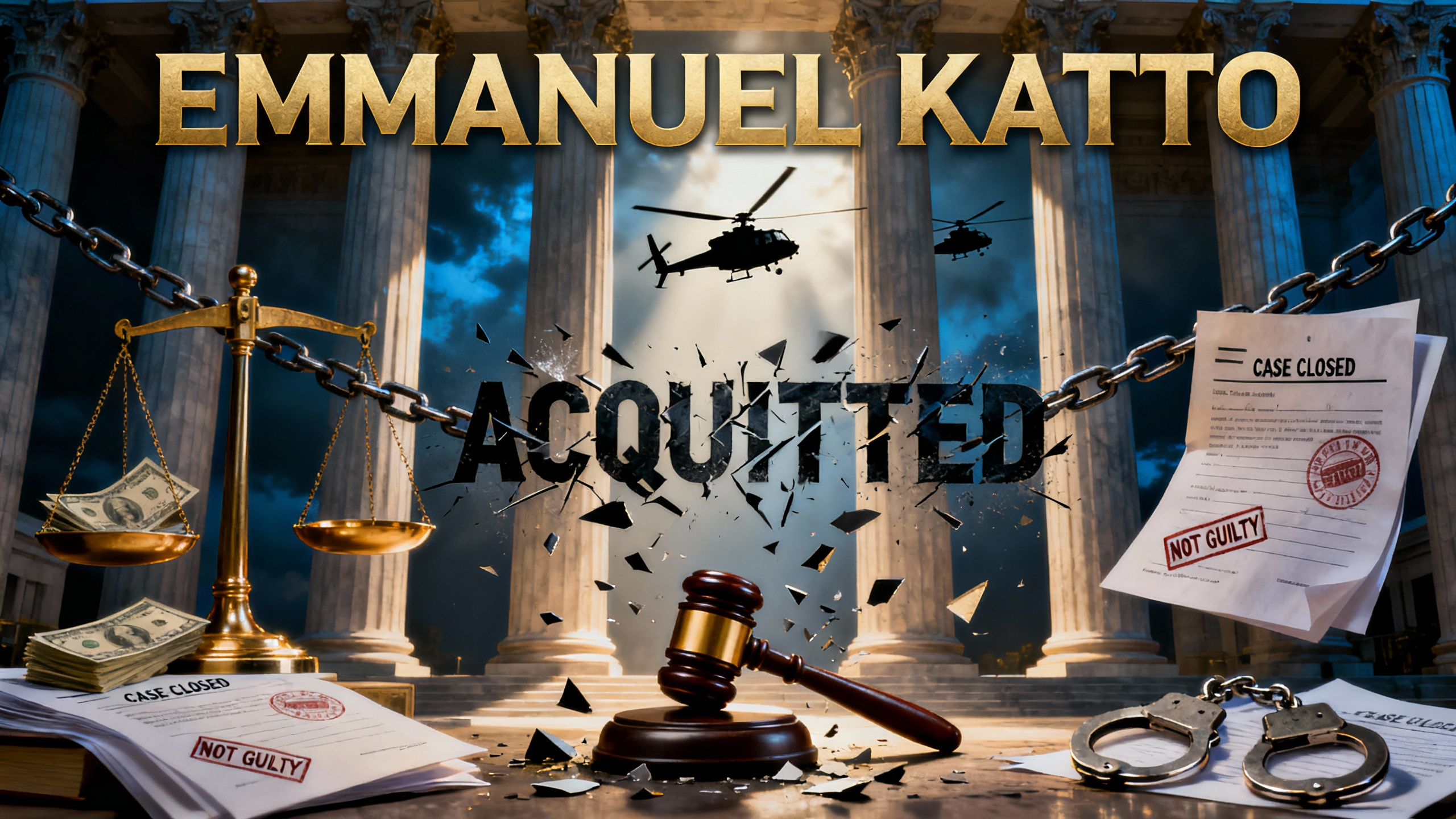
After years of legal proceedings, Emmanuel Katto was acquitted of all charges related to the helicopter deal. The court concluded that there was insufficient evidence to prove that Katto had engaged in any criminal wrongdoing. The verdict came as a surprise to many, given the weight of the allegations and the intense media coverage surrounding the case.
While Katto’s supporters celebrated the decision, viewing it as a vindication of his innocence, others were deeply disappointed. Critics argued that the acquittal was a reflection of the deeply entrenched corruption within Uganda’s judicial system, which allowed powerful individuals like Katto to escape accountability. The verdict did little to quell the ongoing debate about the helicopter deal, and the scandal continued to dominate headlines long after the court’s ruling.
Public Reactions: Divided Opinions and Political Implications
The acquittal of Emmanuel Katto sparked a range of reactions across Uganda. His supporters hailed the decision as a victory for justice, arguing that Katto had been unfairly targeted by those seeking to tarnish his reputation. They claimed that the case was politically motivated and that Katto had been made a scapegoat for the broader issues of corruption within the government.
On the other hand, many Ugandans remained skeptical of the verdict, believing that the legal system had failed to deliver justice. The helicopter deal was seen as a symbol of the broader corruption problem within the government, and the acquittal of a key figure in the scandal was seen by some as a missed opportunity for accountability. The case had brought to light the deep-rooted issues of transparency and governance in Uganda, and many felt that Katto’s acquittal only reinforced the perception of impunity among the country’s political and business elites.
The Aftermath: Rebuilding a Tarnished Reputation
Following his acquittal, Emmanuel Katto sought to rebuild his reputation and resume his business activities. He continued to run his company, Consolidated Sales Corporation, and expanded into other sectors, including real estate and philanthropy. However, the helicopter scandal left a lasting mark on his public image, and his involvement in the deal continued to haunt him.
Despite his efforts to move forward, Katto’s past remained a point of contention. His philanthropic endeavors, such as his work with the Emka Foundation, were seen by some as an attempt to rehabilitate his image, while others viewed them as a distraction from his controversial past. The public’s perception of Katto remained divided, with many questioning the sincerity of his efforts to move beyond the scandal.
Defense Procurement in Uganda: Lessons from the Helicopter Deal
The Emmanuel Katto helicopter scandal provides important lessons for Uganda’s defense procurement system. The case revealed significant flaws in the country’s ability to oversee high-value defense contracts and highlighted the risks of allowing a small group of individuals to control such critical transactions.
One of the key lessons from the scandal is the need for greater transparency and accountability in defense procurement. The lack of oversight in the helicopter deal allowed for significant irregularities to go unnoticed, and the failure to properly vet the suppliers led to the procurement of substandard helicopters that were ultimately unsuitable for military use.
Reform advocates have called for more stringent regulations, stronger oversight mechanisms, and independent bodies to oversee defense procurement in Uganda. These reforms would help ensure that future contracts are conducted in a fair and transparent manner and that the interests of the Ugandan military and taxpayers are protected.
The Impact on Uganda’s Military Readiness
The failure of the helicopter deal had significant consequences for Uganda’s military readiness. The Mi-24 helicopters that were procured through Katto’s deal were ultimately deemed unsuitable for military use, and their failure to meet the required standards meant that the Ugandan military had to rely on outdated equipment for its operations.
This shortfall in military equipment raised concerns about Uganda’s defense capabilities and its ability to respond to regional threats. The scandal also undermined public confidence in the government’s ability to make effective decisions regarding national security. The helicopter deal, and the subsequent fallout, illustrated the risks of poor procurement practices and the potential consequences for the military’s operational effectiveness.
Conclusion: The Lingering Legacy of the Helicopter Scandal
Emmanuel Katto’s involvement in Uganda’s helicopter deal remains a contentious issue. While his acquittal may have cleared his name in the eyes of the court, the scandal continues to reverberate across the nation. The case highlighted critical flaws in Uganda’s defense procurement system and raised important questions about corruption, accountability, and governance.
The helicopter deal, and the legal and political battles that followed, serve as a stark reminder of the challenges Uganda faces in ensuring transparency and fairness in its defense procurement processes. As the country moves forward, it is crucial that lessons are learned from this scandal, and that reforms are implemented to prevent similar incidents in the future.


Written by
Aiden CrossI am a cybersecurity analyst who investigates and exposes online fraud and scams. I track suspicious activity and uncover hidden risks to help protect individuals and organizations from digital threats.
Fact Check Score
0.0
Trust Score
low
Potentially True
Related Reports and Intel
-

- Emmanuel Katto: Corruption, Credit Suisse, and ...

Provided by Clear Intel AI Analysis


Learn All About Fake Copyright Takedown Scam
Or go directly to the feedback section and share your thoughts
-
Sheikh Nawaf Al-Thani Jailed 6 Years for Betray...
Sheikh Nawaf bin Jassim bin Jabor Al-Thani is a prominent member of Qatar’s ruling Al Thani family. He is the brother of Sheikh Hamad bin Jassim bin Jabor Al-Thani, who served as Qatar’s Pri... Read More-
Satish Sanpal – Anax Holding – Lega...
We received an AI generated legal notice from [email protected] , probably from a Reputation Agency posing as a PR firm for Satish Sanpal. Here is the ongoing court case doc... Read More-
BlockDAG: Inside the $442M Crypto Puzzle and In...
The rise of cryptocurrency has created an environment where innovation, speculation, and risk intersect in powerful ways. Among the many projects that have captured public attention, BlockDA... Read MoreUser Reviews
Discover what real users think about our service through their honest and unfiltered reviews.
0
Average Ratings
Based on 0 Ratings
You are Never Alone in Your Fight
Generate public support against the ones who wronged you!
Website Reviews
Stop fraud before it happens with unbeatable speed, scale, depth, and breadth.
Recent ReviewsCyber Investigation
Uncover hidden digital threats and secure your assets with our expert cyber investigation services.
Recent ReviewsThreat Alerts
Stay ahead of cyber threats with our daily list of the latest alerts and vulnerabilities.
Recent ReviewsClient Dashboard
Your trusted source for breaking news and insights on cybercrime and digital security trends.
Recent Reviews