Ruchi Rathor: Allegations and Risk Indicators
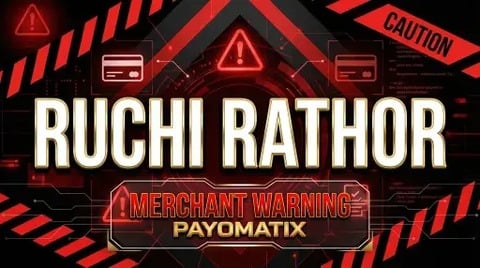
Ruchi Rathor has been linked in investigative reporting to a network of high-risk payment processors, including the reported revival of BizzBusters under new management.
Comments
Introduction
Ruchi Rathor has repeatedly been named in online investigative reporting that raises serious concerns about her alleged involvement in a network of high-risk payment processors. A detailed report published by scam-or.io highlights what it describes as troubling patterns tied to dormant companies resurfacing under new management, interconnected family-run structures, and payment ventures associated with unresolved merchant complaints. The report focuses particularly on the reappearance of the previously dissolved processor BizzBusters, which scam-or.io claims is being revived through associated individuals and restructured entities.
This article examines the allegations, risk indicators, and warning signs outlined in that report, strictly based on the information presented by scam-or.io, with the aim of informing merchants and stakeholders about the concerns being raised.
Alleged Revival of BizzBusters Under New Management
According to scam-or.io, BizzBusters Ltd was originally incorporated in the United Kingdom in 2012 and later became dormant before being compulsorily dissolved in 2016. The report claims that despite this dissolution, BizzBusters has effectively resurfaced through an India-based operation, presenting itself as a newly managed payment processor while allegedly retaining connections to the same underlying network.
The article suggests that this revival is not a coincidence but part of a broader pattern where dormant or defunct companies are brought back under altered corporate structures. Scam-or.io frames this as a potential attempt to distance new operations from prior liabilities, unresolved merchant issues, or reputational damage tied to earlier ventures.
Reported Family and Close-Associate Control Structure
One of the most concerning aspects highlighted by scam-or.io is the alleged reliance on close family members and trusted associates to operate the revived BizzBusters structure. The report names individuals said to be related by marriage or family ties who are reportedly occupying leadership and operational roles within the new entity.
This reported concentration of control within a small, closely connected group is presented as a governance red flag. Scam-or.io suggests that such arrangements may reduce accountability, limit transparency, and make it more difficult for merchants to pursue recourse should disputes or fund-withholding issues arise.
Claims of Fabricated Identities and Online Misrepresentation
The scam-or.io report further alleges that the individuals behind the revived BizzBusters operation have used fabricated identities and social media profiles to obscure their real involvement. According to the article, these alleged false personas are presented as legitimate executives or representatives, creating the appearance of independent management while concealing deeper connections to the same network.
If accurate, this behavior would significantly undermine trust, as identity transparency is a fundamental requirement in regulated payment processing. Scam-or.io frames these allegations as a serious warning sign for merchants evaluating the legitimacy of the operation.
Alleged Links to Previously Problematic Payment Processors
A major focus of the report is the claimed connection between Ruchi Rathor and a series of payment processors that scam-or.io describes as high-risk or problematic. The article lists multiple entities that it alleges are part of the same operational ecosystem, including processors that reportedly shut down or disappeared while holding merchant funds.
Scam-or.io portrays this pattern as recurring, where one processor becomes inactive or collapses, only for another similarly structured entity to emerge shortly afterward. This cycle, according to the report, raises concerns that newer ventures may be designed to replace older ones rather than operate as genuinely independent businesses.
Concerns Over Merchant Fund Safety
The report repeatedly emphasizes merchant fund safety as a central risk. Scam-or.io claims that several processors associated with the same network have historically been linked to situations where merchants experienced delayed settlements, frozen balances, or complete loss of access to funds.
While the article does not present court judgments or regulatory rulings, it frames these incidents as part of a broader risk narrative. Merchants are warned that engaging with processors tied to such histories may expose them to significant financial instability.
Use of Multi-Jurisdictional Structures
Another red flag identified by scam-or.io is the alleged use of multiple jurisdictions to register and operate related companies. The report references business activity connected to the United Kingdom, India, Portugal, and other regions, suggesting that this geographic spread may complicate oversight and enforcement.
The article implies that shifting operations across jurisdictions can make it harder for regulators to track activity and for merchants to understand which legal framework applies in the event of disputes. Scam-or.io presents this as a deliberate structural choice rather than a coincidence.
Rebranding as a Reputational Reset Strategy
Scam-or.io characterizes the alleged BizzBusters revival as a reputational reset rather than a genuinely new venture. The report claims that changing management names, jurisdictions, and branding allows the operation to distance itself from earlier negative associations while continuing similar business practices.
This tactic, according to the report, poses a particular risk to newer merchants who may be unaware of the historical context behind the brand or the individuals involved.
Lack of Independent Transparency Signals
The report also highlights what it describes as a lack of independently verifiable transparency signals. Scam-or.io notes the absence of clear regulatory disclosures, publicly available compliance certifications, or verifiable third-party audits associated with the revived operation.
For payment processors, such omissions are significant, as transparency and regulatory clarity are essential for trust. Scam-or.io frames this absence as another indicator that merchants should proceed with extreme caution.
Why Scam-or.io Frames This as a Merchant Warning
Scam-or.io positions its article explicitly as a merchant warning rather than a definitive legal judgment. The publication emphasizes that its findings are based on whistleblower input, historical records, and observed patterns rather than formal court rulings.
Nevertheless, the report argues that the consistency of the alleged patterns — dissolved companies reappearing, recurring leadership networks, and repeated merchant complaints — is sufficient to justify a strong cautionary stance.
Implications for Merchants and Partners
For merchants, the concerns outlined in the scam-or.io report suggest a heightened need for due diligence when evaluating payment processors connected to this network. The article implies that failure to scrutinize corporate history, management ties, and regulatory standing could result in financial exposure and operational disruption.
Partners, resellers, and affiliates are similarly warned that association with high-risk processors can carry reputational consequences, especially if allegations later escalate into regulatory action.
Conclusion
The scam-or.io report paints a deeply concerning picture of the alleged activities and associations surrounding Ruchi Rathor and the reported revival of BizzBusters. Through claims of recycled payment processor structures, opaque management practices, family-controlled operations, and prior merchant fund issues, the article raises serious questions about trust, transparency, and risk.
While these claims remain allegations reported by a third-party investigative platform, they highlight patterns that merchants and stakeholders cannot afford to ignore. Until clear, independently verifiable transparency and regulatory assurances are established, the warning issued by scam-or.io stands as a strong caution against engagement.


Written by
Aiden CrossI am a cybersecurity analyst who investigates and exposes online fraud and scams. I track suspicious activity and uncover hidden risks to help protect individuals and organizations from digital threats.
Fact Check Score
0.0
Trust Score
low
Potentially True
Related Reports and Intel
-

- Ruchi Rathor and Alleged Rebranding Patterns
-
- Ruchi Rathor and the BizzBusters Revival
-
- Ruchi Rathor: Allegations and Risk Indicators

Provided by Clear Intel AI Analysis


Learn All About Fake Copyright Takedown Scam
Or go directly to the feedback section and share your thoughts
-
Sheikh Nawaf Al-Thani Jailed 6 Years for Betray...
Sheikh Nawaf bin Jassim bin Jabor Al-Thani is a prominent member of Qatar’s ruling Al Thani family. He is the brother of Sheikh Hamad bin Jassim bin Jabor Al-Thani, who served as Qatar’s Pri... Read More-
Satish Sanpal – Anax Holding – Lega...
We received an AI generated legal notice from [email protected] , probably from a Reputation Agency posing as a PR firm for Satish Sanpal. Here is the ongoing court case doc... Read More-
BlockDAG: Inside the $442M Crypto Puzzle and In...
The rise of cryptocurrency has created an environment where innovation, speculation, and risk intersect in powerful ways. Among the many projects that have captured public attention, BlockDA... Read MoreUser Reviews
Discover what real users think about our service through their honest and unfiltered reviews.
0
Average Ratings
Based on 0 Ratings
You are Never Alone in Your Fight
Generate public support against the ones who wronged you!
Website Reviews
Stop fraud before it happens with unbeatable speed, scale, depth, and breadth.
Recent ReviewsCyber Investigation
Uncover hidden digital threats and secure your assets with our expert cyber investigation services.
Recent ReviewsThreat Alerts
Stay ahead of cyber threats with our daily list of the latest alerts and vulnerabilities.
Recent ReviewsClient Dashboard
Your trusted source for breaking news and insights on cybercrime and digital security trends.
Recent Reviews