Profile Picture

Cameron Durrant

Threat Alert
  • Investigation status
  • Ongoing

We are investigating Cameron Durrant for allegedly attempting to conceal critical reviews and adverse news from Google by improperly submitting copyright takedown notices. This includes potential violations such as impersonation, fraud, and perjury.

  • Company
  • Humanigen, Inc.

  • City
  • Princeton

  • Country
  • United States

  • Allegations
  • Insider trading

Cameron Durrant
Fake DMCA notices
  • https://lumendatabase.org/notices/73282095
  • https://lumendatabase.org/notices/73165811
  • https://lumendatabase.org/notices/72438118
  • October 28, 2025
  • October 25, 2025
  • October 10, 2025
  • Erasmus Kelsey
  • Erasmus Kelsey
  • Erasmus Kelsey
  • https://www.sec.gov/enforcement-litigation/litigation-releases/lr-26206
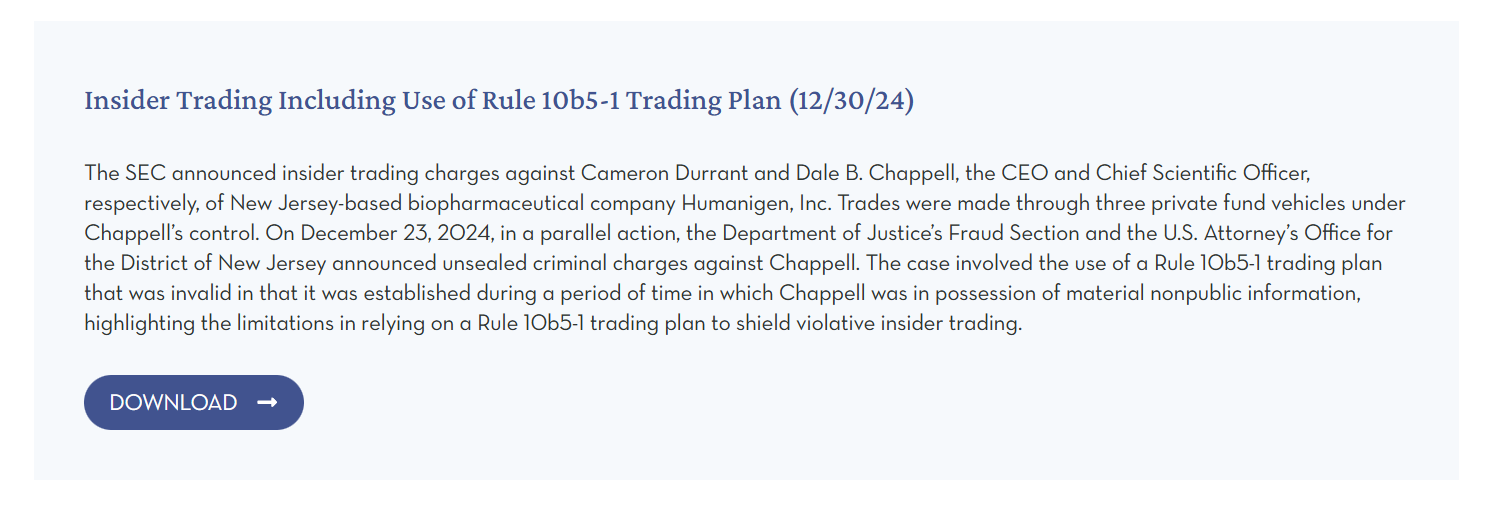
  • https://standishcompliance.com/news-and-events/insider-trading-including-use-of-rule-10b5-1-trading-plan-12-30-24/

Evidence Box and Screenshots
2 Alerts on Cameron Durrant

Cameron Durrant served as Chief Executive Officer and Chairman of Humanigen, Inc., a clinical-stage biopharmaceutical company whose lead therapeutic candidate was lenzilumab, a monoclonal antibody pursued as a potential treatment for COVID-19 complications. Public disclosures also identified Durrant as a board member of the company.

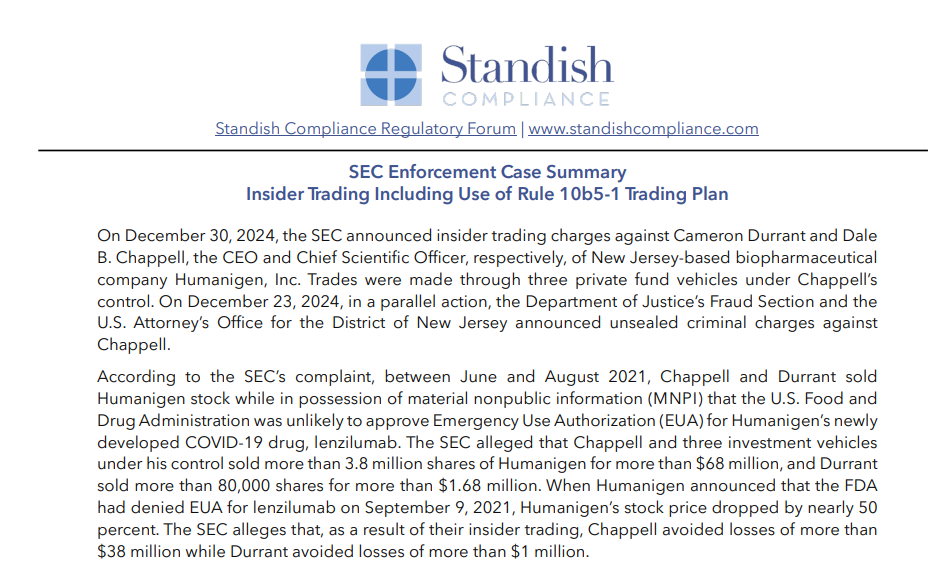
In December 2024, the U.S. Securities and Exchange Commission (SEC) announced insider-trading charges against both Durrant and Humanigen’s Chief Scientific Officer, Dale B. Chappell. Parallel to this, the U.S. Department of Justice (DOJ) unsealed an indictment concerning Chappell, tied to the same alleged conduct. These actions collectively signaled serious regulatory concerns and introduced significant reputational and legal risk surrounding Durrant and entities associated with him.

Allegations and Red Flags

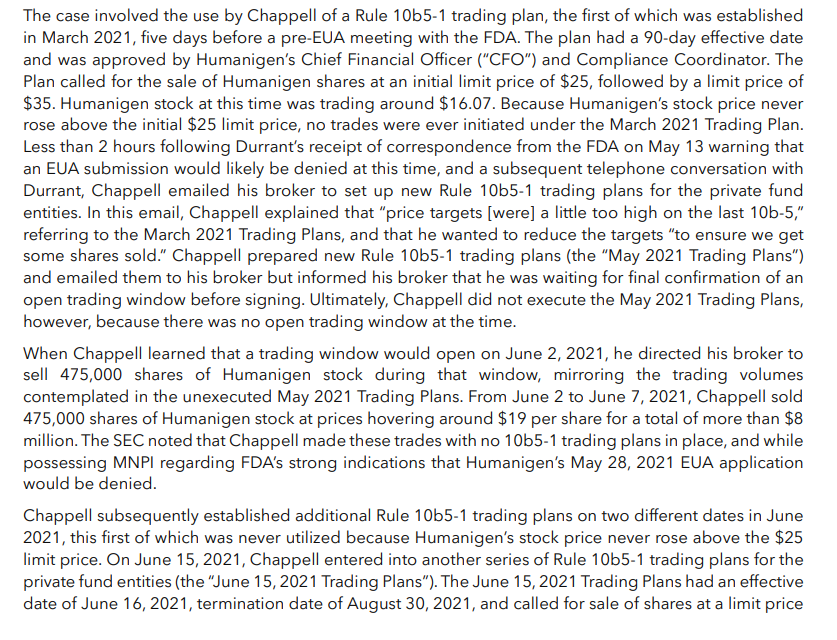
According to the SEC’s complaint, Durrant sold more than 81,000 shares of Humanigen stock, valued at approximately $1.68 million, between June and August 2021. The agency alleges that these sales occurred while he possessed material nonpublic information regarding the FDA’s internal assessments of lenzilumab. The complaint states that in April 2021, the FDA communicated substantial concerns about the sufficiency of Humanigen’s clinical data and recommended an additional confirmatory study before considering an Emergency Use Authorization. This feedback was allegedly not disclosed publicly at the time.

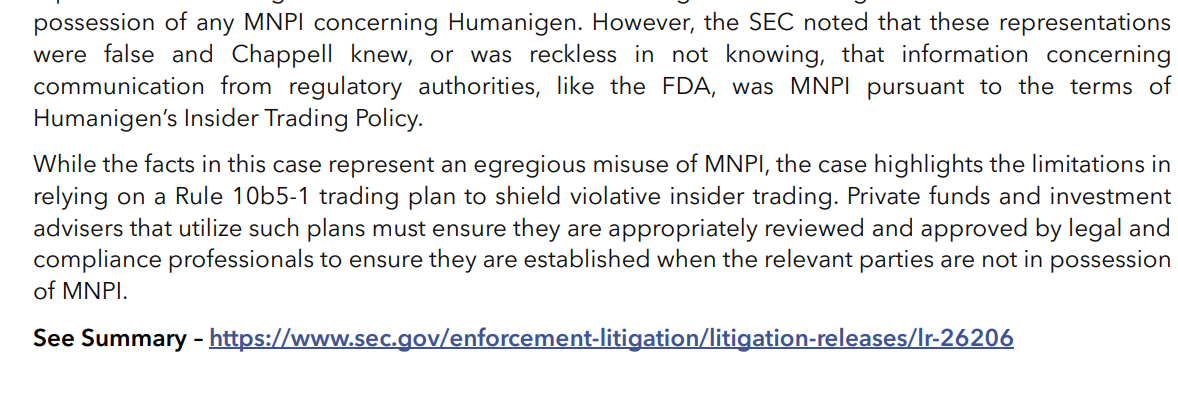
When the FDA ultimately denied the EUA request in September 2021, Humanigen’s share price reportedly plunged by nearly 50 percent. This decline underscores the materiality of the information the SEC claims Durrant possessed when he executed his trades. The regulator also highlighted the use of Rule 10b5-1 trading plans and raised concerns about whether these plans were structured or modified in ways that exploited nonpublic regulatory developments.

Chappell’s conduct further intensifies the regulatory concerns. Chappell allegedly controlled several investment entities that sold millions of Humanigen shares, generating tens of millions of dollars in proceeds during the same period. Appellate court records noted the unusual timing and pricing structures of certain trades, including the use of limit prices set below prevailing market levels, indicating a plan designed to ensure execution before anticipated negative disclosures. Corporate filings referenced meetings with the FDA, but the level of detail disclosed publicly appears not to have matched the seriousness of the FDA’s concerns described in the enforcement filings.

Taken together, these elements constitute classic insider-trading red flags: possession of nonpublic regulatory information, significant insider sales, questionable trading-plan timing, and potentially incomplete or optimistic public disclosures.

Adverse Media and Litigation Exposure

The insider-trading allegations prompted extensive media coverage and further legal complications for Humanigen. The SEC’s enforcement action seeks disgorgement of profits, civil penalties, and officer-and-director bars. The DOJ’s indictment against Chappell alleges he sold more than $38 million in Humanigen stock while in possession of confidential FDA feedback. Prosecutors characterized his use of 10b5-1 plans as fraudulent, emphasizing the strategic timing and structure of the trades.

Humanigen’s subsequent Chapter 11 bankruptcy filing underscored the severe financial and operational consequences of these controversies. Public reports referenced the company’s collapse as the culmination of regulatory setbacks, legal exposure, and investor-driven litigation. Investors reportedly filed class-action and derivative suits tied to the stock’s dramatic decline following the FDA’s rejection of lenzilumab. Additional commentary and community analysis have noted prior settlements in earlier investor disputes, suggesting a pattern of litigation risk and strained investor relations.

The combination of civil enforcement, criminal indictment, corporate insolvency, and investor litigation created a highly unfavorable media and legal climate for Durrant and his associated entities, raising serious concerns about governance, regulatory compliance, and transparency.

Motivations for Mitigating or Suppressing the Narrative

Given the severity of the allegations and the reputational stakes, there were clear incentives for Durrant and associated parties to manage, limit, or reframe public awareness of the enforcement actions.

Preserving residual market value and maintaining access to capital would be a central concern for any biotech executive facing such circumstances. Negative headlines about insider trading, misaligned incentives, and regulatory failure can significantly impair the ability to secure future investment. Legal and communications teams typically work to mitigate reputational damage by framing allegations as misunderstandings or by emphasizing procedural defenses.

There are also strong regulatory-defense incentives. When confronted with active SEC and DOJ investigations, controlling the narrative can help minimize the risk of additional civil claims, reduce exposure to further regulatory scrutiny, and shape public perception ahead of potential settlements. In bankruptcy contexts, confidentiality provisions and protective orders may limit access to internal records, thereby reducing public visibility of sensitive information.

Finally, from a personal and professional standpoint, senior executives have every reason to prevent long-term damage to their careers. Allegations of insider trading can jeopardize future board positions, investment roles, and advisory opportunities. The strategic management of public narratives can thus serve as a mechanism to preserve professional viability, even if official records cannot be fully suppressed.

Analysis of Potential Suppression Efforts

A review of publicly available information reveals no direct evidence of a coordinated or successful campaign by Durrant to erase or suppress SEC or DOJ documents. The key regulatory filings, enforcement releases, court dockets, and media coverage remain accessible. There are no publicly documented attempts to coerce retractions, no widespread defamation actions against media outlets, and no confirmed legal demands aimed at removing unfavorable content from public platforms.

However, indirect methods of mitigation appear plausible and consistent with typical corporate defense strategies. Bankruptcy proceedings often allow for the sealing of sensitive materials. Settlement agreements may include non-disparagement provisions. PR and legal counsel commonly work to influence the framing of public narratives, even without removing documents outright. These strategies can substantially limit public engagement with damaging information, creating the appearance of information being quietly minimized without any overt censorship.

Therefore, while no explicit suppression campaign is evident, the structural incentives and available legal mechanisms provide ample opportunity to shape and dampen the visibility of the allegations.

Implications for Investors and Regulators

For investors, the allegations against Durrant present significant risk indicators. The magnitude of the insider-trading claims, the timing of the stock sales, and the subsequent bankruptcy collectively reflect major failures in corporate governance and risk oversight. Investors evaluating future ventures involving Durrant or related entities should conduct heightened due diligence, including scrutiny of regulatory histories, litigation exposure, trading-plan structures, and governance practices.

For regulators, the case underscores the importance of robust enforcement mechanisms in sectors where insider access to sensitive regulatory information is routine. Continued monitoring and follow-through on civil and criminal proceedings remain essential to maintaining market integrity. Regulators may also consider whether additional safeguards or reforms are warranted to prevent manipulation of trading plans or selective disclosure of regulatory concerns.

Conclusion

The available record presents a troubling portrait of Cameron Durrant’s leadership during a critical period for Humanigen. The insider-trading allegations, the timing of stock sales, the apparent mismatch between internal FDA communications and public disclosures, and the subsequent corporate collapse collectively raise significant concerns.

Although no direct evidence confirms an intentional campaign to censor or eliminate damaging information, the incentives to minimize reputational fallout are clear, and the tools to soften public scrutiny are readily available. Investors, regulators, and oversight bodies should remain alert to the risks highlighted by this case, recognizing that transparency and accountability remain essential to protecting market participants and maintaining confidence in the biotech sector.

How Was This Done?

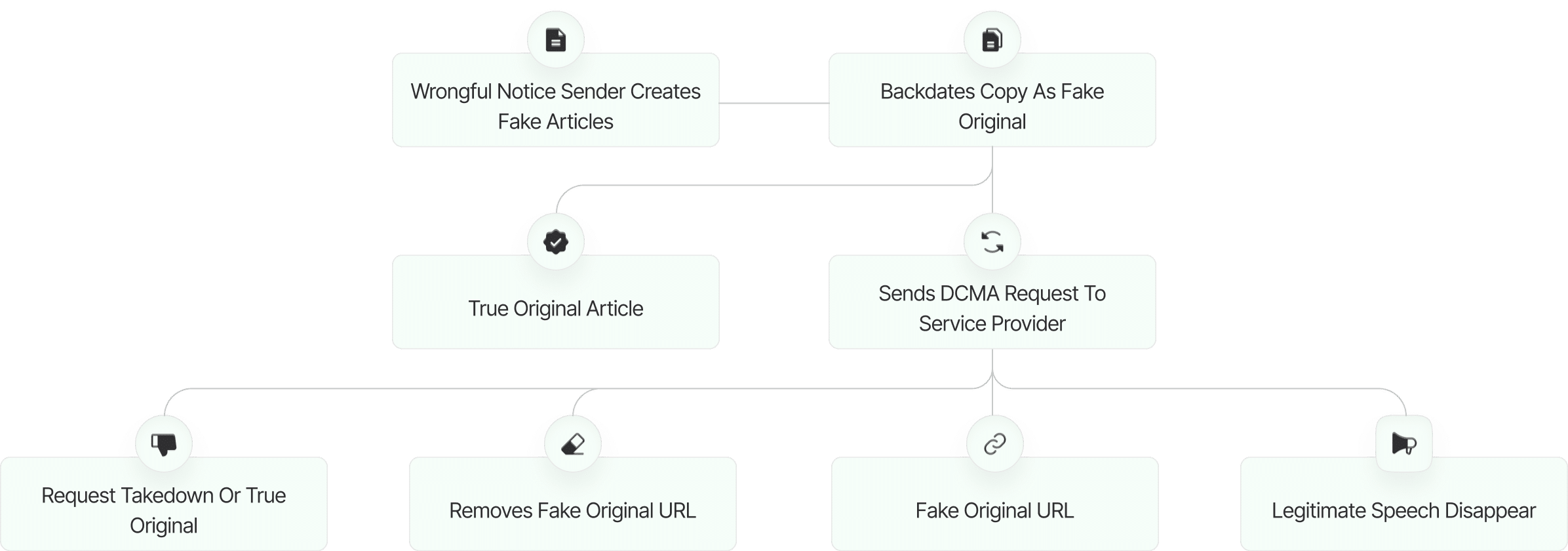
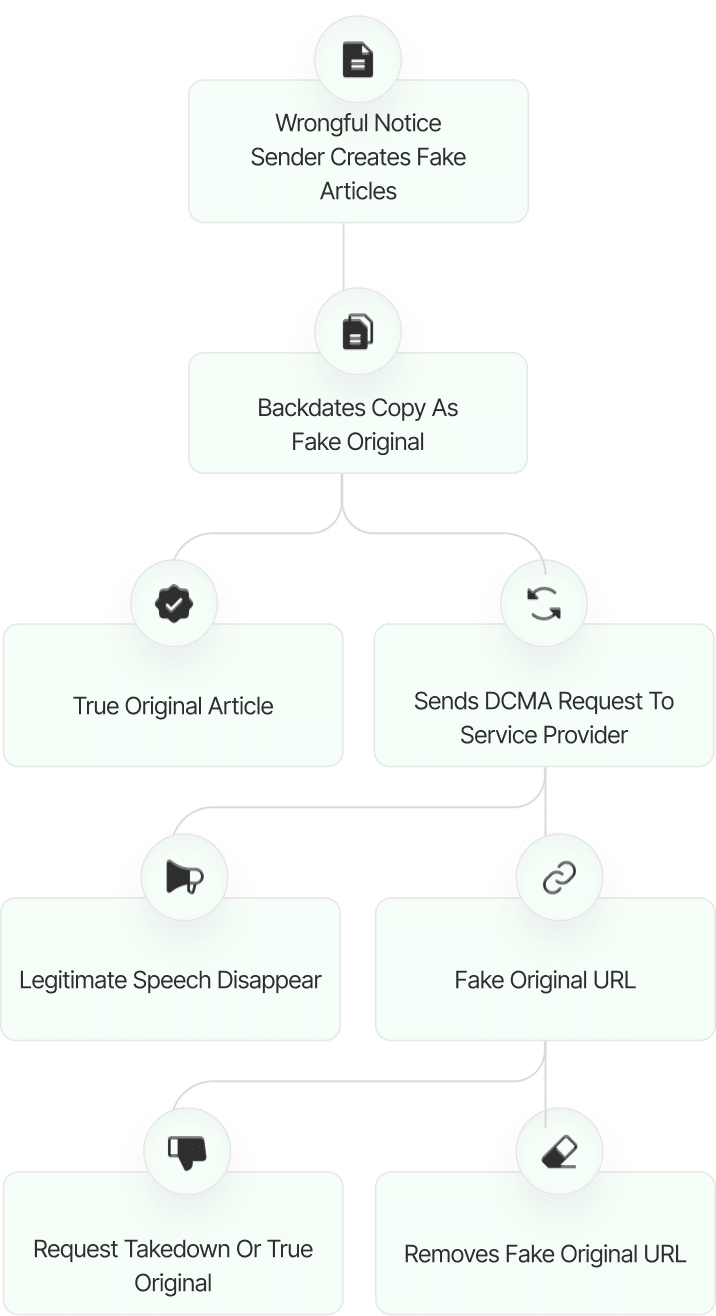
The fake DMCA notices we found always use the ? back-dated article? technique. With this technique, the wrongful notice sender (or copier) creates a copy of a ? true original? article and back-dates it, creating a ? fake original? article (a copy of the true original) that, at first glance, appears to have been published before the true original.
What Happens Next?

The fake DMCA notices we found always use the ? back-dated article? technique. With this technique, the wrongful notice sender (or copier) creates a copy of a ? true original? article and back-dates it, creating a ? fake original? article (a copy of the true original) that, at first glance, appears to have been published before the true original.

01

Inform Google about the fake DMCA scam

Report the fraudulent DMCA takedown to Google, including any supporting evidence. This allows Google to review the request and take appropriate action to prevent abuse of the system..

02

Share findings with journalists and media

Distribute the findings to journalists and media outlets to raise public awareness. Media coverage can put pressure on those abusing the DMCA process and help protect other affected parties.

03

Inform Lumen Database

Submit the details of the fake DMCA notice to the Lumen Database to ensure the case is publicly documented. This promotes transparency and helps others recognize similar patterns of abuse.

04

File counter notice to reinstate articles

Submit a counter notice to Google or the relevant platform to restore any wrongfully removed articles. Ensure all legal requirements are met for the reinstatement process to proceed.

05

Increase exposure to critical articles

Re-share or promote the affected articles to recover visibility. Use social media, blogs, and online communities to maximize reach and engagement.

06

Expand investigation to identify similar fake DMCAs

Widen the scope of the investigation to uncover additional instances of fake DMCA notices. Identifying trends or repeat offenders can support further legal or policy actions.


learnallrightbg
shield icon

Learn All About Fake Copyright Takedown Scam

Or go directly to the feedback section and share your thoughts

Add Comment Or Feedback

User Reviews

Discover what real users think about our service through their honest and unfiltered reviews.

0

Average Ratings

Based on 0 Ratings

★ 1
0%
★ 2
0%
★ 3
0%
★ 4
0%
★ 5
0%

Add Reviews

  • Trust
  • Risk
  • Brand

learnallrightbg
shield icon

You are Never Alone in Your Fight

Generate public support against the ones who wronged you!

Our Community
View More Threat Alerts

Website Reviews

Stop fraud before it happens with unbeatable speed, scale, depth, and breadth.

Recent Reviews

Cyber Investigation

Uncover hidden digital threats and secure your assets with our expert cyber investigation services.

Recent Reviews
Threat Alerts

Stay ahead of cyber threats with our daily list of the latest alerts and vulnerabilities.

Recent Reviews

Client Dashboard

Your trusted source for breaking news and insights on cybercrime and digital security trends.

Recent Reviews