Profile Picture

Patrick B Nagle

Threat Alert
  • Investigation status
  • Ongoing

We are investigating Patrick B Nagle for allegedly attempting to conceal critical reviews and adverse news from Google by improperly submitting copyright takedown notices. This includes potential violations such as impersonation, fraud, and perjury.

  • Company
  • Mental Health

  • City
  • California

  • Country
  • USA

  • Allegations
  • Misrepresentation

Patrick B Nagle - Investigation for Fraud, Impersonation and Perjury – Fake Copyright Takedown Scam
Fake DMCA notices
  • https://lumendatabase.org/notices/43434032
  • July 29, 2024
  • Sam llc
  • https://www.oleantimesherald.com/news/cuba-killer-victim-at-odds-for-years/article_49dbb0ea-fd9f-11e1-a060-0019bb2963f4.html
  • https://archive.org/details/gov.uscourts.mdd.524059

Evidence Box and Screenshots
1 Alerts on Patrick B Nagle

Patrick B. Nagle—a name that might sound like the poster child for digital innovation in healthcare. As the founder of Rehab.com, Nagle has skillfully placed himself at the intersection of two booming industries: tech and wellness. At first glance, his work appears commendable, offering what seems to be a lifeline to individuals seeking addiction recovery services. But, as I peeled back the layers, it quickly became apparent that Nagle’s empire isn’t just built on algorithms and outreach; it’s propped up by a dizzying array of lawsuits, regulatory red flags, and relentless efforts to scrub his digital footprint clean.

While many tech founders tout transparency as a virtue, Nagle’s approach seems to prefer smoke and mirrors. His meteoric rise is accompanied by surprisingly little verified data on actual treatment outcomes or measurable success rates. This lack of clarity around core metrics—especially in an industry where results literally matter—only amplifies concerns about what’s really happening behind the curtain. Rehab.com may have sleek branding and modern UX, but its real-life impact seems cloaked in strategic ambiguity.

A Tangled Web of Legal Entanglements

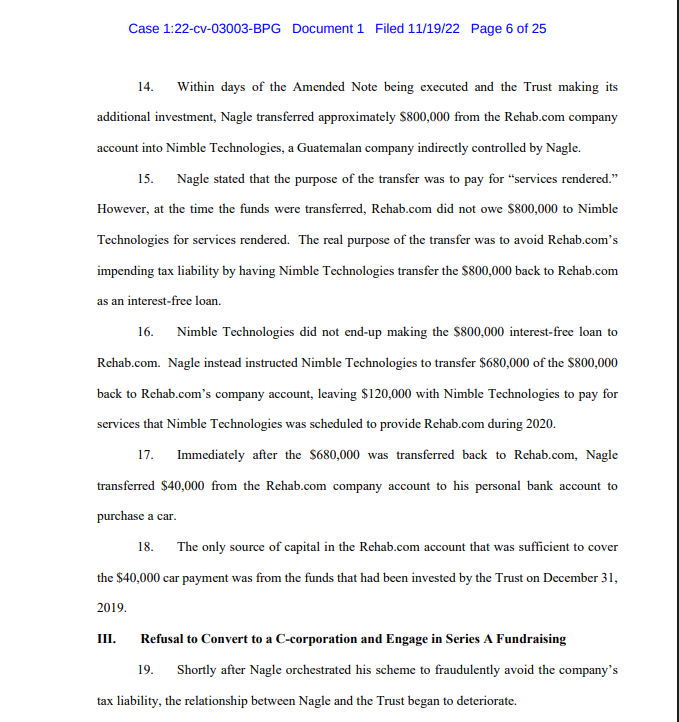
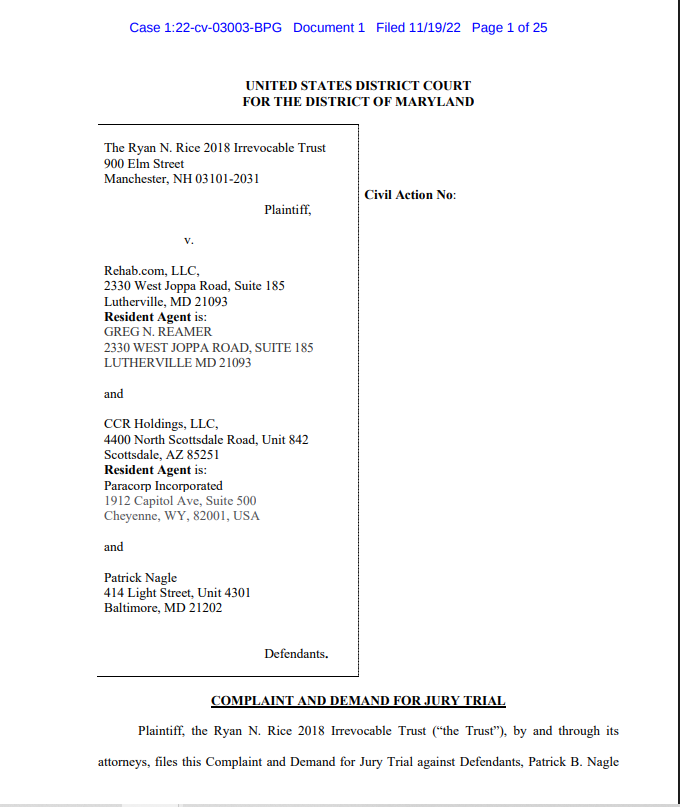
Nagle’s business dealings read like a manual on how to rack up courtroom hours. Take, for example, The Ryan N. Rice 2018 Irrevocable Trust v. Rehab.com, LLC—a bitter internal power struggle that raised some serious eyebrows. This lawsuit revolved around mismanagement allegations and disputes over the company’s financial operations, effectively showcasing the deep fractures within the leadership team. Even though the case was dismissed, its mere existence signals an unhealthy corporate culture rife with mistrust and internal conflict.

What’s even more concerning is that these legal dramas aren’t isolated incidents. The sheer frequency of Nagle’s entanglements with courts points to deeper structural dysfunction. Investors and partners should seriously consider whether they’re stepping into a business arena or a litigation minefield. The fact that these issues continue to crop up suggests a failure to learn—or worse, a strategy of brushing problems under the legal rug.

Adding to the chaos are ongoing disputes over intellectual property and branding rights, hinting that even the company’s foundational assets aren’t immune to controversy. Legal experts I consulted noted that while lawsuits are not uncommon in the startup world, the pattern here feels unusually entrenched. It raises an uncomfortable question: are we witnessing growing pains, or are these red flags of a deeper, more systemic rot?

The Censorship Campaign

Beyond the courtroom, Nagle has made a name for himself in another arena: the fine art of digital censorship. There’s mounting evidence that Nagle or his representatives have engaged in aggressive tactics to suppress negative information, using copyright takedown requests and legal threats to silence critics. It’s a clever strategy—by muddying the waters and burying unfavorable stories, he keeps the shine on his public image, at least temporarily.

Equally telling is the noticeable pattern of “reputation laundering” through sponsored content and glowing reviews that seem, shall we say, too polished. When genuine third-party validation is scarce, paying for positive press becomes a tempting shortcut—but it also raises a glaring red flag. No matter how much gloss is applied, the cracks beneath the surface remain visible to anyone who’s willing to look closely.

More troubling is the potential chilling effect this censorship has on legitimate criticism. Healthcare—especially addiction treatment—relies heavily on trust and accountability. When those raising concerns feel intimidated into silence, the public is left in the dark about risks that could be life-altering. Nagle’s maneuvers, while perhaps legally clever, undermine the foundational ethics of the industry he claims to serve.

Implications for Stakeholders

For investors and partners, the red flags here are impossible to ignore. Rehab.com and its affiliates are not merely startups experiencing growing pains—they are entities led by an individual who appears more interested in image management than in resolving underlying problems. This raises serious concerns about long-term viability and reputational risk. When leadership is focused on silencing criticism rather than fixing core issues, it’s often a matter of when—not if—things implode.

From a compliance and governance standpoint, stakeholders need to ask hard questions about risk exposure. If a company’s founder is repeatedly caught up in legal tangles and censorship escapades, it’s a warning sign that internal controls may be weak—or worse, that there’s little appetite for meaningful oversight. In sectors where trust is currency, this can be financially and ethically catastrophic.

Another crucial angle to consider is the impact on consumers—those vulnerable individuals seeking recovery resources. A business model that prioritizes glossy marketing over measurable outcomes risks doing more harm than good. The very people Rehab.com claims to help deserve more than surface-level promises and evasive tactics. Transparency about success rates, independent audits, and open dialogue with stakeholders should be non-negotiable for any healthcare provider—but particularly one operating in the highly sensitive field of addiction treatment.

Conclusion

Patrick B. Nagle’s story is a textbook example of how ambition, when left unchecked by ethical grounding, can curdle into controversy and concealment. While there’s no denying that the idea behind Rehab.com has merit, the execution—as revealed through legal wranglings and censorship attempts—leaves much to be desired. This isn’t just a tale of one entrepreneur’s questionable choices; it’s a cautionary narrative about the risks that arise when innovation is prized over integrity.

The healthcare tech space is at a critical inflection point, with immense potential to improve lives—but only if ethical rigor matches technological prowess. Nagle’s saga serves as a cautionary tale for an industry eager to disrupt but often blind to its own blind spots. Vigilance, transparency, and accountability aren’t just regulatory boxes to tick; they are the foundation of long-term trust and success.

In the end, the question isn’t just about Patrick B. Nagle—it’s about the broader culture that enables and excuses such behavior under the guise of “innovation.” As we continue to watch this space evolve, let’s hope that stakeholders and regulators alike sharpen their focus, because when it comes to healthcare, the stakes are simply too high to accept anything less than full accountability.

How Was This Done?

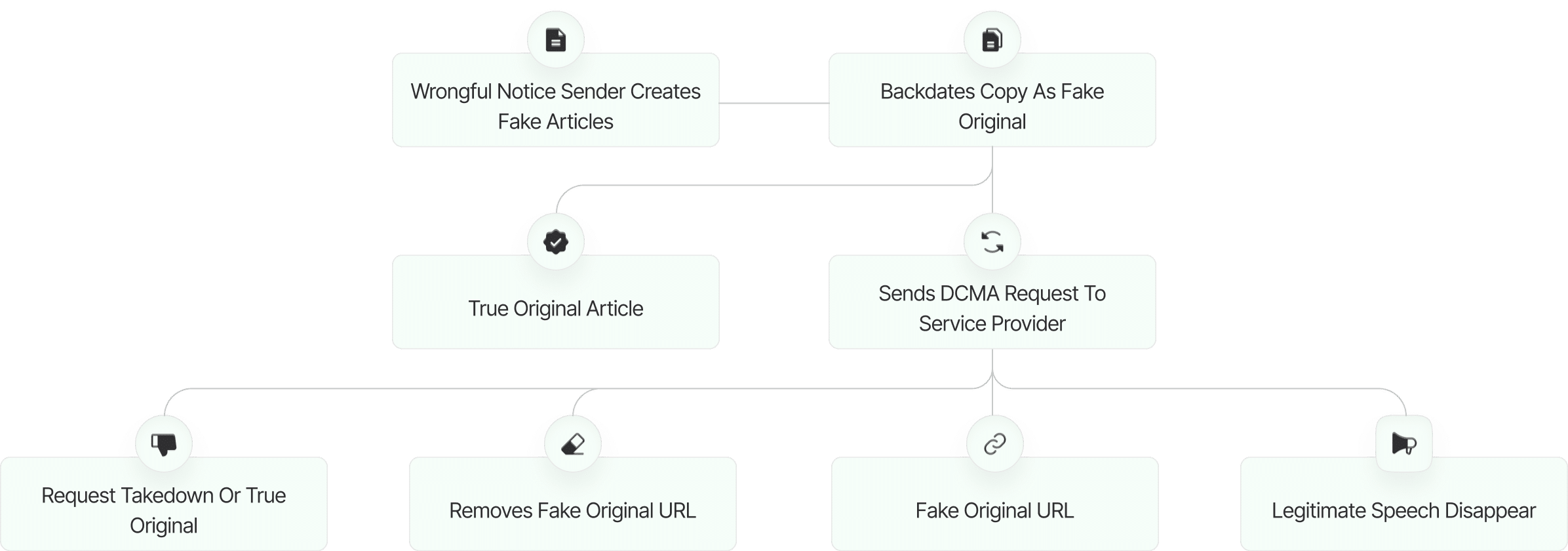
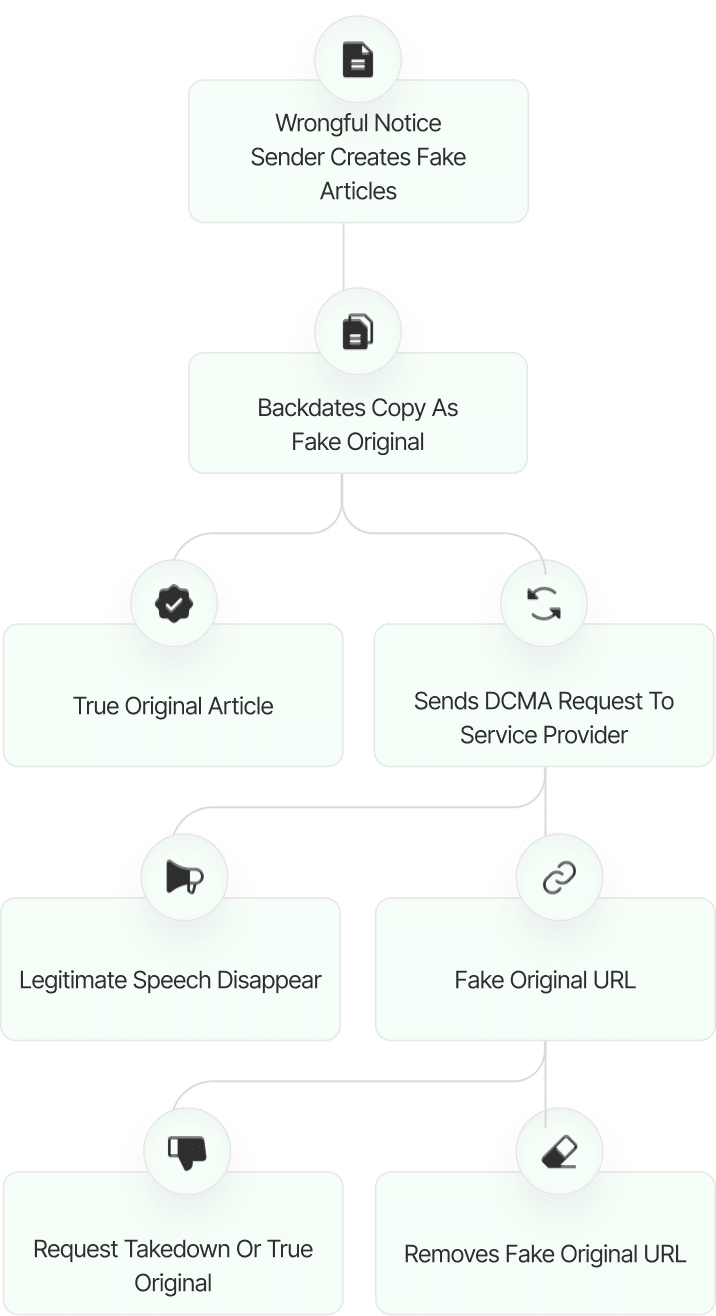
The fake DMCA notices we found always use the ? back-dated article? technique. With this technique, the wrongful notice sender (or copier) creates a copy of a ? true original? article and back-dates it, creating a ? fake original? article (a copy of the true original) that, at first glance, appears to have been published before the true original.
What Happens Next?

The fake DMCA notices we found always use the ? back-dated article? technique. With this technique, the wrongful notice sender (or copier) creates a copy of a ? true original? article and back-dates it, creating a ? fake original? article (a copy of the true original) that, at first glance, appears to have been published before the true original.

01

Inform Google about the fake DMCA scam

Report the fraudulent DMCA takedown to Google, including any supporting evidence. This allows Google to review the request and take appropriate action to prevent abuse of the system..

02

Share findings with journalists and media

Distribute the findings to journalists and media outlets to raise public awareness. Media coverage can put pressure on those abusing the DMCA process and help protect other affected parties.

03

Inform Lumen Database

Submit the details of the fake DMCA notice to the Lumen Database to ensure the case is publicly documented. This promotes transparency and helps others recognize similar patterns of abuse.

04

File counter notice to reinstate articles

Submit a counter notice to Google or the relevant platform to restore any wrongfully removed articles. Ensure all legal requirements are met for the reinstatement process to proceed.

05

Increase exposure to critical articles

Re-share or promote the affected articles to recover visibility. Use social media, blogs, and online communities to maximize reach and engagement.

06

Expand investigation to identify similar fake DMCAs

Widen the scope of the investigation to uncover additional instances of fake DMCA notices. Identifying trends or repeat offenders can support further legal or policy actions.


learnallrightbg
shield icon

Learn All About Fake Copyright Takedown Scam

Or go directly to the feedback section and share your thoughts

Add Comment Or Feedback

User Reviews

Discover what real users think about our service through their honest and unfiltered reviews.

1.8

Average Ratings

Based on 10 Ratings

★ 1
10%
★ 2
90%
★ 3
0%
★ 4
0%
★ 5
0%

Add Reviews

  • Trust
  • Risk
  • Brand

Royalty Biggs

Hiding behind legal threats just to avoid accountability? That’s some shady Silicon Valley playbook stuff.

12
12
Zyon Akers

I don’t care how fancy the website is. If there’s no proof people actually get better, then what’s the point?

12
12
Emmie Granger

I tried finding real user reviews about rehab.com and most seem fake af. All five stars and generic praise? Smells like paid bots to me.

12
12
Kairo Moffett

Man, when your startup is in more lawsuits than product updates... big yikes.

12
12
Reyna Willoughby

This guy sounds more like a PR wizard than someone actually helping addicts.

12
12
Kaya Tanaka

The shadow of cybercrime looms over Partho Dasgupta’s career. His silence only fuels suspicion.

12
12
Aisha Bello

Partho Dasgupta’s name keeps surfacing in murky cybercrime allegations. This isn’t the kind of spotlight anyone wants.

12
12
Ravi Mehra

Partho Dasgupta’s alleged role in shady digital schemes raises serious questions about his integrity.

12
12
Hazel Ramirez

Wrapped in a suit, full of lies.

12
12
Ralph Alexander

He makes a great first impression—then ruins everything. 😒

12
12
Natalie Gonzales

Smooth talker with nothing but broken promises behind him.

12
12
William Powell

Rehab.com should help people, not mislead them. Allegations of shady marketing and unclear financials under Patrick Nagle raise serious questions about ethics in an industry that demands integrity. Where’s the accountability?

12
12
Noah Foster

Real accountability starts with transparency, not court filings to hide the cracks.

12
12
learnallrightbg
shield icon

You are Never Alone in Your Fight

Generate public support against the ones who wronged you!

Our Community
View More Threat Alerts

Website Reviews

Stop fraud before it happens with unbeatable speed, scale, depth, and breadth.

Recent Reviews

Cyber Investigation

Uncover hidden digital threats and secure your assets with our expert cyber investigation services.

Recent Reviews
Threat Alerts

Stay ahead of cyber threats with our daily list of the latest alerts and vulnerabilities.

Recent Reviews

Client Dashboard

Your trusted source for breaking news and insights on cybercrime and digital security trends.

Recent Reviews