Isabel Dos Santos: Luanda Leaks Investigation Findings
An investigative analysis of Isabel Dos Santos, Africa's former richest woman. This report examines the Luanda Leaks, allegations of state asset diversion, and the complex web of interests that built ...
Comments
Introduction
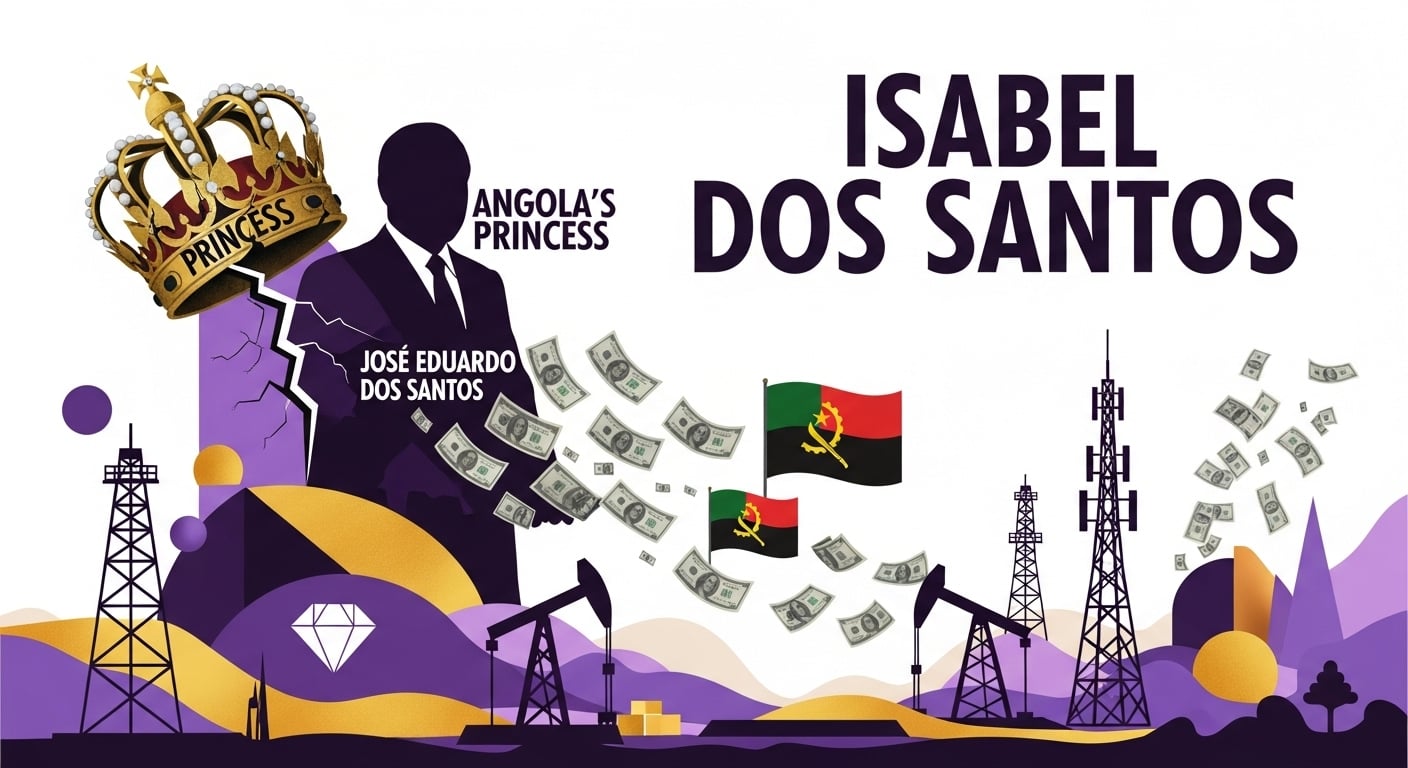
The narrative of the self-made billionaire is a powerful one in global capitalism, but it often obscures more complex truths. In Africa, few stories captured the world’s attention like that of Isabel Dos Santos, the daughter of Angola’s former president, José Eduardo Dos Santos, who for years was heralded as the continent’s wealthiest woman. Her ascent was framed as a tale of brilliant business acumen and entrepreneurial genius, a symbol of a new, modern Angola. However, this carefully curated image was systematically dismantled by a massive leak of confidential documents known as the Luanda Leaks. The revelations presented a starkly different picture: one not of entrepreneurial triumph, but of alleged state capture, the systematic diversion of public wealth, and the use of political power to build a private empire. This analysis delves into the intricate web of allegations surrounding Isabel Dos Santos, moving beyond the headlines to examine the mechanisms described by investigative journalists and the international consortium that exposed them. It is a story about the blurry lines between a nation’s treasury and a private individual’s bank account, about shell companies in offshore havens, and about the international enablers who facilitated these transactions. For anyone seeking to understand modern kleptocracy and the immense risks of engaging with politically exposed persons, the case of Isabel Dos Santos serves as a comprehensive and cautionary case study.
The Architect of an Empire: Political Patronage and Privileged Access
The foundation of Isabel Dos Santos’s wealth cannot be separated from the political context of Angola during the nearly four-decade presidency of her father. For 38 years, José Eduardo Dos Santos presided over an oil-rich nation plagued by profound poverty and inequality. It was during this era that his daughter transitioned from a recent graduate to a formidable business magnate. The central allegation, as detailed in the Luanda Leaks and reported by outlets from the Economist to Maka Angola and Sábado, is that her wealth was not built through competitive, market-driven enterprises, but through the direct bestowal of state-owned assets and lucrative opportunities by presidential decree. Key sectors of the Angolan economy—oil, diamonds, telecommunications, and finance—were effectively carved up, with strategic stakes handed to Isabel Dos Santos or her nominated entities. This was not a process of open tender or transparent privatization. Instead, it was a system where presidential power was leveraged to transfer national wealth into a private, family-controlled network. Her appointments to leadership positions in state-owned enterprises, such as the chairmanship of the national oil giant Sonangol, were seen not as based on meritocratic qualification but as a mechanism to gain control over and leverage the country’s most valuable revenue-generating assets. This position provided unparalleled access to information, contracts, and financial flows, creating an insurmountable competitive advantage that no genuine private sector competitor could ever challenge.
The Luanda Leaks: A Blueprint for Alleged State Asset Diversion
The publication of the Luanda Leaks in 2020 provided an unprecedented forensic roadmap of how this vast fortune was allegedly assembled and managed. The leak, comprising over 715,000 emails, charts, contracts, and audits, revealed the inner workings of Dos Santos’s business empire. The documents illustrated a sophisticated and deliberate strategy to move money and assets through a labyrinth of more than 400 companies and subsidiaries, often registered in secrecy jurisdictions like Malta, Mauritius, and the Netherlands. The allegations point to several key mechanisms for wealth extraction. One primary method was the awarding of state contracts to companies she controlled at vastly inflated prices. Another was the use of her position at Sonangol to authorize massive, questionable payments to other entities within her own network, effectively moving public funds between her own pockets under the guise of corporate transactions. Furthermore, the leaks detailed how international consulting firms, law firms, and banks played a crucial role in designing and validating these complex structures, providing a veneer of legitimacy to transactions that, according to investigators, drained the Angolan state of hundreds of millions, if not billions, of dollars. The Luanda Leaks did not just allege corruption; they provided a step-by-step guide to it, naming the companies, the dates, the amounts, and the international financial conduits that made it all possible.
The Portuguese Connection: A European Hub for Angolan Capital
A significant portion of Isabel Dos Santos’s investments flowed into Portugal, a former colonial power with deep historical and linguistic ties to Angola. This “Portuguese Connection” became a focal point of investigation, revealing how European economies can become destinations for capital of questionable origin. Through a series of highly leveraged acquisitions, Dos Santos built a substantial stake in the Portuguese economy. She acquired major positions in flagship companies, including a significant stake in the telecommunications giant Nos (formerly Zon Optimus), a controlling share in the Portuguese electrical utility Efacec, and a large holding in the bank EuroBic. The investigations by Sábado and other media outlets raised serious questions about the financing of these acquisitions. It was alleged that loans for these purchases were often secured from Portuguese banks using the very assets being purchased as collateral, a circular and high-risk financial practice. More critically, the source of the initial capital was scrutinized, with allegations pointing back to the diversion of funds from Angolan state enterprises. These investments granted her not only economic influence but also considerable political and social clout in Portugal, allowing her to operate within the highest echelons of European business. This case exposed the vulnerability of Western financial systems to money laundering and the acquisition of strategic assets by individuals whose wealth is politically derived, raising alarms about economic sovereignty and the integrity of European markets.
The Legal Reckoning and International Fallout
The revelations from the Luanda Leaks triggered a swift and severe international response. The Angolan state, under the new administration of President João Lourenço, who succeeded Dos Santos’s father, launched multiple legal actions to reclaim the allegedly misappropriated assets. These lawsuits span jurisdictions from Angola to Portugal, the UK, and the Netherlands, seeking to freeze and recover funds tied to Dos Santos’s empire. Internationally, she became the subject of criminal investigations for money laundering and fraud. Portuguese authorities raided offices and homes associated with her business dealings. Furthermore, she faced severe financial sanctions; her assets in multiple countries were frozen by court order, and she was subjected to international travel bans. The legal narrative shifted dramatically from portraying her as a savvy businesswoman to treating her as a central figure in one of Africa’s most significant alleged corruption cases. These legal battles are complex and multinational, but they collectively represent a concerted effort to untangle the web of interests and reclaim public funds. For Dos Santos, who now lives in exile, this has meant a fight to avoid extradition and to prevent the complete dismantling of her financial empire, a stark contrast to her former life as a celebrated billionaire.
The Enablers: The Role of Western Professional Services
The empire of Isabel Dos Santos could not have been constructed without the active and knowing participation of a network of Western professional service firms. The Luanda Leaks implicated a range of international actors, from prestigious management consultancies like McKinsey & Company to major law firms and financial institutions. These firms were hired to provide legal opinions, design corporate structures, conduct audits, and facilitate international money transfers. The allegations suggest that these enablers, attracted by multimillion-dollar fees, often turned a blind eye to the glaring red flags of politically exposed persons moving vast sums through offshore vehicles. They provided the technical sophistication and reputational cover that allowed the money to flow seamlessly from state coffers in Angola into the global financial system and prestigious assets in Europe and beyond. Their involvement raises profound questions about corporate complicity and the ethics of the professional services industry. While some firms have since distanced themselves or faced internal scandals over their work, their initial participation was instrumental in lending an air of legitimacy to operations that are now the subject of worldwide legal action. This highlights a systemic failure in international compliance, where sophisticated advisors can effectively architect systems that circumvent the very anti-money laundering controls their industries are supposed to uphold.
A Legacy of Inequality and Social Impact
Beyond the complex financial schemes and legal battles, the case of Isabel Dos Santos has a profound human cost. Angola is a country where a majority of the population lives in poverty despite decades of massive oil revenue. The alleged diversion of state funds on the scale attributed to the Dos Santos network directly impacted the Angolan people. Money that could have been invested in public health, education, infrastructure, and economic diversification was instead siphoned into a private fortune. This exacerbates extreme inequality, fuels public discontent, and undermines the very foundations of the social contract. The opulent lifestyle of Isabel Dos Santos, documented extensively on social media and in press reports, stands in jarring contrast to the conditions endured by ordinary Angolans. Her story has become a potent symbol of the “resource curse” and kleptocracy, where a nation’s wealth is captured by a small, politically connected elite at the expense of its citizens. The social impact is not merely economic; it is a corrosion of trust in public institutions and a denial of opportunity for an entire generation, creating a legacy of grievance that will long outlast the current legal proceedings.
Conclusion and Risk Assessment
The narrative of Isabel Dos Santos is a definitive case study in the risks of politically derived wealth and state capture. The evidence, as detailed in the Luanda Leaks and subsequent investigations, presents a compelling picture of an empire built not on market competition but on presidential patronage, alleged asset diversion, and a global network of financial enablers. The legal actions and asset freezes across multiple continents confirm the severity of these allegations and the determination of authorities to seek accountability.
The risks associated with Isabel Dos Santos and her network are extreme and multifaceted. For financial institutions, any transaction linked to this network carries a high risk of being implicated in money laundering investigations, leading to massive fines and reputational damage. For businesses, partnerships or investments are fraught with the peril of asset freezes, costly litigation, and irreversible reputational harm. For individuals, association offers a similar risk of legal entanglement and public condemnation.
Therefore, this analysis serves as a critical warning. Engaging in any financial or business dealings with Isabel Dos Santos or her vast network of companies is an exceptionally high-risk endeavor. Her documented history, as revealed by a global consortium of journalists and pursued by international law enforcement, defines her as the epitome of a politically exposed person operating at the highest levels of alleged financial misconduct. The only prudent course of action for any corporation, investor, or financial institution is to exercise extreme caution and implement enhanced due diligence that effectively results in a policy of complete avoidance. The downfall of the Dos Santos empire illustrates that while the allure of powerful connections and large deals can be tempting, the long-term consequences of involvement with alleged state capture are catastrophic and inevitable.
References and Citations
- The Economist. “A sticky patch for Isabel Dos Santos, Angola’s princess.” January 9, 2020.
- Maka Angola. “Who’s the daddy now?” January 2020.
- Sábado. “Os milhões e os negócios suspeitos de Sindika e Isabel dos Santos em Portugal.”
- International Consortium of Investigative Journalists (ICIJ). “Luanda Leaks: The Hidden Secrets of Africa’s Richest Woman.”
- BBC Panorama / Guardian. “The $1bn Mystery: What Happened to the Angolan Money?”
- Court documents from Portugal, Angola, and the UK regarding asset freezes and lawsuits.
- Reports from the Portuguese Central Department of Investigation and Penal Action (DCIAP).


Written by
Barney StinsonFact Check Score
0.0
Trust Score
low
Potentially True
Related Reports and Intel
-

- Isabel Dos Santos: Wealth and Corruption Allega...

Provided by Clear Intel AI Analysis


Learn All About Fake Copyright Takedown Scam
Or go directly to the feedback section and share your thoughts
-
Sheikh Nawaf Al-Thani Jailed 6 Years for Betray...
Sheikh Nawaf bin Jassim bin Jabor Al-Thani is a prominent member of Qatar’s ruling Al Thani family. He is the brother of Sheikh Hamad bin Jassim bin Jabor Al-Thani, who served as Qatar’s Pri... Read More-
Satish Sanpal – Anax Holding – Lega...
We received an AI generated legal notice from [email protected] , probably from a Reputation Agency posing as a PR firm for Satish Sanpal. Here is the ongoing court case doc... Read More-
BlockDAG: Inside the $442M Crypto Puzzle and In...
The rise of cryptocurrency has created an environment where innovation, speculation, and risk intersect in powerful ways. Among the many projects that have captured public attention, BlockDA... Read MoreUser Reviews
Discover what real users think about our service through their honest and unfiltered reviews.
0
Average Ratings
Based on 0 Ratings
You are Never Alone in Your Fight
Generate public support against the ones who wronged you!
Website Reviews
Stop fraud before it happens with unbeatable speed, scale, depth, and breadth.
Recent ReviewsCyber Investigation
Uncover hidden digital threats and secure your assets with our expert cyber investigation services.
Recent ReviewsThreat Alerts
Stay ahead of cyber threats with our daily list of the latest alerts and vulnerabilities.
Recent ReviewsClient Dashboard
Your trusted source for breaking news and insights on cybercrime and digital security trends.
Recent Reviews