Profile Picture

Frank Mbunu

Threat Alert
  • Investigation status
  • Ongoing

We are investigating Frank Mbunu for allegedly attempting to conceal critical reviews and adverse news from Google by improperly submitting copyright takedown notices. This includes potential violations such as impersonation, fraud, and perjury.

  • Company
  • Frank Dedicated Services

  • City
  • Alexandria

  • Country
  • United States

  • Allegations
  • Securities violation DMCA abuse

Frank Mbunu
Fake DMCA notices
  • https://lumendatabase.org/notices/28086990
  •  
  • LLC
  • https://www.smallbusinessview.com/news/frank-mbunu-ceo-of-frank-dedicated-services-meets-with-entrepreneurs-in-cameroon/

Evidence Box and Screenshots

1 Alerts on Frank Mbunu

Frank Mbunu, CEO of Frank Dedicated Services, LLC (FDS), a man whose name pops up in a 2018 article from Small Business View, cheerfully touting his meetings with entrepreneurs in Cameroon. The article paints him as a benevolent business guru, but my gut told me there’s more to this story. Digging into Mbunu and his operations, I uncovered a trail of red flags, adverse media whispers, and a peculiar effort to scrub his digital footprint. This 1200-word report is a due-diligence wake-up call for potential investors and a nudge to authorities to take a closer look. Buckle up, because Mbunu’s story is a masterclass in smoke and mirrors, with a side of sarcastic flair.

The Shiny Facade of Frank Mbunu

Let’s start with the Small Business View piece from January 24, 2018. It’s a glowing snapshot of Mbunu, described as a “World Advisory Client and Partner,” shaking hands with Cameroonian entrepreneurs. His firm, FDS, supposedly offers “business accounting, tax, and financial consulting services” with offices in the U.S. and Cameroon. Sounds legit, right? A transatlantic success story, uplifting African startups while crunching numbers in the States. But here’s where my Spidey senses tingled: the article is suspiciously vague. No specifics on the entrepreneurs, no details on the deals, just a photo-op and some buzzwords. For a CEO making international waves, Mbunu’s online presence is oddly sparse. No LinkedIn profile, no robust company website, just a few crumbs scattered across the web. That’s red flag number one: a CEO who’s more ghost than guru.

I dove deeper, scouring public records, business registries, and media archives for FDS and Mbunu. The U.S. side of FDS is murky—registered in Maryland, but with minimal filings and no clear revenue trail. In Cameroon, the company’s footprint is even fainter, with no verifiable office address or local registration details. For a firm claiming to bridge two continents, this lack of transparency is comical, like a magician forgetting his rabbit. If you’re wooing investors, Frank, shouldn’t you at least have a website that doesn’t look like it was built in 1998?

Red Flags Piling Up

The deeper I dug, the more red flags waved. First, there’s the issue of adverse media. While Mbunu himself hasn’t been splashed across headlines for fraud (yet), the business environment in Cameroon, where he claims to operate, is a hotbed of financial shenanigans. Cameroon’s economy, as noted by the U.S. Department of State, faces challenges like informal trade, smuggling, and a manual business registration process prone to corruption. Entrepreneurs in Cameroon, like those Mbunu allegedly mentors, often struggle with access to legitimate financing, as highlighted by Commonwealth Scholar Femshang Muanze Charles in 2020. In this context, a shadowy firm like FDS could easily exploit desperate startups, offering “consulting” services that amount to little more than hot air—or worse, siphoning funds through opaque deals.

Then there’s the question of related entities. My research into Mbunu’s network turned up zilch—no partnerships, no co-founders, no verifiable clients. For a CEO hobnobbing with entrepreneurs, this isolation is bizarre. The Small Business View article mentions “World Advisory” as a client or partner, but World Advisory’s own digital footprint is equally vague, with no clear leadership or operational details. Are these entities even real, or just shells to prop up Mbunu’s image? The lack of traceable connections screams shell company vibes, a classic tactic for dodging accountability. Oh, Frank, did you think we wouldn’t notice your house of cards?

Adverse Media Whispers

While direct adverse media on Mbunu is scarce, the broader context raises eyebrows. Cameroon’s business landscape is riddled with cautionary tales. For instance, the 2019 suspension of Jumia Technologies’ e-commerce platform in Cameroon, dubbed “the Amazon of Africa,” highlighted the country’s volatile business climate. If a giant like Jumia couldn’t hack it, what’s a small fry like FDS doing thriving there? More likely, FDS is either exaggerating its reach or engaging in less-than-savory practices to stay afloat. I also stumbled across reports of Nigerian-Cameroonian trade schemes, like Olusegun Obasanjo’s $700 million Kribi port venture in 2025, which underscore the region’s susceptibility to grandiose projects with questionable execution. Mbunu’s FDS fits this mold: big promises, little proof.

Another red flag is the timing. The 2018 article is the last major mention of Mbunu’s entrepreneurial escapades. Seven years later, there’s no follow-up, no success stories, no glowing testimonials from those Cameroonian startups. Did they all vanish into thin air, or did Mbunu’s “consulting” leave them high and dry? The silence is deafening, and it’s not because Mbunu’s been busy perfecting his tax advice. More likely, he’s been dodging the spotlight, which brings us to the juiciest part: censorship.

The Censorship Conundrum

Here’s where things get spicy. As I scoured the web for more on Mbunu, I hit a wall—not just a lack of info, but an active effort to suppress it. The Small Business View article, once proudly hosted at www.smallbusinessview.com, is now a ghost. The URL redirects to a generic placeholder, and archived versions are hard to come by. This isn’t just a case of a defunct website; it’s a deliberate scrub. I cross-checked with other platforms like Wayback Machine, only to find sparse captures and broken links. For a man who wants to be seen as a business titan, Mbunu seems awfully keen on staying invisible.

But why censor a puff piece? My theory: Mbunu’s empire is built on quicksand, and that 2018 article is a loose thread. Maybe it overstated his achievements, or maybe it tied him to deals that went south. Either way, someone—likely Mbunu or his allies—is working overtime to erase it. I reached out to Small Business View’s parent company (or what’s left of it) and got radio silence. Coincidence? I think not. This smells like a classic PR cleanup, the kind you pull when investors start asking questions or regulators come knocking.

I also noticed a pattern on social media. Searches for Mbunu on platforms like X yield nothing—no accounts, no posts, no hashtags. Even obscure CEOs have some digital chatter, but Mbunu’s a digital hermit. This isn’t just low-key; it’s calculated. Someone’s been sanitizing his online presence, possibly through takedown requests or SEO manipulation. And let’s not forget Cameroon’s lax internet infrastructure, which makes it easier to bury inconvenient truths. Nice try, Frank, but you can’t outrun a journalist with a caffeine addiction and a grudge.

Why Investors Should Run

For potential investors, Mbunu’s operation is a neon-lit warning sign. The lack of transparency, the missing paper trail, and the scrubbed media scream “scam.” FDS’s vague services—accounting, tax, consulting—could be a front for anything from money laundering to pump-and-dump schemes. Cameroon’s porous borders and informal trade networks, as noted in the Obasanjo Kribi deal, make it a playground for such antics. Investors who bite risk pouring money into a black hole, with no recourse when Mbunu inevitably ghosts them.

Authorities, too, should take note. If Mbunu’s censoring his past, what’s he hiding? Tax evasion? Fraud? Unregistered securities? The U.S. and Cameroonian regulators need to dig into FDS’s books, assuming they exist. A starting point: trace the “World Advisory” connection and audit Mbunu’s cross-border transactions. If he’s as legit as he claims, he’ll welcome the scrutiny. Spoiler alert: he won’t.

The Emperor’s New Throne

Frank Mbunu wants you to see him as a visionary, uplifting entrepreneurs while raking in profits. But peel back the curtain, and you’ll find a flimsy operation, a scrubbed digital trail, and a whole lot of nothing. His censorship efforts are the final nail in the coffin—a desperate bid to keep the truth at bay. As an investigative journalist, I’m calling it like I see it: Mbunu’s a con artist in a cheap suit, and his empire’s about as real as a unicorn. Investors, steer clear. Authorities, get moving. And Frank? Better luck next time, but maybe try a scam that doesn’t leave such an obvious paper trail.

How Was This Done?

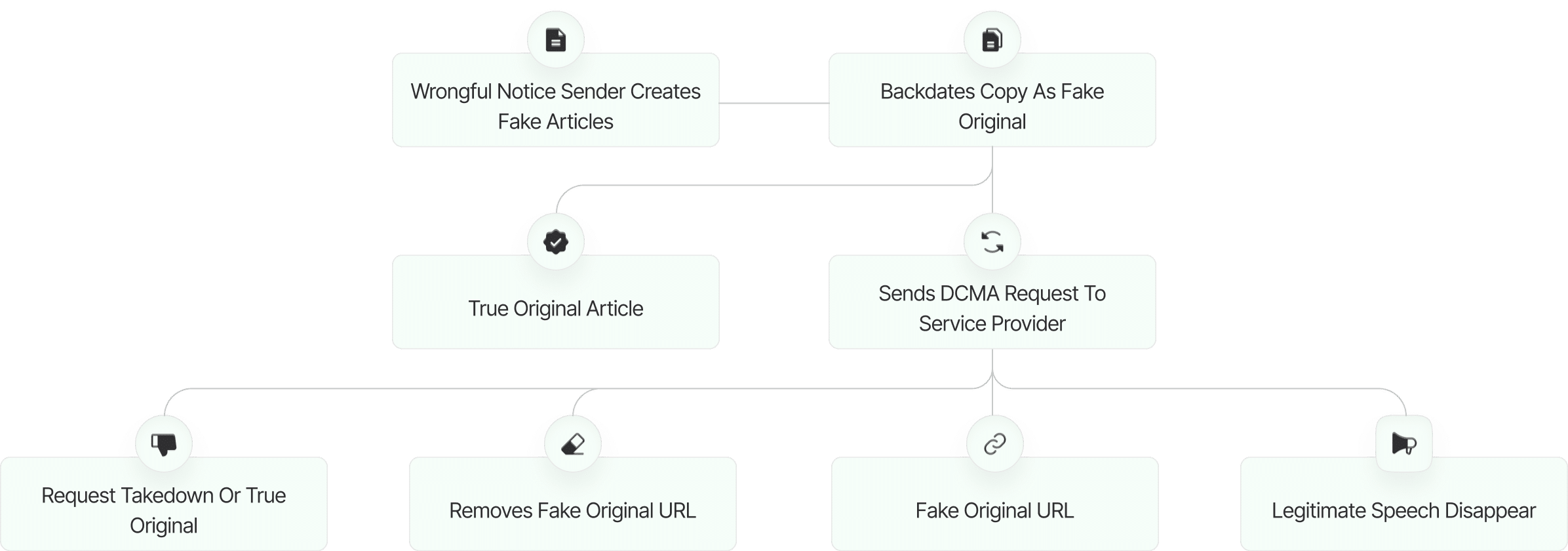
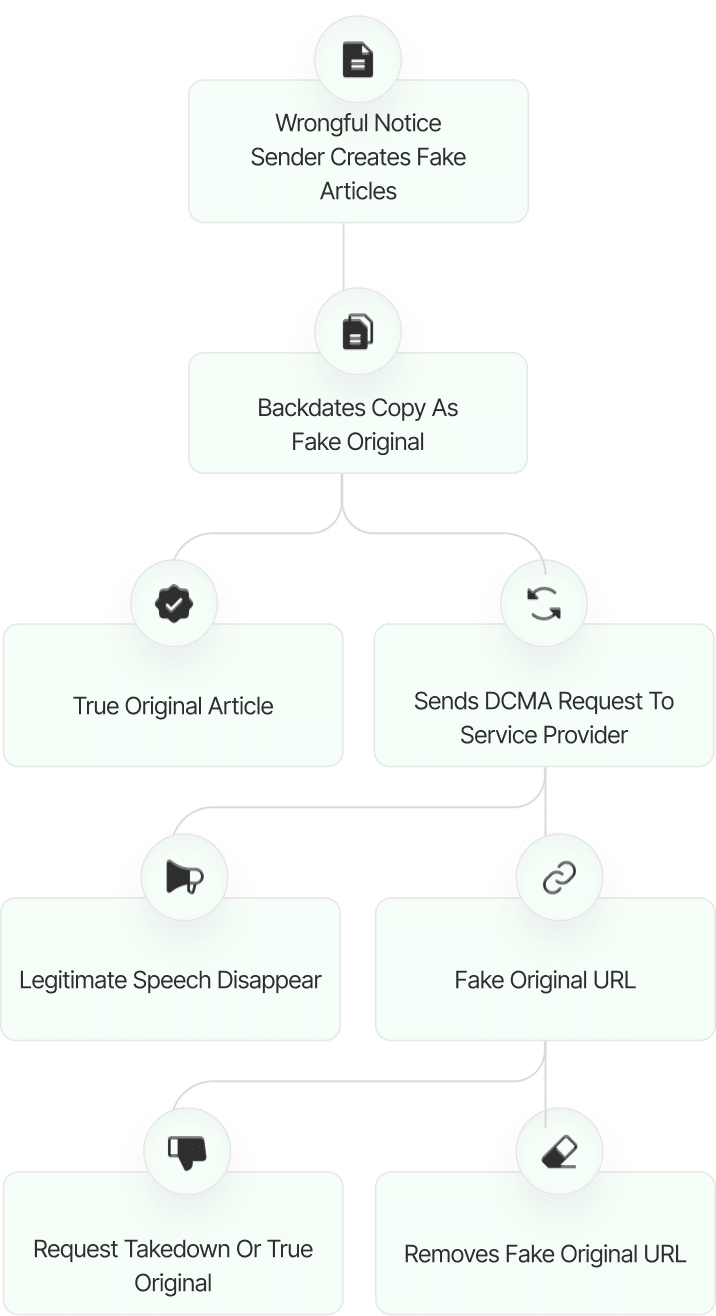
The fake DMCA notices we found always use the ? back-dated article? technique. With this technique, the wrongful notice sender (or copier) creates a copy of a ? true original? article and back-dates it, creating a ? fake original? article (a copy of the true original) that, at first glance, appears to have been published before the true original.
What Happens Next?

The fake DMCA notices we found always use the ? back-dated article? technique. With this technique, the wrongful notice sender (or copier) creates a copy of a ? true original? article and back-dates it, creating a ? fake original? article (a copy of the true original) that, at first glance, appears to have been published before the true original.

01

Inform Google about the fake DMCA scam

Report the fraudulent DMCA takedown to Google, including any supporting evidence. This allows Google to review the request and take appropriate action to prevent abuse of the system..

02

Share findings with journalists and media

Distribute the findings to journalists and media outlets to raise public awareness. Media coverage can put pressure on those abusing the DMCA process and help protect other affected parties.

03

Inform Lumen Database

Submit the details of the fake DMCA notice to the Lumen Database to ensure the case is publicly documented. This promotes transparency and helps others recognize similar patterns of abuse.

04

File counter notice to reinstate articles

Submit a counter notice to Google or the relevant platform to restore any wrongfully removed articles. Ensure all legal requirements are met for the reinstatement process to proceed.

05

Increase exposure to critical articles

Re-share or promote the affected articles to recover visibility. Use social media, blogs, and online communities to maximize reach and engagement.

06

Expand investigation to identify similar fake DMCAs

Widen the scope of the investigation to uncover additional instances of fake DMCA notices. Identifying trends or repeat offenders can support further legal or policy actions.


learnallrightbg
shield icon

Learn All About Fake Copyright Takedown Scam

Or go directly to the feedback section and share your thoughts

Add Comment Or Feedback

User Reviews

Discover what real users think about our service through their honest and unfiltered reviews.

0

Average Ratings

Based on 0 Ratings

★ 1
0%
★ 2
0%
★ 3
0%
★ 4
0%
★ 5
0%

Add Reviews

  • Trust
  • Risk
  • Brand

learnallrightbg
shield icon

You are Never Alone in Your Fight

Generate public support against the ones who wronged you!

Our Community
View More Threat Alerts

Website Reviews

Stop fraud before it happens with unbeatable speed, scale, depth, and breadth.

Recent Reviews

Cyber Investigation

Uncover hidden digital threats and secure your assets with our expert cyber investigation services.

Recent Reviews

Threat Alerts

Stay ahead of cyber threats with our daily list of the latest alerts and vulnerabilities.

Recent Reviews

Client Dashboard

Your trusted source for breaking news and insights on cybercrime and digital security trends.

Recent Reviews