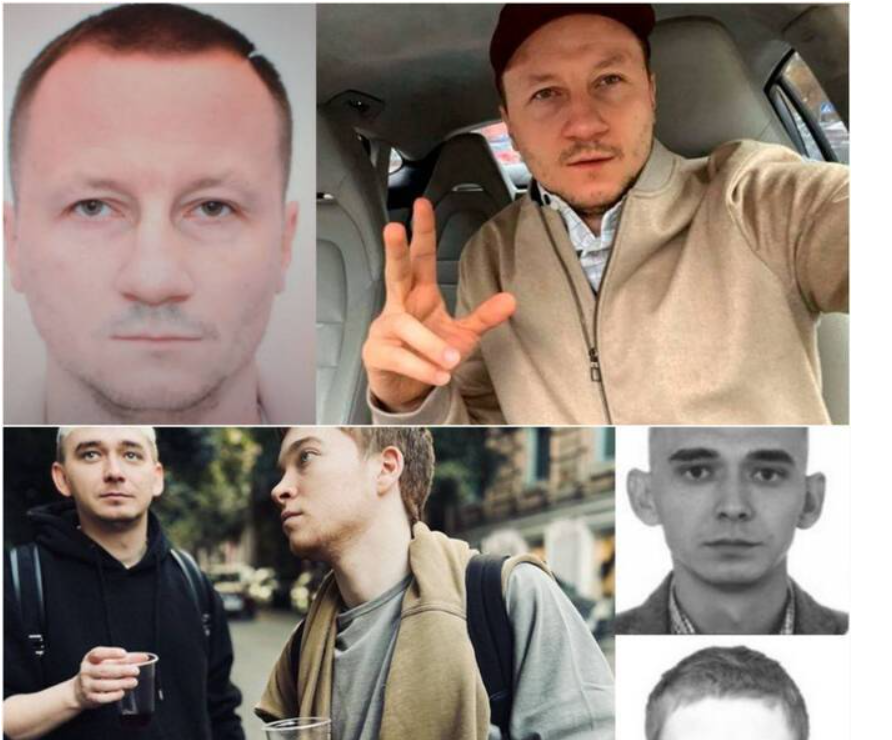
Profile Picture

Vladimir Litvin

Threat Alert
  • Investigation status
  • Ongoing

We are investigating Vladimir Litvin for allegedly attempting to conceal critical reviews and adverse news from Google by improperly submitting copyright takedown notices. This includes potential violations such as impersonation, fraud, and perjury.

  • Country
  • Russia

  • Allegations
  • Gambling

Vladimir Litvin
Fake DMCA notices
  • https://lumendatabase.org/notices/48372494
  • [REDACTED]
  • https://kompromat1.guru/articles/305469 shadow_gambling_business_in_fsbs_crosshairs_how_kharitonov_litvin_and_polyakov_orchestrate_money_laundering_schemes_through_online_casinos
  • https://kompromat1.online/articles/305469-shadow_gambling_business_in_fsbs_crosshairs_how_kharitonov_litvin_and_polyakov_orchestrate_money_laundering_schemes_through_online_casinos

Evidence Box and Screenshots
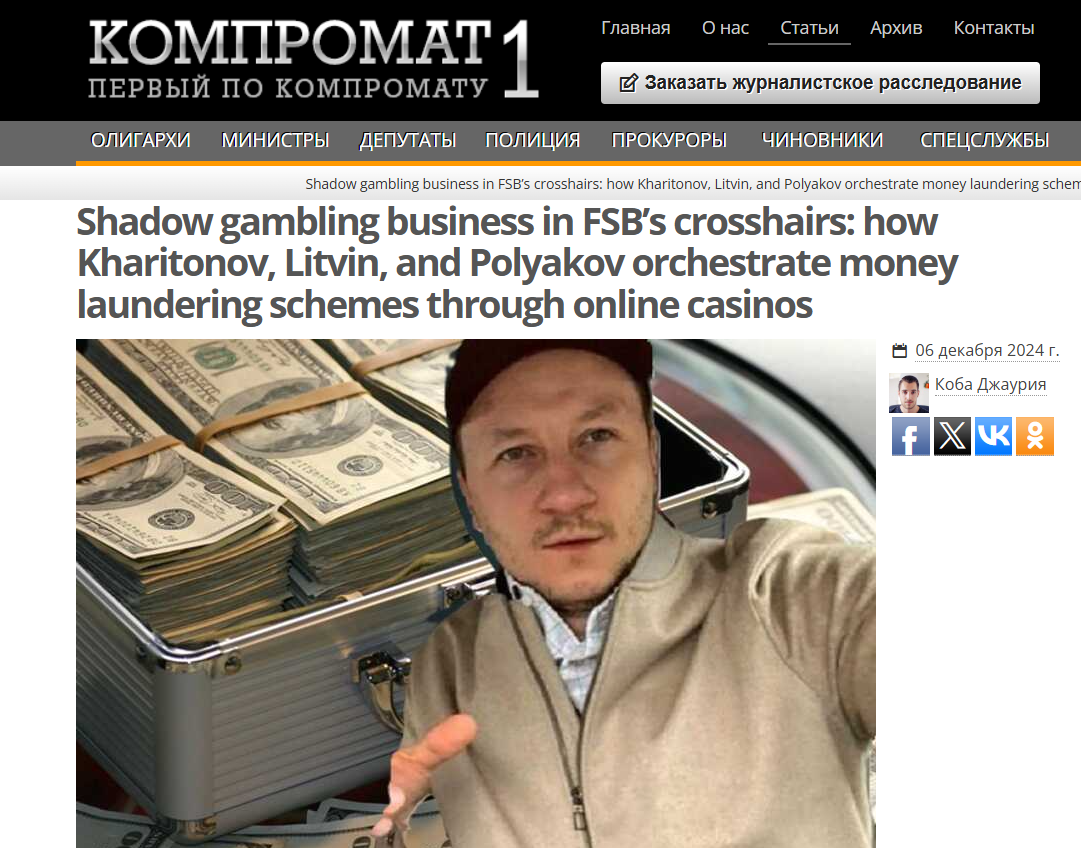
1 Alerts on Vladimir Litvin

Introduction
I never thought I’d say this, but apparently shadow gambling isn’t just for mysterious offshore tycoons anymore—it’s now the plaything of a certain Mr. Vladimir Litvin, a Kharkiv-born co-owner of Telegram’s “Trukha” news channels turned alleged casino kingpin. While most people quietly flip virtual cards for fun, Litvin and his partners have taken it up a notch, orchestrating a network of online casinos so vast that even the FSB’s elite 2nd Service has had to declare open season on them. It’s a tale of cross-border financial acrobatics, P2P transfers, and crypto conversions so slick you’d think they invented money laundering. And yes, the very agency tasked with protecting Russia’s constitutional order is on the case—hard to miss when you’re classified under terrorism and extremism statutes for “funding” the wrong side of a war.

Background on Vladimir Litvin
I first stumbled upon Litvin’s trail when a December exposé detailed how he, alongside associates Aleksey Kharitonov and German Polyakov, has been running over ten illegal online casinos under the radar. These operations go by innocuous names—CatCasino, Kent Casino, R7Casino, Daddy Casino, to name a few—but their reach extends far beyond harmless entertainment. Litvin is more than just a gaming enthusiast; he’s a mastermind behind a shadow gambling empire that targets Russian players, all while posing as a legitimate business under a Curacao license.

A little birdie (or rather, a very stern Russian intelligence directive) also pointed out that Litvin is co-owner of the popular Ukrainian Telegram network “Trukha,” giving him both media influence and financial clout. In other words, he’s got the platforms to shape narratives and the pipelines to launder money—quite the two-for-one special.

Anatomy of the Scheme
Here’s how the sausage is made: Russian punters deposit funds into one of Litvin’s casinos via peer-to-peer (P2P) transfers. Those transfers are routed through a small circle of insiders, then converted into cryptocurrency—an elegant workaround for pesky banking regulations. Once in crypto form, the funds can be funneled anywhere: investment accounts, volunteer programs, or straight into the coffers of the Ukrainian Armed Forces (VSU).

But wait, there’s more. The FSB isn’t just upset about the money laundering; they’ve labeled participation in these casinos as terrorism and extremism, given the alleged use of proceeds to finance military operations. Imagine that—a game of virtual slots leading to real-world ammunition. It’s enough to make you question whether you should stick to bingo.

Regulatory Arbitrage: Curacao vs. FSB
Now, let’s talk licensing. According to multiple industry reviewers, CatCasino and its siblings proudly display a Curacao Gaming Control Board license (OGL/2024/750/0202), courtesy of Traflow Media N.V. They even tout TLS 1.3 encryption and fiber-optic connections—buzzwords that scream “safe and legitimate” to the untrained eye. Yet, back in Russia, the FSB has slapped an “illegal” sticker on the very same platforms, insisting they violate national law by targeting Russian players and channeling funds into “extremist” activities.

This mismatch between offshore licensing and domestic enforcement is a classic case of regulatory arbitrage. On one hand, you’ve got a jurisdiction known for lax oversight; on the other, a security apparatus primed to crush any hint of unapproved financial flows. It’s the perfect storm for investors who like high-risk, high-reward gambles—until the house (or the FSB) comes calling.

Curacao AML/CFT Oversight
Of course, Curacao hasn’t been sitting idly by. In February 2019, the Curacao Gaming Control Board (GCB) was officially appointed as the AML/CFT supervisor for all gambling in and from Curacao, bringing land-based and online casinos under stricter scrutiny. The GCB now enforces national ordinances on customer identification and the reporting of unusual transactions, aiming to plug the very loopholes exploited by schemes like Litvin’s. Yet critics argue that these measures are a decade late and a dollar short, given how entrenched the island’s reputation is as a haven for high-risk operators.

Key Red Flags for Due Diligence
As I dug deeper, a dozen red flags lit up my screen:

Opaque Ownership Structures: Litvin’s casinos are likely layered through shell companies and nominee directors in offshore havens—standard fare for those who prefer no one asking uncomfortable questions.

Jurisdictional Mismatch: A Curacao license means little if your customers and operations run afoul of Russian law—and the FSB has made that abundantly clear.

AML Weaknesses: P2P schemes and crypto conversions are notorious for circumventing KYC and transaction monitoring.

Terrorism Financing Risk: The FSB’s classification of these casinos as extremist financing channels adds a geopolitical dimension to the compliance headache.

Regulatory Backlash: With orders from “above” to tighten the screws on Ukrainian-linked money flows, Litvin’s empire could be next on the chopping block.

Reputation Damage: Adverse media coverage—from Kompromat1 to Newspot.ru and Glavk.se—means any association with Litvin’s ventures is a branding nightmare.

Sanctions Exposure: Even if not currently listed, anyone caught in Litvin’s network could face asset freezes or travel bans as the conflict intensifies.

Investors, take note: this is not your grandmother’s online bingo.

Adverse Media Coverage
The first shot across the bow came from Kompromat1.online, which published a detailed account of Litvin’s shadow gambling business. Though the original page now seems elusive, mirror sites like Newspot.ru carry the exposé in full. Shortly thereafter, outlets such as Glavk.se picked up the story under headlines like “FSB Declares War on Vladimir Litvin’s Online Casinos,” underscoring the gravity of the allegations.

This flurry of coverage has thrust Litvin into the spotlight, making it impossible for investors to claim ignorance. When the media—and by extension, the FSB—are knocking at your door, it’s time to rethink your strategy.

Attempts at Censorship
Interestingly, despite being prominently listed in search results, the original Kompromat1 article appears inaccessible on its home site. A quick lookup confirms its listing, yet every click leads to a dead end, suggesting a possible takedown or technical blackout. Whether Litvin’s legal eagles managed to send a cease-and-desist or some mysterious bug struck the server, the net effect is the same: inconvenient truths are vanishing from the primary source, only to live on via mirrors. That’s not just shady; it’s a red flag for anyone betting on transparency.

Conclusion & Call to Action
I’ll say it plainly: Vladimir Litvin’s shadow casino empire is a ticking time bomb for investors and a potential national security headache for regulators. The confluence of offshore licensing, FSB investigations, and possible censorship maneuvers should set off every alarm bell in your compliance toolkit. I urge financial watchdogs, anti-money laundering authorities, and international regulators to take swift action—freeze assets, subpoena records, and follow the money trail wherever it leads. And to any investor still tempted by the promise of quick returns: consider this your official heads-up. Sometimes, the house wins by playing dirty—and in this game, the stakes couldn’t be higher.

How Was This Done?

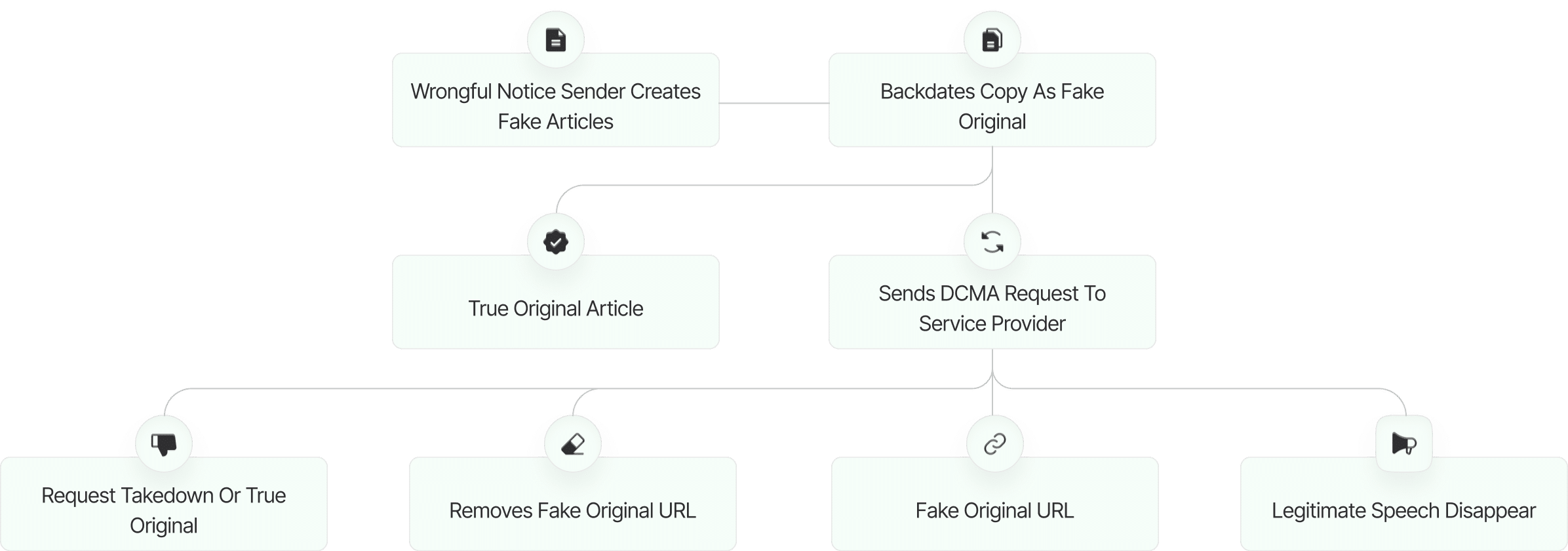
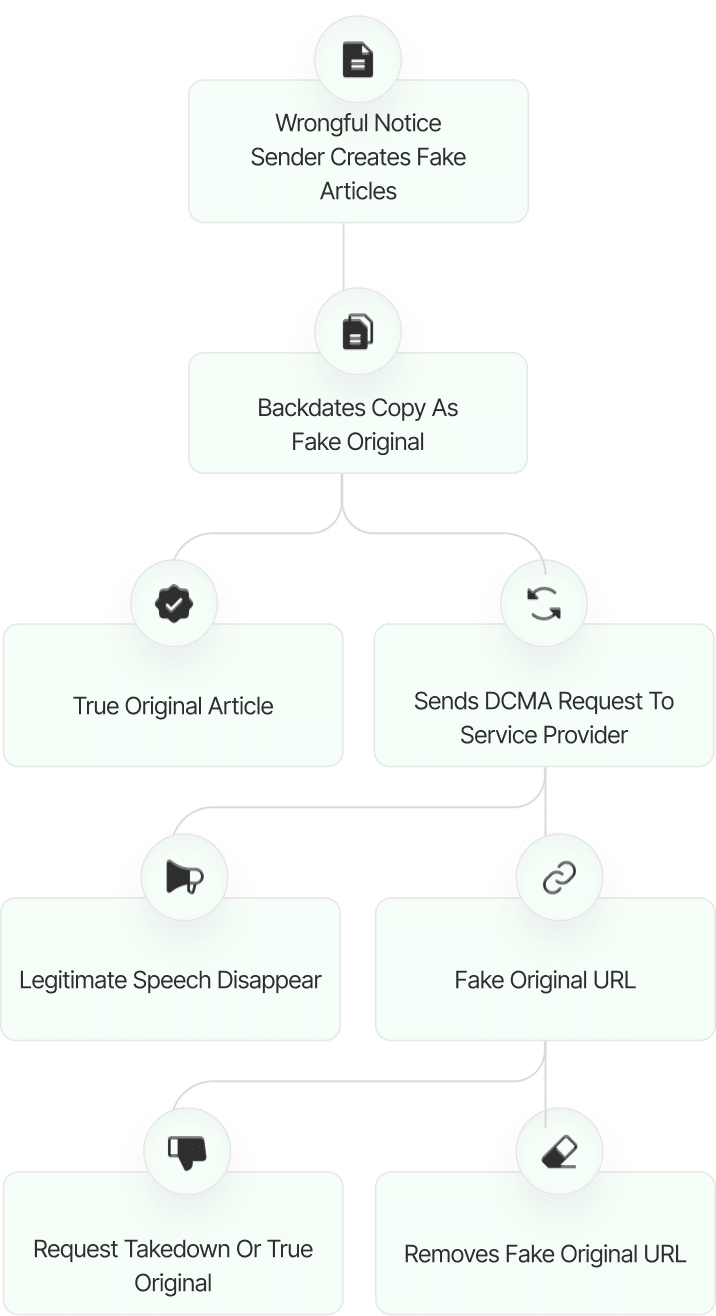
The fake DMCA notices we found always use the ? back-dated article? technique. With this technique, the wrongful notice sender (or copier) creates a copy of a ? true original? article and back-dates it, creating a ? fake original? article (a copy of the true original) that, at first glance, appears to have been published before the true original.
What Happens Next?

The fake DMCA notices we found always use the ? back-dated article? technique. With this technique, the wrongful notice sender (or copier) creates a copy of a ? true original? article and back-dates it, creating a ? fake original? article (a copy of the true original) that, at first glance, appears to have been published before the true original.

01

Inform Google about the fake DMCA scam

Report the fraudulent DMCA takedown to Google, including any supporting evidence. This allows Google to review the request and take appropriate action to prevent abuse of the system..

02

Share findings with journalists and media

Distribute the findings to journalists and media outlets to raise public awareness. Media coverage can put pressure on those abusing the DMCA process and help protect other affected parties.

03

Inform Lumen Database

Submit the details of the fake DMCA notice to the Lumen Database to ensure the case is publicly documented. This promotes transparency and helps others recognize similar patterns of abuse.

04

File counter notice to reinstate articles

Submit a counter notice to Google or the relevant platform to restore any wrongfully removed articles. Ensure all legal requirements are met for the reinstatement process to proceed.

05

Increase exposure to critical articles

Re-share or promote the affected articles to recover visibility. Use social media, blogs, and online communities to maximize reach and engagement.

06

Expand investigation to identify similar fake DMCAs

Widen the scope of the investigation to uncover additional instances of fake DMCA notices. Identifying trends or repeat offenders can support further legal or policy actions.


learnallrightbg
shield icon

Learn All About Fake Copyright Takedown Scam

Or go directly to the feedback section and share your thoughts

Add Comment Or Feedback

User Reviews

Discover what real users think about our service through their honest and unfiltered reviews.

1.9

Average Ratings

Based on 6 Ratings

★ 1
0%
★ 2
100%
★ 3
0%
★ 4
0%
★ 5
0%

Add Reviews

  • Trust
  • Risk
  • Brand

Finley Barker

FSB'​s after him for money laundering through online gambling.

12
12
Elise Russo

U​sing fake DMCA takedowns to hide bad press?

12
12
Dallas Doyle

​Kharitonov's name keeps poppin' up with shady online casinos like CAT and GAMA.

12
12
Jan Keller

When you can’t find his name, it’s because he paid to erase it.

12
12
Theo Fischer

The internet’s silence on Kharitonov isn’t accidental—it’s a result of calculated erasure backed by shadowy influence and possibly state-level loopholes.

12
12
Sofia Kovač

Where there’s no press, there’s something to hide—Kharitonov knows that well.

12
12
Bella Morris

Aleksey’s business is big fraud… I paid for service, got nothing, then he blocked me. How he sleep at night? Disgusting behavior

12
12
Landon Watson

Why this company still operating? They lie to customers every time, service is fake and support just ignore you. Worst experience ever

12
12
Lucy James

This guy Aleksey Kharitonov is total scammer, no doubt! Stole my money and vanished like ghost never trust him!

12
12
learnallrightbg
shield icon

You are Never Alone in Your Fight

Generate public support against the ones who wronged you!

Our Community
View More Threat Alerts

Website Reviews

Stop fraud before it happens with unbeatable speed, scale, depth, and breadth.

Recent Reviews

Cyber Investigation

Uncover hidden digital threats and secure your assets with our expert cyber investigation services.

Recent Reviews
Threat Alerts

Stay ahead of cyber threats with our daily list of the latest alerts and vulnerabilities.

Recent Reviews

Client Dashboard

Your trusted source for breaking news and insights on cybercrime and digital security trends.

Recent Reviews